Key takeaways
- 18 to 19 inches usable width: Best for average-size users or compact rooms.
- 20 to 21 inches usable width: A versatile range for many adults who want more breathing room.
- 22 to 23 inches usable width: A strong target for broad-hipped, tall, or heavier users.
- 24 inches or more usable width: Best for buyers who prioritize maximum freedom of movement and have enough desk clearance.
What's inside
- Decide These 3 Things First
- 1. Match Seat Width to Your Body, Not the Marketing Label
- 2. Get Seat Depth and Height Right
- 3. Choose Cushion Material for Your Sitting Habits
- 4. Check the Construction Behind the Weight Capacity
- 5. Prioritize Comfort Features That Improve Performance
- 6. Understand Price Tiers Before You Buy
- 7. Review Warranty, Delivery, and Assembly Details
- Spec Checklist
- Red Flags
- FAQ
Choosing a big gaming chair is not as simple as finding the widest number on a product page. Many shoppers buy a chair listed as “wide” or “big and tall,” only to discover that the usable sitting area is narrowed by raised side bolsters, hard armrests, or a seat pan that slopes sharply at the edges. Others focus entirely on width and overlook seat depth, weight capacity, base construction, and the practical question of whether the chair will fit under their desk.
- Decide These 3 Things First
- 1. Match Seat Width to Your Body, Not the Marketing Label
- 2. Get Seat Depth and Height Right
- 3. Choose Cushion Material for Your Sitting Habits
- 4. Check the Construction Behind the Weight Capacity
- 5. Prioritize Comfort Features That Improve Performance
- 6. Understand Price Tiers Before You Buy
- 7. Review Warranty, Delivery, and Assembly Details
- Spec Checklist
- Red Flags
- FAQ
The best approach is to treat seat width as one part of a complete fit calculation. A roomy chair should let you sit naturally, shift positions, and use the armrests without feeling pinched—while still providing enough structure for long gaming, work, or streaming sessions. In 2026, the strongest value is usually found in chairs that clearly list their usable seat dimensions, use a metal frame and reinforced base, and match the buyer’s actual body measurements rather than relying on vague “big and tall” marketing.
As an Amazon Associate we earn from qualifying purchases at no extra cost to you. Product prices and availability are accurate as of the date shown and are subject to change.


Decide These 3 Things First
- Measure your preferred seated width. Sit on a flat chair or bench with your usual gaming clothes on. Measure across the widest part of your hips and thighs. Add 2 to 4 inches for a close but comfortable fit, or 4 to 6 inches if you cross your legs, sit angled, or simply prefer extra room.
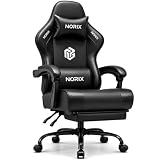
- Choose between a flat seat and a bolstered seat. A flat, office-chair-style cushion makes the full listed width usable. Racing-style gaming chairs often have raised side wings. A chair advertised with a 22-inch seat may offer only 18 to 19 inches of flat space between bolsters.
- Set a realistic budget based on use. For occasional use, a $80 to $120 chair can be adequate. For daily use by a larger adult, expect better support and stronger components in the $140 to $280 range. Above $300, look for meaningful upgrades such as a heavier-duty mechanism, adjustable lumbar support, better upholstery, or a longer warranty—not just a more dramatic design.
1. Match Seat Width to Your Body, Not the Marketing Label
For most adults, a usable seat width of 19 to 21 inches is comfortable. Bigger-framed users often do better with 21 to 23 inches, while people who want room to shift, tuck one leg up, or sit cross-legged may prefer 23 to 25 inches. The key word is usable: the flat area available between the side edges or bolsters.
A chair with a listed 23-inch-wide seat is a promising option if that measurement reflects the actual cushion surface. For example, a big-and-tall model such as the Stella Mia chair is marketed with a 23-inch-wide seat, which is the kind of dimension larger buyers should seek out. But verify whether the seller measures edge-to-edge, including padding and side contours, or measures only the central sitting area.
Use these general targets:
- 18 to 19 inches usable width: Best for average-size users or compact rooms.
- 20 to 21 inches usable width: A versatile range for many adults who want more breathing room.
- 22 to 23 inches usable width: A strong target for broad-hipped, tall, or heavier users.
- 24 inches or more usable width: Best for buyers who prioritize maximum freedom of movement and have enough desk clearance.
Also check outside width. A 25- to 29-inch-wide chair may not slide comfortably between desk legs, especially if your desk has a center drawer, cabinet base, or narrow keyboard tray. Measure the narrowest point beneath your desk and leave at least 1 inch of clearance on each side.
2. Get Seat Depth and Height Right
Seat width gets attention, but seat depth determines whether the chair supports your thighs without pressing into the backs of your knees. Most big gaming chairs have a seat depth between 19 and 22 inches. A useful fit rule is to sit all the way back and leave about 2 to 4 inches between the front of the seat and the back of your knees.
Shorter users may find a 21- or 22-inch-deep seat too long, even if the width is ideal. In that case, a depth of 18 to 20 inches usually gives better circulation and lets your back reach the backrest. Taller buyers—roughly 6 feet 1 inch and above—often benefit from a 20- to 22-inch-deep seat, provided the chair’s lowest height still works with the desk.
Look for a seat-height adjustment range of at least 17 to 21 inches from floor to cushion. Users under about 5 feet 6 inches may need a low setting near 17 inches or a footrest. Taller users may need a top setting of 21 to 23 inches. Your feet should rest flat on the floor with your knees near a 90-degree angle.
3. Choose Cushion Material for Your Sitting Habits
Wide seats can feel excellent at first but become uncomfortable if the foam is too soft, too thin, or poorly supported. For a larger user, the cushion should resist bottoming out during a two- to four-hour session. Look for molded foam, cold-cure foam, or high-density foam in a cushion at least 4 inches thick at its thickest point. A 5- to 6-inch cushion can be especially useful for higher-weight users, although shape matters more than a single thickness number.
Pocket-spring seat cushions are another option. They can provide a more sofa-like feel and distribute pressure well, but they should be paired with a stable foam layer and a sturdy seat base. The GTPLAYER big-and-tall model, priced around $225.52, is an example of a chair positioned around a pocket-spring lumbar and seat-comfort concept.
For upholstery, PU or faux leather is common at every price level. It is easy to wipe clean but can feel warm during long sessions and may eventually peel, especially in hot rooms. Fabric and mesh-like woven upholstery are generally more breathable. If you run warm, game in a room above 74°F, or sit for several hours at a time, breathable fabric is usually the more comfortable choice.
4. Check the Construction Behind the Weight Capacity
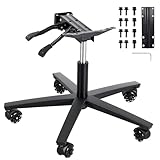
A stated weight capacity is useful only when the rest of the chair supports it. For a true big gaming chair, look for a metal internal frame, a steel or reinforced metal seat plate, a five-point base, and a gas lift rated for the intended load. Avoid treating a 350- or 400-pound claim as proof of durability if the listing does not show the base material or mechanism.
For users up to about 250 pounds, a chair rated for 275 to 300 pounds provides a sensible margin. For users between 250 and 325 pounds, shop for a 350-pound rating. Above that range, prioritize chairs rated for 400 pounds, such as the GTPLAYER and Stella Mia big-and-tall examples. A higher rating does not guarantee comfort, but it generally signals a wider base, stronger cylinder, and more robust seat structure.
Check caster size, too. Standard 2-inch casters work on low-pile carpet and hard floors. Larger 2.5- to 3-inch casters roll more easily over thicker carpet and are helpful on heavier chairs. If your flooring is hardwood, vinyl, or laminate, use soft polyurethane wheels or a protective chair mat.
5. Prioritize Comfort Features That Improve Performance
A wide seat should not force you to compromise on posture. At minimum, choose a chair with height adjustment, tilt, and a lockable recline. A recline range of 90 to 135 degrees is sufficient for most people; 150 to 165 degrees is useful for occasional lounging but should not outweigh core ergonomic features.
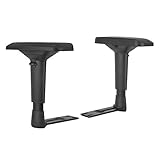
Armrests are especially important on wider chairs. Fixed armrests can sit too far apart, leaving your shoulders unsupported when typing or using a controller. Adjustable 2D armrests move up and down and may pivot. Adjustable 3D or 4D armrests add front-to-back and side-to-side movement, making it easier to bring elbow support inward.
Look for armrest height adjustment of roughly 3 to 4 inches. Ideally, your elbows should rest comfortably with shoulders relaxed, rather than lifted. Lumbar pillows can help, but integrated adjustable lumbar support is generally more convenient because it stays in place and can be tuned to the curve of your lower back. A footrest is a nice extra for reclining, but it should not be the reason you choose a chair with a narrow or poorly built seat.
6. Understand Price Tiers Before You Buy
Budget: $75 to $120. Expect basic faux leather, fixed or limited-adjustment armrests, thinner foam, and weight capacities commonly around 250 to 300 pounds. A basic model such as the N-GEN GAMING chair at about $79.96 or a generic gaming chair with footrest around $84.99 can work for occasional use, lighter users, or a secondary setup. Confirm seat dimensions carefully; many budget “wide” chairs are still under 20 inches of usable width.
Mid-range: $120 to $250. This is often the best category for buyers who need a genuinely bigger chair. You can find 21- to 23-inch seats, 300- to 400-pound capacities, improved padding, and stronger frames. The Stella Mia 23-inch-wide-seat chair at approximately $139.99 illustrates the type of specification to look for in this range.
Premium: $250 to $500 and up. Expect better adjustment mechanisms, more durable upholstery, thicker or more resilient foam, stronger bases, and longer coverage. Do not pay more solely for RGB lighting, oversized wings, or a detachable footrest. Spend for a flat usable seat, good armrest adjustment, solid recline hardware, and a clear warranty.
7. Review Warranty, Delivery, and Assembly Details
For a chair used daily, aim for at least a one-year warranty. Two years or more is preferable, particularly for the frame, tilt mechanism, base, and gas lift. Read whether the warranty covers replacement parts, requires return shipping, or excludes normal wear on upholstery. Faux leather cracking is often considered cosmetic wear, so fabric may be the lower-risk choice for warm or high-use rooms.
Most gaming chairs arrive in one box weighing about 40 to 65 pounds; heavy-duty models can exceed 70 pounds. Plan for help if you live upstairs or have a narrow stairwell. Assembly usually takes 30 to 60 minutes with one person, though installing the backrest is easier with two people.
Before opening the box, confirm the return window and whether the seller accepts an assembled return. Keep the packaging until you have tested the chair for at least a few sessions. Check for a smooth lift, stable armrests, even recline tension, and no side-to-side wobble in the base.
Spec Checklist
| Spec | Budget | Mid | Premium |
|---|---|---|---|
| Usable seat width | 18-20 in. | 20-23 in. | 22-25+ in. |
| Seat depth | 18-20 in. | 19-21 in. | 20-22 in. |
| Weight capacity | 250-300 lb. | 300-400 lb. | 350-450+ lb. |
| Cushion | 3-4 in. foam | 4-5 in. dense foam or hybrid | 5+ in. resilient foam or spring hybrid |
| Armrests | Fixed or 1D | 2D or 3D | 3D or 4D |
| Typical price | $75-$120 | $120-$250 | $250-$500+ |
Red Flags
- A listing gives outside seat width but never states the flat sitting width between bolsters.
- A “big and tall” chair has a seat under 19 inches wide or a capacity below 300 pounds.
- The product page claims a high weight limit but does not identify the base, frame, or lift construction.
- Deep racing-style side bolsters reduce movement or press against your thighs when seated normally.
- The chair has a footrest and reclines dramatically, but offers fixed armrests and no useful lumbar adjustment.
- Photos and specifications conflict, or different seller listings show different dimensions for the same model.
- The warranty is vague, shorter than one year, or requires costly shipping for all claims.
FAQ
What seat width is best for a big gaming chair?
For many larger adults, 21 to 23 inches of usable seat width is a practical target. Choose 23 to 25 inches if you have broad hips or thighs, prefer a relaxed posture, or often sit with one leg folded. Measure the flat cushion area, not the widest outside edge.
How much extra seat width should I allow?
Add at least 2 to 4 inches beyond your widest seated hip or thigh measurement. Add 4 to 6 inches if you want room to change position frequently. Too much extra width is not usually harmful, but armrests may sit too far apart unless they adjust inward.
Is a 400-pound weight capacity necessary for a 250-pound person?
Not necessarily, but it can provide a useful durability margin. A well-built 300-pound-rated chair may suit a 250-pound user. A 350- or 400-pound model is worth considering if you want a wider seat, use the chair heavily, or value a larger base and reinforced mechanism.
Are racing-style side bolsters bad for bigger users?
They are not automatically bad, but pronounced bolsters often reduce usable width and can press against the thighs. Bigger users usually get a better fit from a flat or lightly contoured seat, especially for long desk sessions. If you prefer the racing look, choose a model with shallow, widely spaced side wings.