Key takeaways
- Spraying lubricant everywhere: Overspray can stain fabric, make floors slippery, and collect abrasive dust.
- Greasing the gas-cylinder taper: This can reduce the friction that keeps the cylinder seated in the base.
- Using a hammer on the cylinder: Never strike, heat, drill, or cut a gas lift. Use a proper cylinder-removal tool or professional service if it must be removed.
- Ignoring the casters: A wheel with a bent axle can sound like a base problem and may damage the socket.
- Over-tightening bolts: Excess force can strip aluminum threads or crush plastic spacers. Tighten firmly, not aggressively.
- Testing while parts are loose: Sit only after the base, casters, and seat hardware are secure.
- Buying an incompatible replacement: A five-star base is not automatically universal. Check dimensions, caster stems, mounting pattern, and weight rating.
A squeaky ergonomic gaming chair base is usually a maintenance problem, not an automatic sign that the entire chair is failing. The noise may come from a loose fastener, dry contact point, dirty casters, a worn tilt mechanism, or the gas-cylinder connection where the seat meets the five-star base. Before reaching for lubricant, identify exactly when the squeak occurs: while rolling, when swiveling, when leaning back, or when shifting your weight.
Done incorrectly, this repair can create bigger problems. Spraying oil on the wrong surface can make a chair slippery, attract grit, or damage nearby plastic and upholstery. Over-tightening bolts can strip threads, while hammering on a gas cylinder can damage the lift or make disassembly unsafe. The process below focuses on cleaning, inspection, careful tightening, and targeted lubrication before you spend money on replacement parts.
As an Amazon Associate we earn from qualifying purchases at no extra cost to you. Product prices and availability are accurate as of the date shown and are subject to change.

What You Need
| Item | Why | Optional? |
|---|---|---|
| Phillips screwdriver and metric hex-key set | Removes the seat, tilt-mechanism, caster, and base fasteners. Many gaming chairs use 5 mm or 6 mm hex bolts. | No |
| Adjustable wrench or socket set | Helps secure nuts and inspect the gas-cylinder and mechanism connections. | No |
| Flashlight | Reveals cracked metal, missing washers, bent tabs, and debris inside the wheel sockets. | Yes |
| Vacuum, soft brush, and microfiber cloth | Removes hair, dust, and grit that can cause clicking or squeaking around casters and the base. | No |
| Silicone spray or white lithium grease | Lubricates suitable metal pivot points and wheel axles. Use a small amount, not a soaking application. | No |
| Disposable gloves and cardboard | Protects your hands and floor from grime and overspray. | Yes |
| Replacement base or caster set | Useful if the star base is cracked, bent, or has damaged wheel sockets. Metal replacement bases commonly cost about $50 to $90. | Yes |
Step-by-Step
1. Locate the squeak before taking anything apart (5–10 minutes)
Place the chair on a hard, level floor and remove anything from the seat. Slowly perform one movement at a time: rotate the chair, roll it forward and backward, raise and lower it, and lean into the backrest. Put one hand on the base and another on the seat while repeating the motion. If the noise happens only during rolling, start with the casters. If it happens while swiveling or leaning, inspect the center cylinder and tilt mechanism.
Ask a helper to sit in the chair while you listen from the side. Do not crawl underneath while the chair is occupied. Mark the suspected area with a small piece of painter’s tape.
2. Unplug accessories and turn the chair over safely (5 minutes)
Disconnect any USB cable, power cable, speakers, or massage accessories. Move the chair onto a blanket or a piece of sturdy cardboard. With another adult supporting the backrest, gently tip the chair onto its side or back. Avoid putting your full weight on the armrests, which can bend or loosen their mounting points.
Do not disassemble, puncture, heat, or drill the gas cylinder. It is a pressurized component. Your goal is to inspect the connection around it, not open the cylinder itself.
3. Clean the wheels and five-star base (10–15 minutes)
Pull hair, threads, and carpet fibers from each caster. A narrow tool can help remove wrapped fibers, but avoid cutting the wheel or its axle. Brush dust from the wheel sockets and wipe the underside of the base with a dry microfiber cloth. If the wheels are dirty, clean them with a lightly damp cloth and allow them to dry completely.
Spin every wheel by hand. A healthy caster should rotate without grinding, wobbling, or stopping abruptly. Check that each wheel stem sits fully inside its socket. A loose stem can squeak as it shifts under a typical 200- to 300-pound chair-and-user load.
4. Inspect and tighten accessible fasteners (10–20 minutes)
Check the bolts connecting the seat to the tilt mechanism, the mechanism to the gas-cylinder plate, and the base to any visible mounting hardware. Tighten each fastener gradually in a crisscross pattern. Stop when it is firmly seated; do not force a bolt that turns without tightening, because its threads may be stripped.
Look for missing washers, elongated bolt holes, rust, cracked welds, or metal that has started to fold. If a bolt is loose again after tightening, apply a removable medium-strength threadlocker only if the fastener is metal-to-metal and the manufacturer does not prohibit it. Keep threadlocker and grease away from the gas-cylinder shaft and plastic parts.
5. Lubricate the correct contact points (5–10 minutes)
Apply a small amount of silicone spray or white lithium grease to metal pivot points in the tilt mechanism and to accessible caster axles. Spray onto a cloth or straw first when possible, so lubricant does not reach the upholstery, floor, braking surfaces, or the polished section of the gas-cylinder shaft.
Do not lubricate the tapered connection between the gas cylinder and the base. That joint is designed to grip through friction. Grease can allow the cylinder to shift or make later removal more difficult. Also avoid petroleum-heavy products on unknown plastics, rubber wheels, and painted surfaces unless the product label says they are compatible.
6. Test the chair in stages (5–10 minutes)
Return the chair upright and test it without sitting down. Rotate it, roll it, and move the backrest through its normal range. If the noise is gone, sit carefully and repeat the test. If the squeak remains, place a hand on each base leg while a helper repeats the movement. A cracked or flexing leg often produces a sharper creak than a dry pivot.
Never continue using the chair if the base rocks, a caster pulls out, the seat drops unexpectedly, or a crack is visible. A small squeak is an inconvenience; structural movement is a safety issue.
7. Replace a damaged base when cleaning cannot solve it (20–45 minutes)
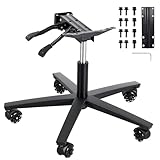
If the base is bent, fractured, badly rusted, or has enlarged caster sockets, replacement is safer than trying to straighten it. Common options include a “Chair Metal Base Replacement with Adjustment Tilt Mechanism Cylinder Wheels,” listed around $89.99, and an “Office Gaming Chair Metal Base Replacement Part with 5 Wheels 5 Bell Glides,” listed around $49.99. Actual prices vary by seller, shipping, finish, and included hardware.
Before ordering, measure the caster-stem diameter, count the mounting holes, compare the distance between holes, and confirm the base supports your chair’s total weight. Also verify whether the listing includes the gas cylinder, tilt mechanism, wheels, or only the five-star base. Transfer parts only when they fit without forcing or modifying them. Follow the replacement instructions and tighten hardware evenly.
Mistakes to Avoid
- Spraying lubricant everywhere: Overspray can stain fabric, make floors slippery, and collect abrasive dust.
- Greasing the gas-cylinder taper: This can reduce the friction that keeps the cylinder seated in the base.
- Using a hammer on the cylinder: Never strike, heat, drill, or cut a gas lift. Use a proper cylinder-removal tool or professional service if it must be removed.
- Ignoring the casters: A wheel with a bent axle can sound like a base problem and may damage the socket.
- Over-tightening bolts: Excess force can strip aluminum threads or crush plastic spacers. Tighten firmly, not aggressively.
- Testing while parts are loose: Sit only after the base, casters, and seat hardware are secure.
- Buying an incompatible replacement: A five-star base is not automatically universal. Check dimensions, caster stems, mounting pattern, and weight rating.
How Often
Inspect the chair every three to six months, or more often if it is used eight or more hours daily, moved across carpet, or exposed to pets and dust. Vacuum the wheel area monthly in a high-traffic workspace. Check fasteners whenever you notice rocking, clicking, or a change in the recline feel. Apply lubricant only when a pivot becomes noisy or dry; routine overspray is unnecessary.
After a repair, repeat the inspection after one week of normal use. This catches bolts that have settled, casters that are not fully seated, and noises that return under a real seated load.
When to Call a Pro or Replace
Stop DIY work and contact a qualified furniture-repair professional if the base has a crack, broken weld, severe bend, or rust perforation. Professional help is also appropriate when the gas cylinder is stuck, the seat drops on its own, or removal requires force near the pressurized cylinder.
Replacement usually makes more sense when the chair is several years old and has multiple problems, such as a damaged base, worn casters, loose tilt mechanism, and failing upholstery. A replacement base in the roughly $50–$90 range may be reasonable for a high-quality chair, but compare that cost with a complete replacement and confirm that the new part carries an adequate weight rating.
FAQ
Can I use WD-40 on a squeaky gaming chair base?
It may quiet some metal contact temporarily, but it is not the best general-purpose choice. It can migrate onto wheels, flooring, and upholstery and may attract dirt. Use a small amount of silicone spray or white lithium grease on suitable metal pivots instead, keeping all lubricant away from the gas-cylinder shaft and taper.
Why does my chair squeak only when I lean back?
The likely causes are a dry tilt-mechanism pivot, loose seat-to-mechanism bolts, or a worn recline spring or bushing. Have someone lean back while you listen from the side, then tighten accessible hardware and lubricate only the exposed metal pivot points. If the mechanism shifts visibly or the backrest feels unstable, replace it or seek professional service.
Are gaming chair bases interchangeable?
Not always. Bases can differ in caster-stem size, center opening, mounting pattern, height, and weight rating. Measure before buying and confirm whether the replacement includes wheels, the cylinder, and the tilt mechanism. Never enlarge holes or force a mismatched cylinder into a base.
Is a squeaky base dangerous?
A noise alone is not necessarily dangerous, but it can indicate a loose fastener, damaged caster socket, bent leg, or cracked weld. Stop using the chair if it rocks, drops, leans unexpectedly, or shows visible damage. Inspect the structure before lubricating, and replace any compromised load-bearing part.