Key takeaways
- Fixed lumbar bolster (gaming chairs): Works well if your natural lumbar curve sits roughly in the middle of your torso height. Many riser-style bolsters sit around 7-9 inches above the seat pan and don’t move, so if your curve is higher or lower than that, you’re pushing your spine into a shape that isn’t yours.
- Adjustable lumbar (ergonomic office chairs): Pads typically travel 4-6 inches vertically and 1-2 inches in depth. This range covers most adult torso lengths, which matters more than people expect once height differences come into play.
What's inside
Neither chair style wins outright: gaming chairs with fixed lumbar bumps tend to help lower-back pain in shorter sitters who like a reclined posture, while adjustable-mesh office chairs tend to help taller bodies and anyone with upper-back or neck pain who needs to sit upright and move. The right pick depends on where your pain actually is and how tall you are, not on which chair looks more “ergonomic” in a product photo.
What your spine actually feels in each chair
Gaming chairs are built on a bucket-seat shell borrowed from racing seats. The side bolsters hold your hips and ribs in place, and the lumbar support is usually a fixed foam curve or a strap-on pillow that sits at one height. That’s great if the bump happens to land on your lower back, and frustrating if it doesn’t, because you can’t move it.
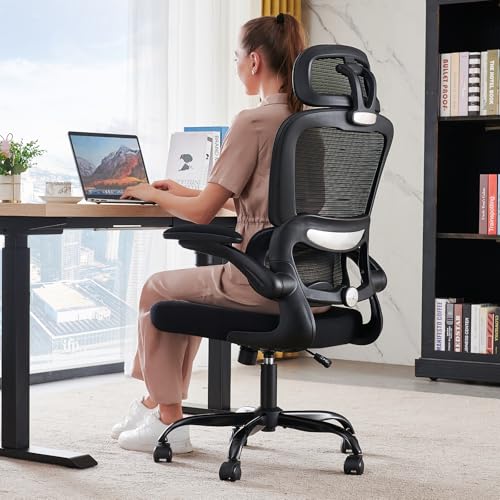
TRALT Office Chair Ergonomic Desk Chair with Lumbar Support Black, 1
Included for 'Gaming Chair vs Office Chair for Back Pain: Which One Actually Helps' as a relevant option in this category; details come from the product listing.
View on Amazon
GABRYLLY Ergonomic Office Chair, High Back Home Desk Chair with Headrest, Flip-Up Arms, 90-120° Tilt Lock and Wide Cushion, Big and Tall Mesh Chairs for Man Woman, Black Task Chair
Included for 'Gaming Chair vs Office Chair for Back Pain: Which One Actually Helps' because the listing specifies High Back Home Desk Chair with Headrest and Flip-Up Arms, details this guide uses to compare options.
View on Amazon
Nexthro Ergonomic Office Chair Desk Chair with Adjustable Lumbar Support
Included for 'Gaming Chair vs Office Chair for Back Pain: Which One Actually Helps' as a relevant option in this category; details come from the product listing.
View on Amazon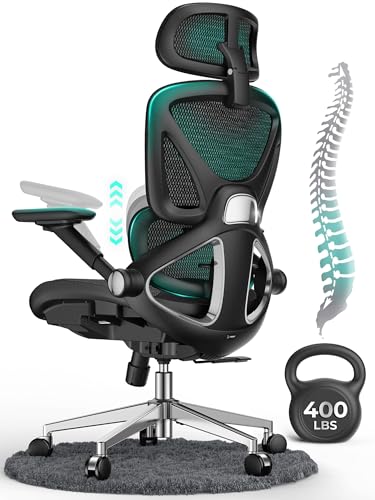
CAPOT Ergonomic Mesh Office Chair, Adjustable Lumbar High Back Desk Chair 400lbs, 4D Flip-up Arms, 3-Level Tilt Backrest, 3D Headrest, PU Wheels, Swivel Rolling Computer Chair for Long Desk Work
Included for 'Gaming Chair vs Office Chair for Back Pain: Which One Actually Helps' because the listing specifies Adjustable Lumbar High Back Desk Chair 400lbs and 4D Flip-up Arms, details this guide uses to compare options.
View on AmazonOffice chairs built for ergonomics use a flatter, wider seat pan with a mesh or foam back that has an adjustable lumbar mechanism: a dial, a sliding pad, or a flexing mesh panel you can raise, lower, or tighten. The seat itself doesn’t hug your hips the way a bucket seat does, so your lower back relies more on the backrest adjustment than on the seat shape.
In practical terms: a bucket seat gives you instant, non-adjustable support in one spot. A mesh ergonomic chair gives you support you have to dial in, but it can follow your body as you shift between tasks.
Lumbar support: fixed bolster vs. adjustable mesh
- Fixed lumbar bolster (gaming chairs): Works well if your natural lumbar curve sits roughly in the middle of your torso height. Many riser-style bolsters sit around 7-9 inches above the seat pan and don’t move, so if your curve is higher or lower than that, you’re pushing your spine into a shape that isn’t yours.
- Adjustable lumbar (ergonomic office chairs): Pads typically travel 4-6 inches vertically and 1-2 inches in depth. This range covers most adult torso lengths, which matters more than people expect once height differences come into play.
Recline range and what it does to your back
Gaming chairs usually recline from about 90° to 155°-180°, and several models lock flat enough to nap in. That deep recline unloads the lumbar spine by shifting weight into the backrest, which can genuinely relieve lower-back pain during breaks. The catch is that most gaming chair recline mechanisms are a simple tilt-lock, not a synchro-tilt, so your hips and knees don’t stay in proper alignment as you lean back, and the seat pan doesn’t move with you.
Office chairs built for all-day ergonomic use typically recline 90°-135° with a synchro-tilt or multi-tilt mechanism, meaning the seat and back move together at a set ratio (often 2:1) so your hip angle opens gradually instead of your lower back taking all the bend. Less dramatic recline, but more support through the motion.
| Feature | Typical Gaming Chair | Typical Ergonomic Office Chair |
|---|---|---|
| Recline range | 90°-155° (some to 180°) | 90°-135° |
| Lumbar adjustment | Fixed or strap-on pillow, non-adjustable height | Dial/pad, adjusts 4-6 in. vertically |
| Seat depth adjustment | Rare; fixed pan, usually 19-20 in. deep | Common on mid/high-end models, 16-20 in. adjustable |
| Seat height range | 17-21 in. | 16-21 in., sometimes 15-20.5 in. on “short” models |
| Armrest adjustment | 2D-4D on most, height and width only on budget models | 3D-4D common, including pivot |
| Weight capacity | Usually 250-300 lb, big-and-tall up to 400 lb | Usually 250-300 lb, big-and-tall up to 400-500 lb |
| Typical price range | $180-$450 | $250-$900 |
Seat depth and height: why 5’4″ and 6’2″ bodies need different chairs
Seat depth (the distance from the front edge of the seat to the backrest) matters more for back pain than most buyers realize. If the seat is too deep, you either sit without lumbar contact (bad for the lower back) or slide forward into a slouch (bad for everything). If it’s too shallow, your thighs lack support and you lean forward to compensate, which loads the upper back and neck.
- 5’4″ and under: Needs a seat depth around 16-18 inches and a seat height that goes down to 15-17 inches off the floor. Most gaming chairs are built around a 19-20 inch fixed depth meant for average-to-tall frames, so shorter sitters often end up with the backrest’s lumbar bump pressing mid-back instead of lower back, and their feet dangling unless the gas cylinder goes low enough. Office chairs with depth adjustment or a “petite” frame fit this body much better.
- 6’2″ and up: Needs seat height up to 21-22 inches and a seat depth of 19-21 inches, plus a backrest tall enough to support the shoulder blades. Big-and-tall gaming chairs (often rated to 350-400 lb with a taller frame) and big-and-tall ergonomic chairs both work, but a standard-size office chair will leave the lumbar pad hitting mid-back and the headrest too low for a tall torso.
Rule of thumb: when seated, you should fit 2-4 fingers between the back of your knee and the seat edge. If you can’t get your fingers in, the seat’s too deep for you; if there’s a gap wider than a fist, it’s too shallow.
Which chair helps which pain pattern
Lower back pain
Lower-back pain generally responds better to deep recline and a lumbar curve that contacts the small of the back under load, which is where fixed-bolster gaming chairs can genuinely help, especially for shorter and average-height users whose lumbar curve lines up with the bolster. The risk is a seat that’s too deep (common for taller gaming chairs used by shorter people), which flattens the lumbar curve and undoes the benefit.
For taller users with lower-back pain, an ergonomic chair with adjustable lumbar depth and a synchro-tilt that keeps hips and spine aligned through the recline usually outperforms a gaming chair, because you can actually position the support where your pain is.
Upper back and neck pain
This is where gaming chairs tend to fall short. The high-back bucket shape with a built-in headrest pillow looks like neck support, but the pillow is usually fixed in angle and position, forcing the head slightly forward or into a tilt that doesn’t match natural neck posture, especially during long typing sessions rather than reclined gaming.
Office chairs with an adjustable headrest (height and tilt, sometimes depth) that lines up with the base of the skull do more for neck and upper-back pain, because the support moves to meet you rather than the other way around. If upper back and neck pain is the primary complaint, prioritize headrest adjustability over recline range.
Decision matrix: match the chair to your situation
| Your situation | Better choice | Why |
|---|---|---|
| Lower-back pain, height 5’4″-5’9″, like reclining to relieve pressure | Gaming chair with adjustable lumbar pillow | Bolster height often matches average torso length; deep recline unloads lumbar spine |
| Lower-back pain, height 6’0″+ | Ergonomic office chair, tall/big-and-tall frame | Adjustable lumbar depth and taller backrest match a longer torso better than a fixed bolster |
| Upper back / neck pain, desk work 6+ hrs/day | Ergonomic office chair with adjustable headrest | Headrest angle and height can be tuned; gaming chair pillows are fixed-angle |
| Short frame (under 5’4″), any pain pattern | Office chair with seat-depth adjustment or petite frame | Fixed-depth gaming chair seats are usually too deep, pushing lumbar contact off-target |
| Pain flares mainly during long gaming/streaming sessions | Gaming chair with 150°+ recline and leg rest | Deep recline plus leg support reduces lumbar load during passive sitting |
| Mixed use: work all day, game at night | Ergonomic chair for daytime, consider swapping or choosing a hybrid “ergo-gaming” model | Synchro-tilt mechanics matter more for 8-hour sitting than for 2-hour gaming sessions |
Build quality and what wears out first
Gaming chair PU-leather upholstery is the most common failure point. It typically starts cracking or peeling at the seat edge and armrest contact points within 12-24 months of daily use, which indirectly affects back support once the foam underneath starts flattening unevenly. Fabric and mesh gaming chairs avoid the peeling issue but can sag at the lumbar bolster seams sooner.
On ergonomic office chairs, the mesh back rarely tears but can lose tension over 3-5 years, softening lumbar support gradually rather than suddenly. The gas cylinder and tilt tension mechanism are usually the first mechanical parts to wear on either chair type, generally after 3-5 years of daily use, and are worth checking for a replaceable, standard-size cylinder before buying either style.
Bottom line
If your pain is mainly lower back, you’re average height or shorter, and you want a chair you can recline deeply into, a gaming chair with an adjustable lumbar pillow is a reasonable, often cheaper option. If you’re taller than about 6 feet, deal with upper back or neck pain, or sit upright for most of the day, an ergonomic office chair with adjustable lumbar depth and a tunable headrest will almost always do more for your spine, even though it costs more upfront.