Key takeaways
- GPU size: Match card length, height and thickness to the case’s stated limits. Reviewers cite roughly 310mm as a common limit in compact cases, but each case differs.
- Power supply: Mini-ITX cases take SFX or SFX-L units. A 650W SFX unit is described as comfortable for a card in the class of the RTX 4070 or RX 7800 XT, while cards that draw 300W or more call for 850W-class SFX-L, per the guides above. Always follow the graphics card maker’s recommended PSU rating.
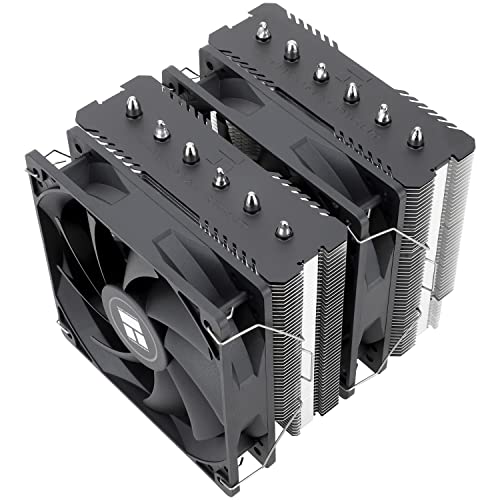
- CPU cooler: Check the case’s cooler height or radiator limit. Low-profile air coolers such as the Noctua NH-L9a-AM5 suit very small cases but limit sustained power. A 240mm or 280mm AIO suits larger ITX cases.
- Motherboard: ITX boards have one PCIe slot and often two M.2 slots, so plan storage ahead. Check for onboard Wi-Fi, USB headers and BIOS support for your chosen CPU.
- Memory: Two DIMM slots only. Choose 32GB as a kit of two sticks.
- Airflow: A smaller case runs warmer. Mesh panels and positive airflow help, and a tuned fan curve keeps noise reasonable.
The best ITX gaming build for most people pairs a Ryzen 7 7800X3D or similar AM5 chip with a mid-to-high-end graphics card inside a case like the Cooler Master NR200P Max, Fractal Design Terra or NZXT H1 v2, with the case chosen first and every other part picked to fit it. This guide lays out sample parts by budget class, explains the fit checks that matter in a small case, and sticks to maker-listed facts and the part lists published by reviewers such as WePC, PropelRC and RAID GG. It does not quote prices.
Start with the case, not the CPU
In a mini-ITX build every choice limits the next one. Case volume decides the maximum graphics card length and thickness, cooler height or radiator size, and power supply format. Pick the case first, read its supported-parts list, then build backward. Reviewers also note that mini-ITX builds usually cost noticeably more than equivalent ATX builds, because ITX boards, SFX power supplies and low-profile coolers carry a premium.
At a glance: cases
| Case | Best for | Notes | Limits |
|---|---|---|---|
| Cooler Master NR200P Max | Most builders; strong all-rounder | Sold with a liquid cooler and SFX-L power supply in the Max version, per the maker | Bundled parts constrain upgrade choices |
| Fractal Design Terra | Quiet, living-room look | Compact case with a wood-and-metal design named in several 2026 guides | Tighter cooling options than mesh cases |
| NZXT H1 v2 | Easiest all-in-one build | Comes with a 140mm AIO, an SFX power supply and a PCIe 4.0 riser, per Sunbeam’s roundup | Limited GPU sizes; PSU choice is fixed |
| Hyte Revolt 3 | Style-focused build | Listed in 2026 case roundups | Check GPU length against the maker’s limit |
| Dan Cases A4-SFX v4.1 | Tiny footprint | Sandwich-style layout for very small builds | Needs low-profile cooler and a short GPU; fiddly assembly |
| Lian Li A4-H2O | Compact cooler-focused build | Used in a Gaming PC Guru premium sample build | Hardware choices are tightly limited |
| SilverStone SG13 | Lowest-cost case | Called the budget pick by Sunbeam | Limited cooling and cable room |
Sample part lists by tier
Mid-range: balanced 1440p build
RAID GG’s mid-range list pairs a Ryzen 5 7600 with an RTX 4070 Super 12GB, a B650-I ITX board such as the ASUS ROG Strix B650-I, 32GB DDR5-5600, a 1TB NVMe SSD, a Corsair SF750 SFX power supply and the NR200P Max case. Those are previous-generation GPU choices; you can substitute a current graphics card of the same class as long as it fits the case’s length and thickness limits and the power supply meets the maker’s recommendation.
High-end: sustained 1440p and 4K gaming
PropelRC’s higher list uses a Ryzen 7 7800X3D, an ASUS ROG Strix B850-I board, an RTX 4070-class card, 32GB DDR5-6000, a 2TB Samsung 990 Pro, a Cooler Master V750 SFX supply, an SSUPD Meshroom D case and a Noctua NH-L9a-AM5 low-profile cooler. For a premium route, Gaming PC Guru lists prebuilt Cooler Master NR2 Pro systems with a 7800X3D and RX 9070 XT, or a 9800X3D and RTX 5080.
Premium: compact flagship
The Gaming PC Guru premium list uses a Lian Li A4-H2O case, Ryzen 7 7700X, RTX 4080 Super and Corsair SF850L PSU. A high-end GPU in a very small case demands careful airflow planning, so check the case maker’s approved card list.
Fit and compatibility checks
- GPU size: Match card length, height and thickness to the case’s stated limits. Reviewers cite roughly 310mm as a common limit in compact cases, but each case differs.
- Power supply: Mini-ITX cases take SFX or SFX-L units. A 650W SFX unit is described as comfortable for a card in the class of the RTX 4070 or RX 7800 XT, while cards that draw 300W or more call for 850W-class SFX-L, per the guides above. Always follow the graphics card maker’s recommended PSU rating.
- CPU cooler: Check the case’s cooler height or radiator limit. Low-profile air coolers such as the Noctua NH-L9a-AM5 suit very small cases but limit sustained power. A 240mm or 280mm AIO suits larger ITX cases.
- Motherboard: ITX boards have one PCIe slot and often two M.2 slots, so plan storage ahead. Check for onboard Wi-Fi, USB headers and BIOS support for your chosen CPU.
- Memory: Two DIMM slots only. Choose 32GB as a kit of two sticks.
- Airflow: A smaller case runs warmer. Mesh panels and positive airflow help, and a tuned fan curve keeps noise reasonable.
Budget tiers by hardware class
- Budget: Ryzen 5 class CPU, mid-range GPU, SilverStone SG13 or similar simple case, 650W SFX.
- Mid-range: Ryzen 7 X3D chip, upper-mid GPU, NR200P Max or Terra, 750W SFX.
- Premium: 9800X3D class CPU, high-end GPU, NR2 Pro, Lian Li A4-H2O or Dan A4-SFX, 850W SFX-L.
Pick X if…
| If you want… | Choose |
|---|---|
| The easiest overall ITX build | Cooler Master NR200P Max |
| A quiet, living-room-friendly look | Fractal Design Terra |
| Fewer parts to pick | NZXT H1 v2 (cooler and PSU included) |
| The smallest footprint | Dan Cases A4-SFX v4.1 |
| The lowest-cost case | SilverStone SG13 |
| The strongest gaming CPU for a small case | Ryzen 7 7800X3D or 9800X3D |
Alternatives
- Prebuilt ITX systems: Cooler Master NR2 Pro-based builds remove compatibility guesswork.
- Micro-ATX build: If you want more slots, cheaper boards and easier cooling, a micro-ATX case is only slightly larger.
- Handheld or mini-PC: For light gaming, a mini PC takes less space but offers no upgrade path.
Graphics card choice for small cases
Small cases care about card length, thickness and cooler design more than brand. Many compact-friendly models are two-slot or 2.5-slot cards under about 300mm, and several makers sell dedicated small-form-factor editions. Because the sample lists above use older RTX 40-series cards, look at newer options such as the RTX 50-series and Radeon RX 9000 series for versions that fit your case’s stated limit, and confirm the power connector type and the PSU’s cable length. Blower or short-card designs can run louder, so read reviewer comments on noise before buying for a living-room build.
Build order and cable management
Work in a logical order. Install the CPU, memory, SSD and cooler on the motherboard outside the case when the design allows it, then fit the PSU and route cables before the graphics card, which often blocks access. Use short or custom SFX cables where the maker offers them, tie them neatly and keep them clear of fans. Update the BIOS before installing the OS, since ITX boards sometimes need a newer version for the latest CPUs. Run a stress test and check temperatures after the first boot, adjusting the fan curve until noise and heat are acceptable.
Cooling and noise expectations
Airflow is the main limit of ITX cases. Mesh panels, intake fans pushing air over the GPU and a CPU cooler matched to the chip all help. The Ryzen X3D chips run cooler than many rivals, which suits tight cases, and a Ryzen 5 class CPU in a small case needs even less cooling. Pairing an efficient graphics card, undervolting within the maker’s guidance, and capping frame rates are simple ways to reduce heat and fan noise.
Storage and connectivity
Most ITX boards offer two M.2 slots, often one on the back of the board, so a 2TB NVMe drive as the main drive is a sensible start. Check whether the board includes Wi-Fi and Bluetooth, how many rear USB ports it has and whether the case front panel needs a USB-C header, because small boards have fewer headers than ATX models.
What to avoid
Avoid buying parts before confirming case limits. Avoid a power supply with too little headroom, and avoid very tall RAM or a large cooler that blocks the graphics card. Finally, do not assume sample builds from earlier years are the best current choice, since part lineups change; use them as a template and swap in current equivalents that meet the same fit limits.
Frequently Asked Questions
Is a mini-ITX gaming PC worth it?
It is if size matters, such as for small desks or living rooms. You trade some cost and cooling headroom for portability and looks. Otherwise an ATX or micro-ATX build gives you more performance per spend.
What CPU is best for an ITX gaming build?
Reviewers repeatedly choose Ryzen 7 7800X3D or the newer 9800X3D for gaming because their cache helps frame rates, and they run cooler than some competitors. A Ryzen 5 7600 is a lower-cost option.
Which power supply format do I need?
Most mini-ITX cases take SFX or SFX-L. The NR200P family and H1 v2 are examples. Match wattage to the maker’s graphics card recommendation, with some headroom.
Can I fit a large graphics card?
Only if the case lists room for it. Check the maker’s maximum length and thickness; some compact cases accept cards around 310mm long, others much shorter.
Does an ITX PC run hotter?
It can, because there is less air volume. A mesh case with good fans, a suitable cooler and a tuned fan curve keeps temperatures within the parts’ limits. Quiet operation is easier in larger ITX cases.
Can I upgrade an ITX build later?
You can swap the GPU, RAM and storage as long as the new parts fit the case and power supply. The one-slot, two-DIMM layout limits expansion cards and memory capacity.
FAQ
Is a mini-ITX gaming PC worth it?
What CPU is best for an ITX gaming build?
Which power supply format do I need?
Can I fit a large graphics card?
Does an ITX PC run hotter?
Can I upgrade an ITX build later?
More from Amazon
Programs that pair well with the guide above. Offers and eligibility are set by Amazon and may change.
Set up recurring deliveries of everyday items on eligible products. Terms and savings are set by Amazon.
Explore Subscribe & SaveFree shipping on eligible items, Prime Video and more. Eligible new members can start with a free trial.
Start a Prime free trialA Prime membership for ages 18-24 with a trial period. Eligibility is set by Amazon.
See Prime for Young AdultsAudiobooks and podcasts to listen to on the go. Eligible new members can start with a free trial.
Try Audible freeAs an Amazon Associate we earn from qualifying purchases.