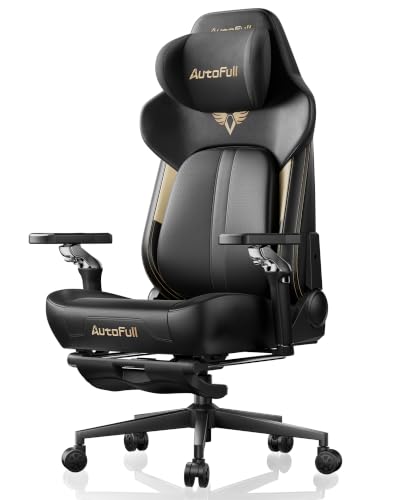
Key takeaways
- No usable seat width, seat depth, or minimum seat-height measurement.
- A weight rating with no information about the base, gas lift, or frame.
- “Leather” upholstery that does not identify PU, PVC, bonded, or genuine leather.
- Extremely low pricing paired with many premium claims and no clear warranty.
- Fixed lumbar and head pillows that cannot be removed or repositioned.
- Reviews mentioning peeling, broken tilt mechanisms, stripped bolts, or wobbling bases.
- A return policy that makes you pay expensive oversized shipping without stating the cost.
Buying your first gaming chair can seem simple: choose a color, compare a few prices, and pick the chair with the most dramatic racing-style design. That approach often leads to common mistakes. Buyers focus on branding instead of seat dimensions, assume “ergonomic” guarantees comfort, overlook the difference between bonded leather and genuine leather, or buy a chair that cannot support their height and weight comfortably.
A fabric vs. leather gaming chair buying guide for beginners should start with fit and construction, not appearance. Fabric is usually cooler and more forgiving in warm rooms, while leather-look upholstery is easier to wipe clean and often gives a more polished appearance. Neither material automatically makes a chair comfortable or durable. The frame, padding, mechanism, measurements, and return policy matter just as much.
Our top picks
 GTPLAYER Gaming Chair Fabric with Pocket Spring
- Product Group: Furniture
- Binding: Kitchen
| Product | Key specs | Amazon rating | |
|---|---|---|---|
| GTPLAYER Gaming Chair Fabric with Pocket Spring | Product Group: Furniture Binding: Kitchen | 4.5★ | Check price |
 Ferghana Velvet Fabric Gaming Chair Ferghana Velvet Fabric Gaming Chair | – | Check price | |
 N-GEN GAMING Gaming Chair N-GEN GAMING Gaming Chair | – | Check price | |
 N-GEN GAMING Big and Tall Gaming Chair N-GEN GAMING Big and Tall Gaming Chair | Product Group: Furniture Binding: Kitchen | 4.5★ | Check price |
As an Amazon Associate we earn from qualifying purchases at no extra cost to you. Ratings are shown as listed on Amazon.
The examples in this category show the broad market: budget fabric chairs can cost less than $100, while larger reclining models and chairs with footrests often land between $110 and $160. Use the numbers below as practical buying targets for 2026 rather than promises of performance from any individual product.
Decide These 3 Things First
- Your body measurements: Measure your height, seated hip width, and approximate weight. A chair’s usable seat width is more important than its advertised “big and tall” label.
- Your room and climate: Fabric typically feels less sticky during long sessions, but it can absorb spills and odors. Leather or synthetic leather wipes clean quickly but may feel warmer without ventilation.
- Your real sitting routine: Decide whether you need a chair for two-hour gaming sessions, eight-hour workdays, reclining, or occasional use. Extra features are not useful if the basic seat does not fit.
Size and Fit
Fit is the most decisive factor. Look for a seat width of at least 18 to 20 inches for most adults, measured between the side bolsters rather than across the widest exterior. If you have wider hips or prefer room to change position, target 20 to 22 inches of usable width. A seat depth between 18 and 20 inches suits many users, but shorter people may need 17 to 18 inches so the front edge does not press behind the knees.
Your feet should rest flat on the floor with your knees near a 90-degree angle. Check the chair’s minimum and maximum seat height: approximately 17 to 21 inches works for many desks, while taller desks may require a chair that rises to 22 inches or more. A tall back is not automatically supportive; the lumbar area and shoulder position must line up with your body.
Weight ratings also deserve caution. Treat the published limit as a maximum, not an ideal everyday load. For example, a 250-pound user may reasonably prefer a chair rated for 300 pounds or more. Big-and-tall models commonly advertise 300 to 350 pounds, but inspect the seat width, gas lift class, base, and warranty before relying on the headline number.
Material: Fabric vs. Leather
Fabric is generally the better choice for breathability and a less slippery feel. It can be comfortable in warm bedrooms or offices and may conceal small scuffs better than smooth upholstery. The tradeoffs are harder stain removal, possible pilling, and greater sensitivity to pet hair, food, and moisture. Look for tightly woven upholstery, reinforced seams, and a removable or washable cushion cover if available.
Synthetic leather, often called PU or PVC leather, is easy to wipe with a damp cloth and gives chairs a sleek finish. It can be practical for children, messy workspaces, or users who regularly eat at their desk. However, low-quality coatings may crack or peel after repeated flexing, heat, and humidity. Ask whether the chair uses full-cover PU, PVC, or a fabric-and-leather combination; “leather” in a product title does not necessarily mean genuine leather.
Genuine leather is uncommon in entry-level gaming chairs and usually costs substantially more. It can age well when properly maintained, but it is not automatically cooler, softer, or more ergonomic. For most beginners, the more useful comparison is breathable fabric versus well-made synthetic leather.
Construction and Adjustability
Look for a steel or reinforced metal frame, a five-star metal or heavy-duty nylon base, and a gas lift rated for your weight range. A Class 3 gas lift is common in budget chairs; Class 4 is a worthwhile target for heavier users or frequent daily use. The base should have a diameter of roughly 26 to 28 inches for stability.
Padding density is rarely listed consistently, so do not judge a chair only by thickness. A seat cushion around 4 to 6 inches thick may feel supportive, but overly soft foam can bottom out sooner than firmer, well-shaped foam. Pocket springs can add a more cushioned feel, as seen in some budget models, but springs do not replace adequate foam or a supportive frame.
Useful adjustments include seat height, tilt tension, a lockable recline, and armrest height. Two-dimensional armrests are a reasonable baseline. Four-dimensional arms, which adjust up and down, forward and backward, and side to side, help align your elbows but often raise the price. A recline range of 90 to 135 degrees covers work, gaming, and short rest breaks; a footrest is optional and should not be treated as a substitute for a properly positioned desk.
Comfort and Performance
For desk work and gaming, prioritize a level seat, adjustable lumbar support, and a headrest that does not push your head forward. A detachable lumbar pillow can be useful because you can move it several inches to match your lower back. Fixed, oversized cushions may feel supportive in a showroom but create pressure if they do not match your spine.
Armrests should allow your shoulders to relax while your elbows sit near 90 degrees. If the arms cannot fit under your desk, measure their lowest height before ordering. Casters should roll smoothly on your floor; on hardwood, laminate, or tile, consider a chair mat or softer roller wheels.
Massage functions and built-in electronics are secondary features. A basic massage lumbar cushion may use roughly 2 to 10 watts, depending on the design, but vibration is not the same as therapeutic treatment. Check whether the massage function requires a USB connection, how long the cable is, and whether the chair remains comfortable when the feature is turned off.
Price Tiers
At $80 to $120, expect fabric or synthetic leather upholstery, basic padding, a tilt mechanism, fixed or two-dimensional arms, and a weight rating commonly around 250 to 300 pounds. Current examples include fabric models priced around $86 to $99 and larger basic chairs near $113. These can be sensible starter choices when the measurements match, but inspect the return policy carefully.
At $120 to $220, you are more likely to find a wider seat, stronger base, better recline hardware, upgraded armrests, pocket springs, or a footrest. A big-and-tall reclining model around $144 fits this range. Do not assume every added feature improves long-session comfort; spend first on fit, foam, and adjustability.
At $220 to $450 or more, chairs may offer better upholstery, refined mechanisms, metal components, longer warranties, and more consistent quality control. Genuine leather or premium performance fabric can push prices higher. Before paying extra, compare the seat measurements and warranty with a less expensive chair.
Warranty and Return Policy
A warranty is most useful when it covers the parts most likely to fail: the gas lift, mechanism, base, casters, frame, and upholstery. A one-year limited warranty is common at the budget level. Two to three years is a stronger target, while premium brands may offer five years on the frame and shorter coverage on moving parts.
Read exclusions. Some warranties cover only the original purchaser, require registration, or exclude normal peeling, stains, and damage from assembly. Confirm whether replacement parts are shipped free and whether labor or return shipping is your responsibility. A return window of at least 30 days is helpful, but check whether a large, assembled chair must be boxed and who pays for shipping.
Delivery and Assembly
Most gaming chairs arrive in a box weighing approximately 40 to 75 pounds. A wider big-and-tall model may be heavier. Plan for two people during assembly, especially when attaching the backrest to the seat. Allow 30 to 90 minutes, depending on the instructions and hardware.
Before ordering, verify the package dimensions, delivery location, and whether the carton can pass through doorways and stairs. After assembly, tighten every bolt evenly, test the recline lock, and inspect the gas lift and base before regular use. Do not sit in the chair if the base is cracked, the mechanism rocks excessively, or a bolt cannot be fully secured.
Spec Checklist
| Spec | Budget | Mid | Premium |
|---|---|---|---|
| Typical price | $80–$120 | $120–$220 | $220–$450+ |
| Usable seat width | 18–20 in. | 19–22 in. | 20–24 in. |
| Weight rating target | 250–300 lb. | 300–350 lb. | 300–400 lb. |
| Seat height range | 17–21 in. | 17–22 in. | 16–23 in. |
| Recline | 90–120° | 90–135° | 90–150° |
| Armrests | Fixed or 2D | 2D or 3D | 3D or 4D |
| Warranty target | 1 year | 1–3 years | 3–5 years |
Red Flags
- No usable seat width, seat depth, or minimum seat-height measurement.
- A weight rating with no information about the base, gas lift, or frame.
- “Leather” upholstery that does not identify PU, PVC, bonded, or genuine leather.
- Extremely low pricing paired with many premium claims and no clear warranty.
- Fixed lumbar and head pillows that cannot be removed or repositioned.
- Reviews mentioning peeling, broken tilt mechanisms, stripped bolts, or wobbling bases.
- A return policy that makes you pay expensive oversized shipping without stating the cost.
FAQ
Is fabric or leather better for a gaming chair?
Fabric is usually better for breathability and a less slippery feel. Synthetic leather is easier to clean and can work well in messy environments. Choose based on your room temperature, cleaning habits, and tolerance for potential peeling rather than assuming one material is universally superior.
Are gaming chairs good for eight-hour workdays?
Some are, but the label does not guarantee office-level support. Choose a chair with adjustable lumbar support, a seat that keeps your feet flat, comfortable armrests, and a tilt mechanism. If possible, buy from a seller offering a practical return period and test it with your normal desk.
Do I need a footrest or massage function?
No. A footrest can be pleasant for short reclining breaks, but it should not support your legs while you work continuously at an unsuitable angle. Massage features provide vibration rather than medical treatment and should be considered optional after fit and construction.
What is the best beginner budget?
Plan on roughly $90 to $150 for a reasonable starter chair. At that price, compare dimensions, upholstery, base construction, warranty, and returns before choosing extras such as embroidery, a footrest, or LED-style styling. A simple chair that fits is a better buy than a feature-heavy chair that feels cramped.