Our Top Picks
 Herman Miller Embody Ergonomic Office Chair28D x 27W x 38.25H in28 x 27 x 38.25 inches51 poundsCheck on Amazon
The Herman Miller x Logitech G Embody Gaming Chair earns its price mostly through one thing: a pixelated backrest made of individual foam elements that flex independently, spreading load across your spine instead of letting a rigid racing-shell back concentrate pressure on a few contact points. Whether that’s worth the jump from a $300-$500 racing chair to a $1,300-$1,600 ergonomic seat depends on how many hours you sit and what your back already tells you at hour six.
What the Pixelated Support Layer Actually Does
Standard racing-style gaming chairs use one continuous foam-and-fabric shell shaped like a bucket seat. It looks supportive because of the bolstered sides, but the back panel itself is usually a single density of foam over a rigid frame. Sit in one for a few hours and pressure builds at the lumbar region and shoulder blades because those two zones are doing all the work of holding your spine’s curve.
Herman Miller Embody Ergonomic Office Chair | Fully Adjustable Arms and Carpet Casters | Black Rhythm
Chosen because it specifies Fully Adjustable Arms and Carpet Casters and Black Rhythm.
View on Amazon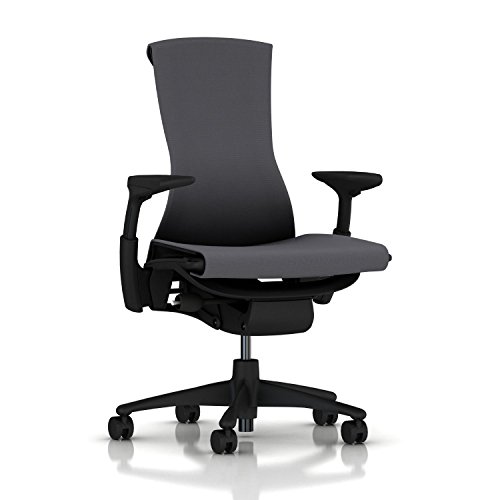
Herman Miller Embody Ergonomic Office Chair | Fully Adjustable Arms and Carpet Casters | Charcoal Rhythm
Chosen because it specifies Fully Adjustable Arms and Carpet Casters and Charcoal Rhythm.
View on Amazon
Herman Miller Embody Chair, Charcoal Rhythm
Chosen because it specifies Charcoal Rhythm.
View on Amazon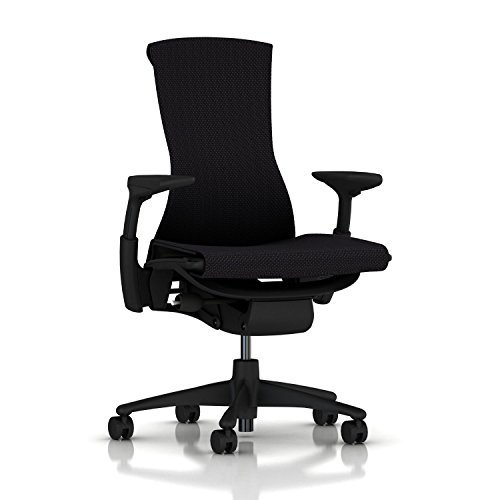
Herman Miller Embody Ergonomic Office Chair | Fully Adjustable Arms and Carpet Casters | Black Balance
Chosen because it specifies Fully Adjustable Arms and Carpet Casters and Black Balance.
View on AmazonThe Embody’s backrest is built from small independent “pixels” of foam, each one able to compress on its own. When you lean back or twist to grab something off a desk, the pixels directly under load compress while the ones around them stay neutral. That’s a meaningfully different mechanic than a foam shell flexing as one piece. In practice it means the chair is constantly redistributing contact pressure as you shift, rather than you having to find “the one correct position” and stay there.
BackFit Adjustment: The Other Half of the Equation
The pixelated layer only works well if the spine curve of the chair matches your own. That’s what the BackFit dial handles — it’s a rear-mounted adjuster that changes the depth and curvature of the lower backrest to match the height of your specific lumbar curve, not just the height of the seat. Racing chairs approximate this with a strapped lumbar pillow you position by feel. BackFit is a mechanical adjustment tied to a measurement, so it’s more repeatable and less likely to drift out of place during a match or a long work session.
Real Dimensions and Desk Clearance
Because the seat pan and arm geometry are wider and taller than most racing chairs, desk clearance is the detail people miss until the chair arrives.
| Spec | Herman Miller x Logitech G Embody | Typical Racing-Style Gaming Chair |
|---|---|---|
| Seat height range | 15.9″ – 20.9″ | 17″ – 21″ (varies by brand) |
| Overall width | 28.5″ | 27″ – 29″ (with bolsters) |
| Overall depth | 25″ – 27″ (with recline) | 25″ – 28″ |
| Backrest height | 34″ | 45″ – 50″ (full-back shell) |
| Armrest height range | 7″ – 10.5″ above seat | Usually fixed or 2D pivot only |
| Weight capacity | Up to 300 lbs | 220 – 300 lbs, brand-dependent |
| Chair weight (shipping) | Approx. 85 lbs boxed | 45 – 60 lbs boxed |
The number that trips people up is minimum desk clearance under the armrests. Most desks sit at 28″-30″ from floor to underside. With the Embody’s arms set low, at 7″ above the seat and the seat raised to a typical 19″, the arm height clears most standard desks. But if you use a taller standing desk or a desk with a center support bar, measure the actual clearance from floor to the bottom of the desk surface and subtract the seat height you’ll actually sit at, not the chair’s minimum. Because the seat back is shorter (34″ versus 45″+ on racing chairs), it also fits under lower ceilings or sloped-roof rooms without hitting overhead beams, something worth checking in attic or basement setups with under-7-foot ceilings.
What the 12-Year Warranty Actually Covers
Herman Miller backs the Embody with a 12-year warranty, which is unusually long for anything in the gaming chair category, where most competitors offer 2 to 5 years.
- Covered: structural frame failure, pneumatic cylinder failure, tilt mechanism defects, armrest mechanism failure, and premature breakdown of the foam pixels under normal use.
- Covered: casters and base components failing under rated load within the warranty period.
- Not covered: fabric wear from pets, cuts, stains, or UV fading from direct sunlight exposure.
- Not covered: damage from exceeding the 300 lb weight limit or using the chair outside normal indoor conditions.
- Not covered: cosmetic scuffs on the plastic base or armrest caps from moving the chair across rooms.
The practical value here is that the parts most likely to fail on a cheaper chair, gas cylinders, tilt mechanisms, and foam that goes flat, are explicitly covered for over a decade. On a $400 racing chair with a 2-year warranty, a failed cylinder around year three just means buying a new chair. On the Embody, it means a warranty claim.
Assembly and Moving Realities
The Embody ships in a single large box weighing close to 90 lbs including packaging, heavier than most gaming chairs because the base, cylinder, and seat pan use denser materials. Assembly is more straightforward than racing chairs, though, since there’s no back-to-seat bolting step: the backrest and seat arrive pre-connected as one unit, and you’re mainly attaching the base, casters, and arms. Expect 15-20 minutes with basic tools, versus 30-45 minutes for a racing chair with a separate headrest, lumbar pillow, and multi-panel backrest.
Moving it between rooms is where the extra weight matters. At roughly 60 lbs assembled versus 35-40 lbs for a typical racing chair, it’s not something you want to carry up a narrow stairwell solo. Most doorways (30″-32″ wide) clear the chair’s 28.5″ width without needing to tilt it, but if you’re moving it through a doorway with the arms still attached at their widest setting, narrow doorways under 30″ may require removing the armrests first.
Standard Racing Chair vs. Embody: A Practical Trade-off Table
| Factor | Racing-Style Chair | Herman Miller x Logitech G Embody |
|---|---|---|
| Price range | $250 – $600 | $1,300 – $1,600 |
| Best for sessions under | 2-3 hours | No practical limit for most users |
| Lumbar support method | Strapped or inflatable pillow | Mechanical BackFit adjustment |
| Pressure distribution | Concentrated at lumbar/shoulders | Spread across pixelated backrest |
| Long-term durability | Foam flattens in 1-3 years | Foam pixels rated for 12-year use |
| Aesthetic | Bold, gamer-branded styling | Minimalist, desk-neutral look |
Who Should Actually Buy It
- People with existing back pain who sit 6+ hours a day: the BackFit adjustment and pixelated support directly address the pressure points a racing chair aggravates. This is the clearest case for paying the premium.
- Streamers and remote workers using the same chair for work and gaming: the neutral design fits on camera and in a home office better than bolstered racing shells.
- Casual gamers playing under 10 hours a week: the cost difference is hard to justify. A mid-range racing chair with a swappable lumbar cushion covers this use case adequately.
- Renters or frequent movers: the extra 20-25 lbs of chair weight and lack of a carry handle make it more cumbersome to relocate than a lighter racing chair.
- Households with pets: the mesh-like back fabric isn’t covered against pet damage under warranty, so households with cats that scratch furniture should weigh that risk against the ergonomic gains.
Bottom Line
The posture tech is real, not marketing dressing. The pixelated backrest and BackFit dial change how pressure moves across your back in a way a single-density foam shell can’t replicate, and the 12-year warranty covers the mechanical parts most likely to fail on a cheaper chair. It’s worth the price for long daily sitters and anyone already dealing with back discomfort. For lighter, occasional use, a well-built racing chair still gets the job done for a fraction of the cost.