Key takeaways
- Choosing between a manual crank and an electric standing gaming desk is less about whether standing is “better” and more about how you actually use your setup. If you change height once in the morning and once at night, a…
Choosing between a manual crank and an electric standing gaming desk is less about whether standing is “better” and more about how you actually use your setup. If you change height once in the morning and once at night, a hand-crank desk can be simple, affordable, and refreshingly durable. If you switch from sitting to standing several times during long gaming sessions, work calls, or study blocks, electric lift is usually the more comfortable choice.
The real decision is convenience versus simplicity. Manual crank desks have fewer electronic parts, lower upfront costs, and no need for a nearby outlet. Electric standing gaming desks raise and lower at the push of a button, often include memory presets, and make it much easier to use the desk’s full height-adjustment range. Your room size, budget, equipment weight, and tolerance for adjusting a crank handle all matter.
Our top picks


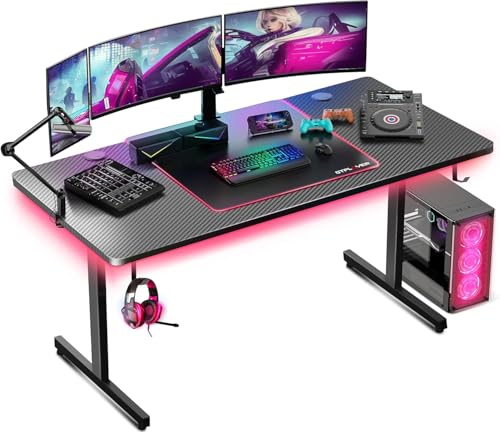
 ErGear 48 X 24 Inch Height Adjustable
- Product Group: Furniture
- Binding: Home
As an Amazon Associate we earn from qualifying purchases at no extra cost to you. Ratings are shown as listed on Amazon.
Quick Verdict
Choose a manual crank standing desk if you want a lower-cost, low-tech desk for a stable setup that will stay at one height for most of the day. It is especially practical for renters, occasional standing, and buyers who would rather avoid motors, control panels, and cords.
Choose an electric standing gaming desk if you expect to change positions regularly, share the desk with another person, or use a monitor-heavy gaming and work station. For most people building a desk around a PC, dual monitors, speakers, a microphone arm, and peripherals, electric adjustment is worth the extra cost.
Side by Side
| Factor | Manual Crank Standing Desk | Electric Standing Gaming Desk |
|---|---|---|
| Comfort and convenience | Requires turning a handle, usually 20 to 40 turns for a meaningful height change. | Button-operated lift; many models offer 2 to 4 saved height presets. |
| Typical desk height range | Commonly about 28 to 46 inches, depending on the frame. | Often about 28 to 47 inches; some extend higher for taller users. |
| Load capacity | Usually 100 to 200 pounds. | Commonly 150 to 300 pounds, with premium dual-motor frames sometimes higher. |
| Price range | About $180 to $450 for a complete desk. | About $250 to $800 for most gaming-friendly desks; premium models can cost more. |
| Maintenance | Occasional bolt checks and light lubrication if the crank becomes stiff. | Occasional bolt checks plus potential motor, handset, cable, or control-box issues. |
| Space needed | Needs clearance for a removable or folding crank handle, usually 5 to 8 inches at the side. | Needs access to a wall outlet and room for a power cable to move safely with the desk. |
| Look | Usually more office-like and mechanical, though the handle can often be tucked away. | Typically cleaner-looking from the front, with a control pad beneath the desktop. |
| Resale | Can appeal to buyers who value simple mechanics, but demand is narrower. | Usually easier to resell if the motor and controls work properly. |
| Best for | Budget-focused buyers, light equipment loads, rentals, and infrequent height changes. | Daily gamers, remote workers, shared desks, and multi-monitor setups. |
Where Manual Crank Wins
A manual crank desk wins on mechanical simplicity. There is no motor to fail, no control pad to stop responding, and no need to route a power cord behind your desk. That can be useful in a room with limited outlets, an older home with awkward wall access, or a rental where you want fewer cables and fewer things to troubleshoot.
It also has a lower barrier to ownership. A basic crank-adjustable frame with a 48-by-24-inch or 55-by-28-inch top is often priced below an electric desk with a comparable surface. That difference can pay for a monitor arm, cable tray, desk mat, or better chair. For context, a 55-inch fixed-height gaming desk such as the GTPLAYER 55 Inch Gaming Desk with LED Lights is listed around $64.50, while an entry-level electric option such as the 48-by-24-inch ErGear electric standing desk is around $99.99. A manually adjustable desk falls between fixed and electric options depending on its frame and desktop materials.
Manual adjustment can also feel more dependable for buyers who keep equipment in place for years. The crank mechanism is not comparable to a heavy-duty boat winch or a sports-net tensioner, but the appeal is similar: direct mechanical control without depending on electronics. A hand-operated mechanism can be easier to understand and inspect when something feels loose or stiff.
There is another practical benefit: a crank desk cannot move accidentally because a child leaned on a control button or a pet bumped a handset. That does not eliminate safety concerns—heavy monitors and desktop PCs should still be secured—but it reduces one source of unintended movement.
The drawback is clear: you may stop using the standing feature because raising the desk takes effort. If you have to rotate a side handle dozens of times while your headset cable, monitor cords, and chair are in the way, “I’ll stand later” can become the default. A manual desk works best when you genuinely plan to make fewer, larger adjustments.
Where Electric Standing Gaming Desk Wins
Electric standing desks are built around frequency of use. A typical model moves at roughly 1 to 1.5 inches per second, so changing from a 29-inch seated position to a 42-inch standing position generally takes under 15 seconds. That is a small convenience, but it makes a major difference over a full day of gaming, work, streaming, or homework.
Memory presets are especially valuable in a shared home. One person may prefer a 28- or 29-inch seated height, while another needs 31 inches. Standing preferences can vary even more. With presets, each user can return to a comfortable position without measuring, guessing, or cranking through several inches of travel.
Electric desks also suit cable-heavy setups better in everyday use—provided you manage cables correctly. Use a cable tray under the rear edge, leave a loose service loop from the wall outlet, and avoid tightly securing cables between moving and fixed surfaces. A single-motor desk may be sufficient for a laptop, one monitor, keyboard, and console. For a desktop tower, two monitors, monitor arms, speakers, and other accessories, a dual-motor frame with a stated capacity of at least 200 pounds offers more breathing room.
Gaming-focused electric desks often bring extras that buyers enjoy: integrated USB charging, a headphone hook, cup holder, LED accents, and a wide mouse-pad-style surface. These features are convenient, but prioritize frame stability and desktop depth first. A 24-inch-deep surface can work for a compact keyboard-and-monitor setup, while 27 to 30 inches of depth is more comfortable for a monitor arm, full-size keyboard, and a sensible viewing distance.
The trade-off is that electric desks introduce more potential failure points. Motors, handsets, anti-collision sensors, power adapters, and control boxes are all serviceable parts, but they are still parts. Buy from a seller that provides clear warranty terms and replacement components. Also check that the desk has anti-collision protection if children, pets, rolling drawer units, or a PC tower might be beneath the desktop.
Cost Over 5 Years
Upfront price is the biggest cost difference. A manual crank desk commonly starts around $180 and can reach $450 with a larger top, stronger frame, or better finish. An electric standing gaming desk often starts near $250, though sale-priced basic models can dip closer to $100, and well-equipped dual-motor desks often land between $450 and $800.
Electricity is not likely to decide the purchase. Many electric desk power supplies are rated around 100 to 200 watts while moving, but the motor runs only briefly. Even if you adjust the desk several times daily, annual energy use is generally minor compared with a gaming PC, display, or console. The more meaningful five-year expense is repair risk: a replacement handset, adapter, or control box can cost roughly $25 to $100 when available, while a motor or frame issue may be more expensive or require warranty service.
Manual desks usually have lower repair exposure. Over five years, you may spend nothing beyond checking fasteners, tightening frame bolts, or addressing a stiff crank linkage. Set aside about $20 to $50 for basic upkeep or replacement hardware if you want a realistic buffer.
For a buyer who will use standing mode once or twice a week, the manual desk often delivers the better five-year value. For someone who changes position two to six times per day, electric adjustment can justify its higher purchase price because it is far more likely to be used as intended.
Which One for Your Home
Small apartment
Pick based on outlet placement and desk footprint. A 48-by-24-inch electric desk is efficient for a small room, but plan for cable routing behind it. A manual desk is appealing if the only available outlet is far away or already crowded with a PC, monitor, router, and chargers. Avoid overly wide 60-inch tops unless you have enough clearance to pull out a chair and access the crank or controls comfortably.
Family with kids or pets
An electric desk with anti-collision protection and a child-lock function is usually the more flexible choice, but keep the control panel out of easy reach and inspect cords regularly. A manual desk removes powered movement concerns, though the crank handle should be folded or removed when not in use. In either case, do not place climbing-prone furniture beneath the desk, and stabilize monitors with secure stands or arms.
Rental
A manual crank desk is often ideal for renters because it needs no outlet and keeps the setup visually simple. It is also easy to move without worrying about a control box or power supply. However, if you work from home daily, an electric desk may be worth bringing along to your next place. Choose a frame that can be disassembled and a desktop that fits through your doorways, hallways, and stairwells.
Long-term home
For a permanent gaming room or home office, electric is usually the better investment. The convenience encourages regular movement, presets make the desk easier to share, and a larger 55-by-28-inch or 60-by-30-inch top can support a more complete setup. In 2026, the strongest long-term choice for most serious gamers is a stable electric frame with cable management, anti-collision technology, and enough capacity for future monitor upgrades.
FAQ
Are manual crank standing desks hard to raise?
They are not usually difficult, but they are slower and more physical than electric desks. Expect to turn the handle multiple times for every inch of movement. The effort increases if the desktop carries heavy monitors, a PC tower, or other equipment, even when the desk remains within its listed weight limit.
Is a single-motor electric desk good enough for gaming?
It can be. A single-motor desk is generally suitable for a modest setup with one monitor, a console or laptop, and standard peripherals. For dual monitors, large monitor arms, a desktop PC, speakers, and heavier accessories, a dual-motor desk with at least a 200-pound stated capacity is a safer long-term choice.
Do electric standing desks use much power?
No. They draw the most power only while moving, and movement usually lasts seconds at a time. The desk’s energy use is typically small compared with the rest of a gaming setup. Unplugging during long trips is reasonable, but daily electricity cost should not be a major concern.
What desktop size is best for a standing gaming desk?
For a compact setup, 48 by 24 inches is workable. For most PC gaming stations, 55 by 28 inches provides more comfortable room for a monitor, keyboard, mouse movement, and accessories. Choose 60 by 30 inches if you use multiple monitors, wide speakers, or a large desktop tower on the surface, but confirm the desk will fit your room and that the frame is rated for the load.