Key takeaways
- Sit back while using the keyboard and mouse.
- Hold a controller with your arms in their normal position.
- Reach for frequently used desk items.
- Try a modest recline without forcing your shoulders against the backrest.
- Shift position naturally rather than remaining deliberately centered.
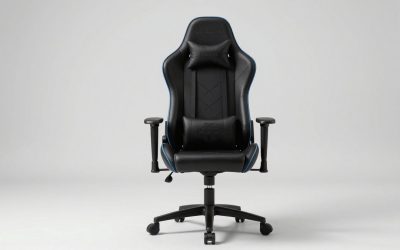
If you are researching the side bolster of the backrest secretlagb titan evo xl, the key buying question is whether the chair’s curved backrest edges leave enough room for your shoulders and upper arms. The product is the Secretlab TITAN Evo XL, and its published backrest width does not establish the flat space between those edges. Choose it only after checking the complete fit: shoulder clearance, backrest contact, seat depth, and minimum seat height. The XL provides a larger backrest than the Regular, but sizing up alone cannot guarantee that the side wings will feel comfortable.
Understanding the side bolster of the backrest secretlagb titan evo xl
The backrest side bolsters, also called side wings, are the raised, curved sections along the sides of the backrest. They are different from the seat bolsters beside your hips and thighs.
That distinction matters when assessing discomfort. Pressure against the outside of your thighs suggests a seat-fit issue. Contact around the shoulder blades, upper torso, or upper arms points toward the backrest shape, arm position, or the way you sit against it.
Secretlab describes the TITAN Evo’s backrest wings as having a 30-degree slope. That is the manufacturer’s design specification, not a guarantee of clearance for every shoulder width or sitting position.
The practical question is whether you can use the backrest while keeping your shoulders relaxed and reaching your controls comfortably. Light contact is different from an edge that feels intrusive or causes you to shift forward to avoid it.
What the published backrest width actually tells you
Secretlab’s technical drawing lists the TITAN Evo XL backrest width as 22 inches, compared with 21 inches for the Regular. Those figures describe the labeled backrest measurement; they should not be interpreted as a flat, unobstructed shoulder-support area.
A curved backrest has width, depth, and changing contours. Two people with similar shoulder measurements can contact it differently because their torso shape, shoulder height, and seated position differ.
Do not subtract an assumed bolster width from the published figure. The checked technical sheet does not provide a separate measurement for the flat inner shoulder area or the forward projection of each wing. Without those dimensions, a calculation would create false precision.
The XL dimensions that matter beyond shoulder room
A wider backrest is useful only when the rest of the chair also fits. Moving to XL changes several dimensions together.
| Published measurement | TITAN Evo Regular | TITAN Evo XL | Buying implication |
|---|---|---|---|
| Backrest width | 21 inches | 22 inches | XL is wider, but neither figure defines flat inner clearance |
| Backrest length | 33.5 inches | 35 inches | The backrest contours may meet your torso at different heights |
| Seat depth | 19.3 inches | 19.7 inches | Check whether you can sit back without crowding the backs of your knees |
| Floor-to-seatbase range | 17.7–21 inches | 18.1–21.9 inches | XL starts higher |
| Seatbase width, excluding sides | 18.5 inches | 19.3 inches | Useful for comparing the seat, not shoulder clearance |
Dimensions above follow the manufacturer’s labeled technical drawing and rounded inch values. They are not independently measured dimensions under a seated load.
The difference between Regular and XL is therefore more complicated than “one extra inch of shoulder room.” The taller backrest and different seat position can change where your body meets the contours.
If you are considering XL solely to avoid shoulder contact, compare its seat height and depth with a chair you already use. A backrest that feels roomier does not compensate for a seat that prevents you from sitting fully back.
How to assess shoulder clearance before ordering
Start with a chair whose strengths and weaknesses you understand. Its measurements provide a more useful reference than a product photo or the label “extra large.”
Compare contact at the same height on the backrest
Sit normally in your current chair and note where your shoulders and upper arms meet the backrest. If it has wings, measure the spacing at the height where contact occurs rather than only measuring its widest point.
Record whether that measurement follows the curved surface or runs straight between two points. Those methods produce different numbers. Photos should also identify the measurement location.
For the TITAN Evo XL, ask Secretlab support for clarification at that same location. A useful request includes your height, the dimensions of your current chair, and a description of the contact you are trying to avoid.
For example: “The sides of my current backrest touch my upper arms when I use a controller. Can you clarify the inner backrest spacing and wing projection at this height on the XL?” That asks a more answerable question than whether the chair fits broad shoulders.
Check the positions you actually use
A chair can feel acceptable while typing but restrictive when you hold a controller closer to your body. Conversely, an armrest setting that works for controller play may interfere with moving close to the desk.
During a trial, assess your usual activities:
- Sit back while using the keyboard and mouse.
- Hold a controller with your arms in their normal position.
- Reach for frequently used desk items.
- Try a modest recline without forcing your shoulders against the backrest.
- Shift position naturally rather than remaining deliberately centered.
The objective is comfortable movement during ordinary use. You do not need to force your elbows behind your torso as an artificial pass-or-fail test.
If you can avoid pressure only by sitting forward, the backrest is not serving the purpose you bought it for in that position.
Separate armrest interference from backrest interference
An upper-arm contact problem is not always caused by the wings. Armrests positioned too high, too wide, or too far back can also affect where your arms and shoulders settle.
The TITAN Evo includes 4D armrests, so assess their available positions before attributing every restriction to the backrest. Make small changes and observe which contact point changes.
That does not mean arm adjustments can correct an unsuitable backrest. If the wing itself remains intrusive when your arms are comfortably positioned, that is relevant evidence against the fit.
Which adjustments can help—and which cannot?
The TITAN Evo’s lumbar system adjusts lower-back support in height and depth. Its backrest reclines, and its armrests provide multiple directions of movement. These controls address different parts of the sitting position.
They should not be confused with adjustable shoulder wings. The documented controls do not provide an independent mechanism to widen or flatten the backrest bolsters.
| Adjustment or change | What it can help you evaluate | What it does not establish |
|---|---|---|
| Armrest positioning | Whether arm support is affecting shoulder position | That the backrest has enough clearance |
| Lumbar height and depth | Whether lower-back support is pushing your torso into an unwanted position | A change in wing width |
| Modest backrest recline | Whether contact changes during your normal range of use | That an uncomfortable upright fit is acceptable |
| Removing or repositioning the head pillow | Whether the pillow is influencing your head and upper-body position | A solution to restrictive side contours |
| Choosing a different upholstery | Surface preference and care requirements | Wider structural clearance |
Use adjustments to find a workable position, not to justify a chair that consistently feels wrong. A setting that solves shoulder contact but leaves you unable to reach the desk comfortably is a trade-off to assess carefully.
Should broad-shouldered buyers choose XL automatically?
No. Shoulder breadth is one part of the decision, and the XL’s overall dimensions still need to work for you.
Secretlab’s published XL sizing guidance targets approximately 5 feet 11 inches to 6 feet 9 inches and 175–395 pounds. These are manufacturer recommendations rather than a personalized fit assessment. Its sizing guidance also addresses users outside the usual combinations of height and weight.
For someone within the overlapping Regular and XL height ranges, the decision should include backrest contact, seat depth, foot support, and armrest placement. Do not choose from height alone.
A shorter person seeking more shoulder room may find that the larger seat creates another problem. Someone taller may need the XL backrest length even if their shoulders are relatively narrow. Neither situation is resolved by comparing only the widest backrest dimension.
Choose XL when the complete chair suits you. If shoulder-wing clearance remains uncertain, obtain better measurements or consider a backrest with less pronounced side contouring.
When another backrest design is the better purchase
A different chair deserves consideration when avoiding lateral contact is a firm requirement. Look for a backrest whose shape and dimensions can be inspected directly, ideally through an in-person trial.
This does not mean every mesh or office-style chair will provide more room. A rigid perimeter frame, narrow backrest, or projecting lumbar assembly can introduce its own contact points. Evaluate the particular design rather than its category.
| Your priority or experience | More useful next step |
|---|---|
| You like the TITAN Evo shape and need a larger overall chair | Compare XL’s complete dimensions with your current chair |
| You dislike any wing contact around your upper arms | Trial a less contoured backrest |
| Your current seat already feels too high or deep | Check those dimensions before sizing up |
| You cannot determine inner shoulder clearance | Request location-specific measurements before ordering |
| You already own the chair and one side appears different | Document the condition and contact support |
The strongest reason to choose another chair is a demonstrated mismatch with how you sit. There is no need to identify a manufacturing defect to decide that a particular contour is unsuitable.
What to check if you already own the chair
First, distinguish a symmetrical fit issue from an apparent assembly or component problem. If both wings contact your body similarly, the issue may be the interaction between your proportions and the backrest shape.
If one side seems visibly different, inspect the chair against the assembly instructions without loosening structural fasteners while seated. Photograph the chair straight-on and from above, and document where the contact occurs. A tilted camera can make a symmetrical backrest look uneven, so use consistent angles.
Contact Secretlab with the order details and photographs if you suspect damage, incorrect assembly, or a defective component. Do not bend the wings, cut the foam, or open the upholstery to create room.
Also avoid relying on an assumed break-in period. Surface feel can change with use, but there is no verified basis here for promising that the structural contour will widen enough to resolve restrictive contact.
Return terms belong in the buying decision
If you cannot try the chair beforehand, understand the consequences of a poor fit before ordering.
Check the U.S. return document applicable to your purchase, including eligibility, deadlines, condition requirements, packaging, and shipping responsibilities. Retain the documents and packaging required by that policy.
Secretlab’s policy page states that the applicable legal document is determined at purchase. It also states that exchanges are not currently offered. Do not assume you can simply exchange XL for Regular after a trial.
Warranty coverage is a separate issue. A chair that functions as designed but does not suit your body raises a different question from a damaged or defective backrest. Ask about the appropriate process rather than assuming warranty coverage includes subjective fit.
Frequently asked questions
Is the side bolster of the backrest secretlagb titan evo xl adjustable?
The chair is correctly named the Secretlab TITAN Evo XL. Its documented adjustments include lumbar support, armrests, and backrest recline; they do not include independent shoulder-wing width adjustment. Moving the lumbar support can change your contact with the backrest, but it does not widen the wings.
Does a 22-inch backrest mean 22 inches between the bolsters?
No. The manufacturer labels a 22-inch backrest width, but that does not identify a flat inner channel between the wings. Use the technical drawing for the dimension it actually labels. Request additional measurements if the internal contour is decisive for your purchase.
Will fabric upholstery solve shoulder pressure?
Changing upholstery can alter surface feel, but it should not be treated as a structural sizing change. If the underlying contour contacts your upper arms in an unwanted way, fabric alone is not a verified solution. Compare the exact chair configuration and assess the shape separately.
Should you add a thick cushion to move away from the wings?
That can change your distance from the backrest, but it also changes effective seat depth and the position of other supports. It may create a different mismatch rather than solve the original one. Evaluate the complete sitting position instead of assuming more padding improves fit.
Can you remove the side bolsters?
They are not documented as user-removable fit accessories. Removing covers over assembly hardware is different from removing the backrest’s upholstered wings. Do not cut, reshape, or dismantle the backrest to alter its contour; contact support about suspected defects or choose a more suitable design.
Conclusion
The TITAN Evo XL’s backrest side bolsters deserve a fit check, especially if you dislike contact around your shoulders or upper arms. Its published 22-inch backrest width is useful for comparison, but it does not establish flat clearance between the wings. Check where your body meets the contour, test your normal keyboard and controller positions, and confirm that the seat height and depth also work. Choose XL when the complete chair fits your proportions. If avoiding side contact is essential and clearance remains uncertain, trial a less contoured backrest before committing.