Key takeaways
- Rasterization: The RX 9070 XT is very strong in traditional raster performance, frequently matching or beating the RTX 5070 in non-ray-traced games.
- Ray tracing: The RTX 5070 holds a clear edge in ray-traced titles, where NVIDIA’s architecture and denoising remain ahead.
- Upscaling: DLSS on the 5070 is more mature and widely supported than AMD’s FSR, giving NVIDIA an image-quality and adoption advantage.
- VRAM: Both offer 16GB, so neither card is memory-starved in modern texture-heavy games.
- Price-to-raster: The RX 9070 XT typically delivers more raw frames per dollar, making it the value leader for pure gaming.
- Software ecosystem: NVIDIA’s CUDA and broader creator-app support favor the 5070 for rendering, streaming, and AI workloads.
The AMD Radeon RX 9070 XT versus NVIDIA RTX 5070 is the defining mid-to-high-end GPU rivalry of 2026, pitting AMD’s RDNA 4 value play against NVIDIA’s feature-rich Blackwell card. Both target the sweet spot of 1440p high-refresh and capable 4K gaming, but they get there differently: the RX 9070 XT leans on strong raw rasterization and generous 16GB memory, while the RTX 5070 counters with superior ray tracing and the mature DLSS ecosystem.
Choosing correctly in 2026 matters because these cards sit at a price where every advantage counts, and the tiebreaker often comes down to which features you actually use. With a deep bench of RX 9070 XT partner cards — from the Sapphire Nitro+ and XFX Mercury to the GIGABYTE Gaming OC — facing off against RTX 5070 designs, the best choice depends on whether you prioritize raster value or ray-tracing and upscaling polish.
Our top picks


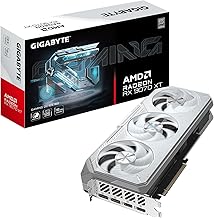


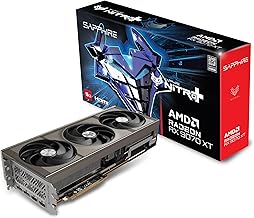
As an Amazon Associate we earn from qualifying purchases at no extra cost to you. Ratings are shown as listed on Amazon.
⚡ Save on Your Next PC — Amazon Prime
Prime members get fast free shipping on the systems above, plus early access to Prime Day & Black Friday PC deals. New members get a 30-day free trial.
Watch: RX 9070 XT vs RTX 5070: 2026 Comparison — Video Review
Quick Verdict
The RX 9070 XT is the better buy for raw rasterization value and high-refresh 1440p gaming, offering strong frame rates and 16GB of VRAM, often at a friendlier price — cards like the Sapphire Nitro+ and XFX Mercury are standouts. The RTX 5070 is the pick if you prioritize ray tracing, the polished DLSS upscaling and frame generation ecosystem, or CUDA-accelerated creative and AI apps.
Key Differences
- Rasterization: The RX 9070 XT is very strong in traditional raster performance, frequently matching or beating the RTX 5070 in non-ray-traced games.
- Ray tracing: The RTX 5070 holds a clear edge in ray-traced titles, where NVIDIA’s architecture and denoising remain ahead.
- Upscaling: DLSS on the 5070 is more mature and widely supported than AMD’s FSR, giving NVIDIA an image-quality and adoption advantage.
- VRAM: Both offer 16GB, so neither card is memory-starved in modern texture-heavy games.
- Price-to-raster: The RX 9070 XT typically delivers more raw frames per dollar, making it the value leader for pure gaming.
- Software ecosystem: NVIDIA’s CUDA and broader creator-app support favor the 5070 for rendering, streaming, and AI workloads.
RX 9070 XT: Rasterization Value and VRAM
The RX 9070 XT is built to win on the fundamentals of gaming performance and price. Its RDNA 4 architecture puts up excellent raw rasterization numbers, so in the many titles that do not lean heavily on ray tracing it frequently trades blows with or beats the RTX 5070 while costing less. Premium designs like the Sapphire Nitro+ and XFX Mercury OC add strong cooling and RGB flair, and the 16GB memory buffer ensures texture-heavy 2026 games have room to breathe.
For gamers whose priority is high frame rates at 1440p, or smooth 4K in raster-focused titles, the 9070 XT is a compelling value proposition. You give up some ray-tracing headroom and the polish of DLSS, but you gain more frames per dollar and a card that handles the bulk of modern games with ease. If you rarely enable ray tracing and want the most gaming performance for your money, AMD’s card makes a strong case.
RTX 5070: Ray Tracing and the DLSS Ecosystem
The RTX 5070 justifies its place through features rather than pure raster value. In ray-traced and path-traced games it pulls ahead of the 9070 XT, and NVIDIA’s DLSS — including frame generation — remains the more mature, more widely supported upscaling solution, often delivering cleaner image quality at a given performance level. That combination makes the 5070 the better choice for players who want the latest visual bells and whistles running smoothly.
Beyond gaming, the 5070’s CUDA support and broad creator-app compatibility give it real value for streaming, video editing, 3D rendering, and AI workloads, where NVIDIA’s software stack is the industry default. If your GPU does double duty as a work tool, or you simply want the strongest ray-tracing experience and the safety of the most widely adopted upscaling tech, the 5070 is worth its slight price premium over the AMD card.
Which Should You Buy?
- For raw 1440p high-refresh value: pick the RX 9070 XT because it delivers more rasterized frames per dollar.
- For ray-tracing and path-traced games: pick the RTX 5070, whose architecture handles heavy RT workloads more comfortably.
- For creators and streamers: pick the RTX 5070 for CUDA acceleration and the broadest creative-app support.
- For the best price on pure gaming: pick an RX 9070 XT like the PowerColor Reaper or ASRock Challenger to maximize frames per dollar.
- For the most polished upscaling: pick the RTX 5070, since DLSS is more mature and widely supported than FSR in 2026.
Frequently Asked Questions
Is the RX 9070 XT faster than the RTX 5070?
In traditional rasterized games the 9070 XT often matches or beats the 5070, but the NVIDIA card pulls ahead once ray tracing is enabled. The winner depends on whether you play RT-heavy titles.
Does DLSS give NVIDIA a real advantage?
Yes. DLSS, including frame generation, is more mature and broadly supported than AMD’s FSR, generally producing cleaner upscaled images at a given performance target, which is a meaningful edge for the 5070.
Is 16GB of VRAM enough on both cards?
Yes. Both the RX 9070 XT and RTX 5070 carry 16GB, which is comfortable for texture-heavy 2026 games at 1440p and 4K, so neither is memory-limited in typical use.
Which card is better for content creation?
The RTX 5070 is generally better for creation thanks to CUDA acceleration and wider support across video, 3D, and AI applications, where NVIDIA’s software ecosystem dominates.
Final Verdict
In 2026, the RX 9070 XT is the value pick for gamers who prioritize raw rasterization and high-refresh 1440p frames per dollar, while the RTX 5070 earns its keep for ray tracing, the polished DLSS ecosystem, and creative workloads. Decide which features you actually use — raster value or RT-and-DLSS polish — and the right card becomes clear.