Key takeaways
- More precise fit: Adjustable seat depth, lumbar support, armrests, and recline can accommodate more body types than a fixed budget chair.
- Better support for long sessions: A stable backrest and supportive cushion may reduce the need to constantly shift position during work or gaming.
- Improved durability: Higher-quality mechanisms, bases, and casters are more likely to tolerate daily use than lightweight components.
- Less unwanted movement: A solid five-star base and dependable tilt lock can make the chair feel safer when reclining or changing position.
- More useful customization: The best models let you set resistance, recline angle, armrest height, and lumbar pressure independently.
- Better after-sale support: Replacement wheels, arm pads, gas cylinders, or cushions may be available instead of requiring a complete replacement.
- Longer ownership: If a premium chair lasts several years longer, its cost per year can be reasonable even when the upfront price is high.
What's inside
The Short Answer
Are expensive ergonomic gaming chairs worth the extra money? Sometimes—but only if you need reliable adjustability for long, frequent sessions and choose a chair that fits your body. A $500 chair is not automatically more ergonomic than a $150 model, and no chair can compensate for a poor desk height, a badly positioned monitor, or sitting without breaks.
For occasional gaming, homework, or general computer use, a budget chair can be perfectly adequate. For someone who sits at a desk six to 10 hours a day, a better-built chair may be worth paying for because its adjustments, materials, warranty, and long-term comfort are usually more consistent. The key is to pay for useful features—not racing-style upholstery, flashy stitching, or a footrest you will rarely use.
As an Amazon Associate we earn from qualifying purchases at no extra cost to you. Product prices and availability are accurate as of the date shown and are subject to change.


What You Actually Get
“Expensive” is a vague category. In 2026, gaming chairs under about $150 are generally entry-level, chairs in the $200-$400 range occupy the midrange, and premium models commonly cost $500-$1,000 or more. Prices vary widely during sales, so compare the chair’s normal construction and warranty rather than judging by the list price alone.
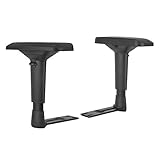
The biggest upgrade is usually adjustability. A more expensive chair may offer a seat pan that slides forward and backward, a seat-height range of roughly 16 to 22 inches, adjustable lumbar support, a backrest that tilts independently from the seat, and armrests that move in three or four directions. These features help you position your elbows near a 90-degree angle, keep your feet flat, and support your lower back without forcing you into one posture.
Seat dimensions matter just as much as the number of adjustments. A seat around 18 to 21 inches wide suits many users, while a wider model may be more comfortable for larger frames. Seat depth is especially important: when sitting fully back, you generally want about 2 to 3 inches between the front edge of the seat and the backs of your knees. A seat that is too deep can press behind your knees; one that is too shallow may leave your thighs unsupported.
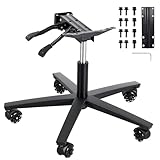
Construction is another reason premium chairs cost more. A sturdy base, smoother casters, a stronger tilt mechanism, and a thicker cushion can make daily use feel better. Some premium chairs use breathable mesh, while many gaming chairs use synthetic leather. Leather-look upholstery is easy to wipe clean, but it can feel warm and may peel over time. Mesh usually ventilates better, although it can feel firmer and is harder to repair if it tears.
You are also paying for quality control and support. A reputable manufacturer may provide a longer warranty, replacement parts, and clearer weight guidance. Still, inspect the terms: a “lifetime” warranty may cover only the frame, while upholstery and moving parts may have shorter coverage.
Pros
- More precise fit: Adjustable seat depth, lumbar support, armrests, and recline can accommodate more body types than a fixed budget chair.
- Better support for long sessions: A stable backrest and supportive cushion may reduce the need to constantly shift position during work or gaming.
- Improved durability: Higher-quality mechanisms, bases, and casters are more likely to tolerate daily use than lightweight components.
- Less unwanted movement: A solid five-star base and dependable tilt lock can make the chair feel safer when reclining or changing position.
- More useful customization: The best models let you set resistance, recline angle, armrest height, and lumbar pressure independently.
- Better after-sale support: Replacement wheels, arm pads, gas cylinders, or cushions may be available instead of requiring a complete replacement.
- Longer ownership: If a premium chair lasts several years longer, its cost per year can be reasonable even when the upfront price is high.
Cons
- High upfront cost: Spending $400 to $900 on a chair may not make sense for a casual user or a temporary setup.
- Marketing can obscure value: Embossed logos, bright colors, footrests, and “racing” styling do not prove that a chair supports your posture.
- Fit is not universal: A premium chair can still feel uncomfortable if the seat is too tall, too narrow, too deep, or insufficiently padded for you.
- Expensive upholstery can age poorly: Synthetic leather may crack or peel, especially in warm rooms or with heavy daily use.
- More adjustments require more setup: A chair with many controls can be frustrating if you do not spend time dialing them in.
- “Ergonomic” is not a guarantee: The term is used broadly. Look for measurable dimensions, adjustment ranges, weight limits, and a return policy.
- It cannot fix a bad workstation: A chair will not solve a monitor that is too low, a desk that is too high, or a keyboard positioned too far away.
Who Should Buy It
Buy an expensive ergonomic gaming chair if you spend most weekdays at a desk, regularly play for several hours at a time, and have already identified what feels wrong with your current chair. Someone with recurring discomfort from unsupported lumbar areas, fixed armrests, or an overly short seat may benefit from targeted adjustments.
It is also a sensible purchase for a shared home office or gaming room where the chair will receive heavy daily use. In that situation, prioritize a strong warranty, replaceable parts, an appropriate weight rating, and a return window long enough to evaluate the fit. If you weigh close to the chair’s stated capacity, choose a model with a generous margin rather than treating the limit as a target.
Who Should Skip It
Skip the premium price if you sit for less than a couple of hours a day, move between rooms frequently, or are furnishing a short-term apartment. You should also skip a particular model if its seat dimensions do not match your body, even if reviews praise it. A less expensive chair that fits is better than a costly chair that forces your knees, shoulders, or lower back into an awkward position.
Do not buy one mainly for a built-in footrest or a very deep recline. A footrest can be pleasant for short breaks, but it does not replace a properly adjusted desk chair. Likewise, reclining to 135 or 145 degrees can be comfortable for watching content, but active typing usually requires a more upright position.
Cheaper Alternatives
Before moving into the $300-plus category, consider what you actually need. These lower-cost options can make sense, especially when paired with a properly adjusted desk and regular movement breaks.
| Option | Cost | Trade-off |
|---|---|---|
| N-GEN GAMING chair with footrest, lumbar support, and high back | $79.96 | Very low entry price and gaming-style features, but expect fewer adjustments and less confidence in long-term durability than a premium chair. |
| COMHOMA big-and-tall gaming chair with footrest, 145-degree recline, adjustable armrests, and pocket-spring back support | $159.94 | More room and features than a basic model, but its larger design may not suit smaller users, and low-cost upholstery may wear sooner. |
| Midrange mesh office chair with adjustable arms and lumbar support | About $150-$300 | Usually better ventilation and a less aggressive appearance, but it may have a firmer seat and less recline than a gaming chair. |
| Used commercial office chair from a reputable brand | About $100-$400 | Potentially excellent ergonomics for the money, but condition, missing parts, warranty coverage, and cleanliness can be uncertain. |
A $79.96 chair may be reasonable for light use, while the $159.94 COMHOMA model may appeal to larger users who want a broad seat and recline. Neither should be judged by feature count alone. Check the actual seat height, width, depth, weight limit, and return policy before ordering.
FAQ
How much should I spend on an ergonomic gaming chair?
For occasional use, $80-$200 can be enough. For daily work and gaming, a realistic value range is about $200-$500, where you may find more meaningful adjustments and sturdier components. Spending beyond $500 can be worthwhile for exceptional fit, materials, warranty coverage, or heavy-duty construction, but there are diminishing returns. Measure your body and compare specifications before increasing your budget.
Are gaming chairs better than office chairs for your back?
Not automatically. Gaming chairs often provide high backs, pronounced side bolsters, and a reclined racing-inspired shape. Office chairs more commonly offer breathable mesh, adjustable seat depth, and subtler lumbar support. Either type can work if it keeps your feet supported, allows your shoulders to relax, and fits your seat depth. Your posture, desk setup, and movement habits matter at least as much as the category.
Is a footrest worth paying extra for?
Usually, it is a comfort feature rather than an ergonomic necessity. A footrest can be useful for reclining, watching videos, or supporting your legs during a short rest. It is less useful while typing, and built-in versions can add bulk or fail before the chair itself. If you want one, an inexpensive separate footrest gives you more flexibility and can be replaced easily.
What should I check before buying an expensive chair?
Confirm the seat height, seat width, seat depth, armrest range, recline angle, tilt tension, weight capacity, materials, warranty, and return period. Look for a return policy that covers comfort-related returns, not only defects. Also check the chair’s assembled footprint: many gaming models are roughly 26 to 30 inches wide at the base, which can be tight in a small room. The best purchase is not the chair with the longest feature list; it is the one whose dimensions and adjustments match your body and daily routine.