Key takeaways
- Your seated height: Measure from the floor to the top of your head while sitting upright, then measure from the floor to the underside of your knee. These numbers matter more than your standing height.
- Your usable width and depth: Measure your hips while seated, wearing the clothing you normally use, and add at least 2 to 4 inches for comfortable movement. Also measure from the back of your hips to the back of your knees.
- Your real daily load: Compare your weight with the chair’s stated capacity, but leave a safety margin of at least 50 pounds. A 250-pound user should generally look beyond a chair rated for 275 pounds, especially if the chair will be used for long sessions or frequent reclining.
What's inside
- Decide These 3 Things First
- 1. Size: Match the Seat and Backrest to Your Body
- 2. Material: Choose for Heat, Maintenance, and Longevity
- 3. Construction: Look Past the Weight Rating
- 4. Comfort and Performance: Prioritize Adjustability
- 5. Price Tiers: Spend on Structure Before Extras
- 6. Warranty: Protect the Parts Most Likely to Fail
- 7. Delivery and Assembly: Account for the Practical Details
- Spec Checklist
- Red Flags
- FAQ
Choosing a gaming chair by height and weight sounds simple, but many buyers make the same costly mistakes: they rely on a maximum weight rating without checking seat width, choose a chair because it looks supportive, or assume a tall backrest will automatically fit a tall user. A chair can safely hold your weight and still leave your knees too high, your shoulders above the headrest, or your hips pressed against the side bolsters.
- Decide These 3 Things First
- 1. Size: Match the Seat and Backrest to Your Body
- 2. Material: Choose for Heat, Maintenance, and Longevity
- 3. Construction: Look Past the Weight Rating
- 4. Comfort and Performance: Prioritize Adjustability
- 5. Price Tiers: Spend on Structure Before Extras
- 6. Warranty: Protect the Parts Most Likely to Fail
- 7. Delivery and Assembly: Account for the Practical Details
- Spec Checklist
- Red Flags
- FAQ
The right approach is to match your body measurements to the chair’s usable dimensions, then evaluate construction, adjustability, comfort, and return protection. The following guide explains what actually matters when shopping in 2026, including how to compare budget chairs with big-and-tall models.
As an Amazon Associate we earn from qualifying purchases at no extra cost to you. Product prices and availability are accurate as of the date shown and are subject to change.


Decide These 3 Things First
- Your seated height: Measure from the floor to the top of your head while sitting upright, then measure from the floor to the underside of your knee. These numbers matter more than your standing height.
- Your usable width and depth: Measure your hips while seated, wearing the clothing you normally use, and add at least 2 to 4 inches for comfortable movement. Also measure from the back of your hips to the back of your knees.
- Your real daily load: Compare your weight with the chair’s stated capacity, but leave a safety margin of at least 50 pounds. A 250-pound user should generally look beyond a chair rated for 275 pounds, especially if the chair will be used for long sessions or frequent reclining.
These measurements create a useful starting point. Next, consider the following factors in order of importance.
1. Size: Match the Seat and Backrest to Your Body
Weight capacity is only one part of fit. For most users, a seat width of 18 to 20 inches works well. If you have broad hips, prefer a relaxed posture, or dislike side bolsters, look for at least 20 to 22 inches of usable seat width. Be careful: an advertised seat width may include the raised edges, so check the flat sitting area.
Seat depth is equally important. A typical adult needs roughly 18 to 20 inches of usable depth. When sitting fully back, you should have about 2 to 3 inches between the front edge of the seat and the back of your knees. A seat that is too deep can cut into circulation; one that is too short may leave your thighs unsupported.
Seat-height range should allow your feet to rest flat. Many standard chairs adjust from about 17 to 21 inches, while big-and-tall models may start around 19 inches and rise to 23 inches or more. If your desk is 29 to 30 inches high, check that the armrests can fit underneath or adjust low enough to avoid forcing your shoulders upward.
For taller users, look for a backrest at least 30 inches high from the seat and a headrest positioned near the base of the skull. Users over 6 feet 2 inches may prefer a backrest around 32 to 35 inches high, although the shape and headrest adjustment matter more than the total measurement.
2. Material: Choose for Heat, Maintenance, and Longevity
PU leather is common in gaming chairs because it is inexpensive, easy to wipe clean, and available in many colors. Its weakness is heat retention and potential peeling after extended use, particularly in warm rooms or with heavy daily use. If you choose PU, look for perforated panels or a fabric seating surface.
Fabric usually breathes better and feels less sticky during long gaming sessions. It can be harder to clean and may absorb spills, so a removable or stain-resistant cover is helpful. Mesh offers the best airflow, but full-mesh gaming chairs are less common and may provide less plush cushioning.
Check the foam as well as the cover. A seat using high-density foam around 2 to 3 inches thick generally provides more consistent support than a very soft, thin cushion. “Memory foam” alone is not a guarantee of quality; it can feel comfortable initially but compress if the underlying support is weak.
3. Construction: Look Past the Weight Rating
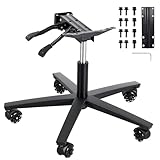
A high weight rating is useful only when the frame, base, casters, and tilt mechanism support it together. Budget chairs often use a metal or reinforced frame with a nylon base. For heavier users or frequent reclining, a steel-reinforced frame and a metal five-star base are preferable.
Look for a five-star base at least 26 to 28 inches wide, smooth-rolling casters around 2 to 3 inches in diameter, and a tilt mechanism that locks at more than one angle. A class-3 or class-4 gas lift is a reasonable target, but the lift’s certification and actual capacity should be confirmed in the product specifications.
For users near 300 to 400 pounds, seek a stated capacity of at least 400 pounds and a seat with reinforced attachment points. A wide seat is not enough if the arms are loosely mounted or the recline mechanism flexes under load. Look for reviews mentioning wobble, creaking, uneven casters, or bolts that loosen after assembly.
4. Comfort and Performance: Prioritize Adjustability
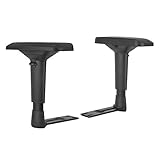
A chair should let you sit with your feet flat, knees near a 90- to 110-degree angle, and elbows close to your sides. Height-adjustable armrests are the minimum; 3D or 4D armrests can also move inward, outward, forward, or backward. This is especially helpful if your desk, keyboard, or controller position differs from a standard office setup.
Adjustable lumbar support is more useful than a fixed decorative pillow. A built-in lumbar mechanism lets you change both height and pressure. If the chair uses a loose lumbar cushion, make sure it can be positioned at the belt-line area rather than only at the middle of your back.
Recline is helpful for breaks, but it is not a substitute for correct seat fit. A range of about 90 to 135 degrees covers working, gaming, and relaxed viewing. Footrests can be convenient for short rests, but thin retractable footrests are not designed to support your full body weight or replace an ottoman.
5. Price Tiers: Spend on Structure Before Extras
Budget gaming chairs generally cost about $70 to $130. At this level, expect basic height adjustment, fixed or 2D armrests, PU upholstery, and a modest recline range. The N-GEN GAMING chair with footrest, lumbar support, and high back is an example of the feature-heavy budget category, listed around $79.96. Verify the seat dimensions and capacity rather than assuming its added features make it suitable for every body type.
Midrange chairs usually cost about $130 to $220. They may offer wider seats, stronger bases, better padding, improved tilt mechanisms, and more useful lumbar adjustment. The LEMBERI chair listed around $99.99 advertises a 400-pound capacity, but capacity should still be compared with its seat width, usable depth, and warranty.
Premium big-and-tall models generally range from $220 to $400 or more. The extra cost may provide a wider seat, pocket-spring support, reinforced hardware, smoother recline, and better upholstery. GTPLAYER big-and-tall examples are listed around $169.96 to $225.52, depending on the version and finish. Treat those prices as shopping references, not proof of performance; inspect the current specifications and return terms before buying.
6. Warranty: Protect the Parts Most Likely to Fail
Look for at least a one-year warranty covering the frame, gas lift, base, and mechanism. Some manufacturers offer longer frame coverage but shorter coverage for upholstery, casters, armrests, or cushions. Read those exclusions carefully because moving parts and surface materials often show wear first.
A warranty is most useful when replacement parts are available separately. Confirm whether the company ships a new armrest, caster, cylinder, or mechanism, and whether you pay return shipping. Keep the packaging until you have tested the chair for several days.
7. Delivery and Assembly: Account for the Practical Details
Most gaming chairs arrive in one box weighing roughly 45 to 75 pounds. Big-and-tall models may weigh 60 to 90 pounds and require two people to carry safely. Before ordering, measure doorways, stair turns, and the space beside your desk. Allow about 45 to 90 minutes for assembly, depending on the instructions and hardware.
Check whether the box includes a tool kit, spare bolts, and clear assembly diagrams. After assembly, tighten every connection again after one week of use. A chair that rocks may need a level floor, properly seated casters, or retightened bolts rather than immediate replacement.
Spec Checklist
| Spec | Budget | Mid | Premium |
|---|---|---|---|
| Typical price | $70–$130 | $130–$220 | $220–$400+ |
| Weight capacity | 250–300 lb | 300–400 lb | 400 lb or higher |
| Usable seat width | 17–20 in. | 19–22 in. | 21–24+ in. |
| Usable seat depth | 17–19 in. | 18–21 in. | 20–23 in. |
| Seat-height range | 17–21 in. | 18–22 in. | 19–24 in. |
| Armrests | Fixed or 2D | 2D or 3D | 3D or 4D |
| Recline range | 90–120 degrees | 90–135 degrees | 90–150 degrees |
| Base and casters | Nylon base; 2-inch casters | Reinforced base; 2–3-inch casters | Metal base; heavy-duty 3-inch casters |
Red Flags
- A weight rating appears without seat width, seat depth, or backrest measurements.
- The product lists “wide” or “big and tall” but provides no usable seat dimensions.
- The chair has a footrest, cushions, or racing-style wings but no adjustable lumbar support.
- The base, gas lift, or tilt mechanism has no material or capacity information.
- Reviews repeatedly mention peeling upholstery, leaning, wobbling, broken arms, or missing hardware.
- The return window is shorter than the time needed to test the chair, or return shipping is unclear.
- The listed maximum weight leaves less than a 50-pound margin above your body weight.
FAQ
How do I choose a gaming chair by height and weight?
Start with seated height, knee height, hip width, and body weight. Choose a seat that leaves 2 to 3 inches behind your knees, enough width for 2 to 4 inches of movement, and a capacity at least 50 pounds above your weight. Taller users should also check backrest height and maximum seat height.
Is a 400-pound gaming chair suitable for everyone?
Not automatically. A 400-pound rating indicates the chair is designed for a higher load, but it may still be too wide, too deep, or too tall for a smaller user. Compare the seat dimensions and adjustment ranges with your own measurements.
What chair size is best for someone over 6 feet tall?
Look for a seat-height range that reaches at least 22 inches, a backrest around 32 to 35 inches from the seat, and a seat depth of roughly 20 to 23 inches. Adjustable lumbar and headrest positioning are more important than a tall-looking backrest alone.
Are expensive gaming chairs better for heavy users?
Often, but not by default. Higher prices can bring reinforced frames, stronger bases, wider seats, better mechanisms, and longer warranties. Compare those structural details rather than paying extra for lighting, embroidered logos, or a footrest that does not improve your sitting position.