Key takeaways
- The listing gives overall chair dimensions but not seat width, seat depth, or seat height.
- “Ergonomic” is used without explaining lumbar adjustment, cushion construction, or the mechanism.
- The weight capacity is missing, unusually high, or applies only to the seat rather than the complete chair.
- Product photos show a footrest or pillow that is absent from the written specifications.
- The return policy excludes opened or assembled chairs, or requires expensive return shipping.
- The chair wobbles when reclined, has visible gaps around the tilt mechanism, or has armrests that flex under light pressure.
- The front cushion edge is sharply raised and presses behind your knees during a short sitting test.
What's inside
Most people shopping for a gaming chair focus on color, recline angle, or whether it includes a footrest. Those details matter, but they do not fix a seat that is too deep, too narrow, or poorly supported. The most common mistake is choosing a chair by its overall height rather than by the distance from the front edge of the cushion to the backrest.
This ergonomic gaming chair seat depth buying guide explains how to measure that distance, compare materials and construction, and judge whether a low-cost chair is a sensible buy. A chair can look substantial in a product photo while leaving shorter users unable to place both feet flat on the floor. Conversely, a compact cushion can feel cramped for a taller or broader user.
As an Amazon Associate we earn from qualifying purchases at no extra cost to you. Product prices and availability are accurate as of the date shown and are subject to change.


For 2026, the best approach is to match the chair to your body measurements and daily use before comparing styling or accessories. Use listed dimensions as a starting point, then look for a return policy that gives you time to test the seat at your desk.
Decide These 3 Things First
- Your usable seat depth: Measure from the back of your hips to about 2 to 3 inches behind your knees while seated. The chair cushion should be close to this measurement, not dramatically longer. As a general starting point, many adults need approximately 16 to 19 inches of usable depth. A seat slider or adjustable seat pan is especially useful if more than one person will use the chair.
- Your seat width: Measure your seated hip width, then add at least 2 inches for comfortable movement. A narrow racing-style chair may work at 18 to 19 inches wide, while a broader user may need 20 to 23 inches or more. Check whether the advertised width includes side bolsters or armrests; those can reduce the actual sitting area.
- Your desk and body position: Your feet should rest flat, your knees should be near a 90- to 100-degree angle, and your elbows should be close to desk height. A chair that is comfortable in a showroom can become uncomfortable if its minimum height is too high for your desk.
Size and Seat Depth
Seat depth is the distance from the front edge of the cushion to the backrest. The usable portion may be shorter than the published measurement because thick lumbar padding, a sculpted back, or a raised front edge takes up space.
For many users under about 5 feet 6 inches, a usable depth around 15.5 to 17.5 inches is easier to manage. Users between roughly 5 feet 6 inches and 6 feet may prefer about 17 to 19 inches. Taller users often benefit from 19 to 21 inches, provided the chair does not force the lower legs forward. These are starting ranges, not body-size rules.
A quick test is the two- to three-finger gap: sit fully back and leave roughly 2 to 3 inches between the cushion edge and the back of your knees. If the edge presses into your legs, the seat is too deep or the cushion is too firm at the front. If you cannot sit back without losing back support, it may be too shallow.
Also check the seat height range. A useful general range is about 17 to 21 inches from the floor to the top of the cushion, although cushion compression changes the real measurement. Taller users may need a 22-inch maximum or a suitable footrest. A wider seat is not automatically a better seat if the side bolsters push your thighs inward.
Material and Cushion Feel
Common gaming-chair surfaces include polyurethane leather, fabric, mesh, and fleece or other textured upholstery. PU leather is easy to wipe clean and often appears on budget chairs priced from about $70 to $180, but it can feel warm and may crack or peel with heavy use. Fabric generally breathes better and hides minor wear, though spills are harder to remove.
Foam density is more useful than a generic “high-density foam” label. Ask whether the seller provides a density rating. As a broad comparison, a cushion around 1.8 to 2.5 pounds per cubic foot is a more reassuring starting point for daily seating than an unspecified foam, but density alone does not determine comfort. A 3- to 5-inch cushion thickness is common; thick padding can still bottom out if the foam is soft or poorly supported.
Look for a level front edge rather than an aggressively raised bucket shape. Racing-style bolsters can stabilize the legs, but they reduce usable width and may make it harder to change posture. If you sit for eight or more hours, breathable fabric and a supportive, moderately firm cushion are usually more practical than the softest showroom feel.
Construction and Weight Capacity
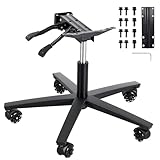
Examine the parts that carry your weight: the base, casters, gas lift, seat plate, backrest frame, and armrest mounts. A five-star metal base is generally preferable to a thin plastic base, but the complete chair should be evaluated rather than one material claim.
Weight ratings vary widely. Budget chairs commonly list capacities around 250 to 300 pounds. Big-and-tall models may list 350 to 400 pounds, but the rating is not a promise that every component will feel equally stable at the limit. Leave a margin rather than buying a 300-pound-rated chair for a 295-pound user who reclines frequently.
For a heavier or taller user, prioritize a wide seat pan, a reinforced tilt mechanism, a steel or aluminum base, and a backrest that reaches the shoulders without forcing the head forward. Casters around 2.5 to 3 inches in diameter can roll more easily over carpet than very small wheels. Check the floor type before choosing hard casters, which may be noisy or harsh on wood.
Comfort and Performance
Adjustability matters because it lets the chair fit your desk rather than forcing your body to fit the chair. Useful features include seat-height adjustment, a tilt lock, adjustable recline, lumbar support, and armrests that move in at least two directions.
A recline range around 90 to 135 degrees covers upright work through relaxed gaming. Reclining to 150 degrees or more can be comfortable for short breaks, but it does not replace an ergonomic working position. Use the footrest only when leaning back; extending it while sitting upright can encourage slouching.
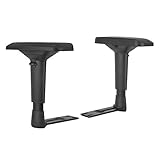
Two-way armrests are a reasonable budget target. Three- or four-way armrests allow height, width, depth, and angle changes, which can make a larger difference than decorative headrest pillows. A removable lumbar pillow is adjustable but can shift. Built-in lumbar mechanisms are easier to keep in place, though they usually raise the price.
Do not treat massage motors, speakers, or LED lighting as ergonomic features. If a chair includes powered electronics, verify the required voltage, adapter certification, and cable length. A chair with no electronics has no meaningful wattage requirement; any stated power consumption applies only to optional powered components.
Price Tiers
Budget: about $70 to $130. This range can cover basic PU-leather chairs with a five-star base, height adjustment, reclining back, and sometimes a footrest. The N-GEN GAMING chair listed at $79.96 and the GTPLAYER models listed at $69.97 and $69.99 fit this type of entry-level pricing. Expect more limited armrest adjustment, less precise seat-depth information, and greater variation in cushion feel.
Midrange: about $130 to $250. Buyers can usually expect improved upholstery choices, sturdier mechanisms, wider cushions, better padding, or more useful lumbar adjustment. The Dowinx Big and Tall model listed at $179.99 illustrates how a higher price may go toward a wider seat, thicker cushion, and a higher stated capacity. Confirm all dimensions rather than assuming “big and tall” guarantees a good fit.
Premium: about $250 to $600 or more. The strongest reason to spend more is adjustability and long-term construction, not extra styling. Look for a seat slider, independently adjustable lumbar support, stable four-way armrests, a tested mechanism, replaceable parts, and a warranty that covers the gas lift and frame. A premium price is not proof of superior ergonomics.
Warranty and Service
Read the warranty before buying. A practical minimum is one year for the complete chair, while two to five years on the frame or mechanism is more reassuring. Check whether the warranty covers upholstery, casters, armrests, the gas lift, and normal commercial use.
Some policies require photos, original packaging, or customer-paid return shipping. Those conditions matter because a boxed chair can weigh 40 to 70 pounds, and a big-and-tall model may weigh even more. Look for replacement-part availability rather than a vague promise of “customer support.”
Delivery and Assembly
Most gaming chairs require 45 to 90 minutes of assembly for one person. The heaviest pieces are usually the backrest, seat, and base. Two people can make installation safer, especially for chairs weighing 50 pounds or more.
Before ordering, check the package dimensions, door clearance, elevator access, and whether delivery is to the doorstep or room of choice. Inspect the box for crushed corners and photograph damage before opening. Do not discard packaging until you have confirmed the recline, height adjustment, casters, armrests, and seat alignment.
Spec Checklist
| Spec | Budget | Mid | Premium |
|---|---|---|---|
| Typical price | $70–$130 | $130–$250 | $250–$600+ |
| Usable seat depth | 16–19 in.; often fixed | 17–20 in.; verify padding loss | 16–21 in.; slider preferred |
| Usable seat width | 18–20 in. | 19–22 in. | 20–24 in. or adjustable |
| Seat height | 17–21 in. | 17–22 in. | 16.5–23 in. or more |
| Weight rating | 250–300 lb | 300–350 lb | 350–400+ lb; verify testing |
| Armrests | Fixed or 1D/2D | 2D or 3D | 3D or 4D |
| Recline | About 90–135° | About 90–150° | About 90–155° with stable lock |
| Warranty target | 1 year | 1–3 years | 3–5 years on frame or mechanism |
Red Flags
- The listing gives overall chair dimensions but not seat width, seat depth, or seat height.
- “Ergonomic” is used without explaining lumbar adjustment, cushion construction, or the mechanism.
- The weight capacity is missing, unusually high, or applies only to the seat rather than the complete chair.
- Product photos show a footrest or pillow that is absent from the written specifications.
- The return policy excludes opened or assembled chairs, or requires expensive return shipping.
- The chair wobbles when reclined, has visible gaps around the tilt mechanism, or has armrests that flex under light pressure.
- The front cushion edge is sharply raised and presses behind your knees during a short sitting test.
FAQ
What is the best seat depth for an ergonomic gaming chair?
For many adults, about 16 to 19 inches of usable depth is a reasonable starting point. The better test is leaving 2 to 3 inches between the cushion edge and the back of your knees while your lower back remains supported. Taller users may need 19 to 21 inches, while shorter users often need less.
Is a deeper gaming chair seat better for tall people?
Not automatically. A tall user may need more depth, but an excessively deep cushion can push the hips forward and remove back support. Prioritize a seat slider, a supportive backrest, and a seat height that allows both feet to rest flat.
Are gaming chairs with footrests ergonomic?
A footrest can be useful when reclining for a break, especially at roughly 120 to 150 degrees. It should not be considered a substitute for correct seat depth, lumbar support, or desk height. Retract it while working upright unless it lets you maintain a neutral posture.
How long should a gaming chair last?
Service life depends on weight, daily hours, flooring, and construction. A budget chair may require earlier replacement of casters, upholstery, or the gas lift, while a better-supported frame with available parts can last longer. A clear one-year warranty is a minimum starting point; longer frame and mechanism coverage is preferable.