Key takeaways
- Buying by width alone: A 55-inch desk that is only 20 inches deep may feel less usable than a 48 × 24-inch desk.
- Ignoring the PC tower: Measure the tower’s height, width, and front-to-back depth, including ventilation clearance.
- Forgetting the frame legs: A desktop may be wide enough, but the lifting columns can interfere with a chair, drawer unit, or under-desk PC mount.
- Leaving no cable slack: Cables pulled tight can unplug equipment or become damaged when the desk rises.
- Assuming a shelf adds usable space: A host shelf may hold a monitor or speakers, but it can limit monitor height and reduce flexibility.
- Overloading a small desk: Check the manufacturer’s total weight capacity. Include the desktop, monitor arms, monitors, PC, speakers, and every accessory.
- Choosing a desk that is too deep: A 30-inch desk is useful, but it can make a small room feel crowded and increase the distance to controls.
What's inside
The Short Answer
For most people, a 48- to 55-inch wide by 24-inch deep standing gaming desk is the best all-purpose size. It gives you room for a monitor, keyboard, mouse, speakers, and a gaming PC without taking over the room. Choose a 47- or 48-inch desk for one monitor and a compact setup; move up to 55 or 60 inches if you use two or three monitors, a large PC tower, speakers, or streaming equipment.
Desk depth matters as much as width. A 24-inch depth is the practical minimum for comfortable gaming because it leaves space between your eyes and the monitor. A 30-inch-deep desk is better for a large display, a curved ultrawide monitor, a microphone arm, or a second row of equipment. Standing desks usually cost about $90 to $250 for common electric gaming and home-office models, depending on width, frame strength, controls, outlets, lighting, and accessories.
As an Amazon Associate we earn from qualifying purchases at no extra cost to you. Product prices and availability are accurate as of the date shown and are subject to change.


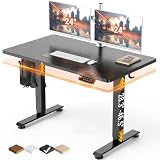

As a 2026 buying rule, measure the desktop, not just the advertised width. A shelf, cable tray, control panel, or desktop-mounted riser can reduce the usable area by several inches.
Standard Sizes
| Desk size | Approx. metric size | Best for | Typical equipment |
|---|---|---|---|
| 40–47 in. W × 20–24 in. D | 102–119 cm W × 51–61 cm D | Small rooms and simple setups | Laptop or one monitor, compact keyboard and mouse |
| 48 in. W × 24 in. D | 122 cm W × 61 cm D | Most single-monitor gaming setups | One monitor, PC, speakers, headset stand, and accessories |
| 55 in. W × 24 in. D | 140 cm W × 61 cm D | Roomier gaming and workstations | Two monitors, a larger tower, speakers, and a microphone arm |
| 60 in. W × 24–30 in. D | 152 cm W × 61–76 cm D | Streaming, productivity, and multi-monitor use | Two or three monitors, audio equipment, lighting, and documents |
| 72 in. W × 30 in. D | 183 cm W × 76 cm D | Large dedicated offices or studios | Three monitors, large speakers, consoles, and extensive accessories |
A 47- or 48-inch desk is generally enough for one 24- to 32-inch monitor. For two monitors, 55 inches is more comfortable, particularly if the screens are side by side on their stands rather than mounted to an arm. A 60-inch desk gives you better spacing and room for a console or paperwork.
Many affordable electric models fall into the 47- to 48-inch category. Examples include a 48 × 24-inch desk and a 47 × 24-inch desk, often priced around $90 to $100. A 47.2-inch model is similarly suited to a compact single-monitor setup. A 55 × 24-inch gaming desk with LED lighting and a shelf may cost around $250 and provides more surface area, although a shelf can change how much of the desktop is available for equipment.
For a standing desk, also check height range. A typical adjustable frame may cover roughly 28 to 48 inches, but users who are especially short or tall should verify the lowest and highest settings. Your elbows should rest near a 90-degree angle while typing, and the monitor should sit so the top of the screen is at or slightly below eye level.
How to Measure Your Space
- Measure the available wall or alcove width. Use a tape measure at the floor, desktop height, and any shelf height. Walls and baseboards can vary. Subtract at least 2 to 4 inches from the narrowest measurement so the desk does not look wedged into place.
- Measure the usable depth. Start at the wall and measure toward the room. Leave space behind the desk for power cords and monitor cables. If the desktop is 24 inches deep, plan for about 26 to 30 inches of total depth once cables, a wall gap, or a power strip are included.
- Map the standing and sitting clearance. Leave at least 30 inches of open space in front of the desk for a chair and comfortable standing. For a chair that needs to roll backward, 36 inches or more is preferable.
- Check nearby doors, drawers, and windows. Open doors and drawers fully before choosing a location. Avoid placing the desktop where it blocks a radiator, window crank, closet door, or floor vent.
- Measure the height of obstacles. Note outlets, windowsills, wall shelves, and cabinets. A standing desk can rise 20 inches or more, so confirm that the desktop, monitor, and any attached shelf will not hit an obstruction.
- Measure your equipment. Record the width and depth of your monitor stands, PC tower, speakers, microphone base, charging dock, and other items. Add their measurements together, then keep at least 2 to 4 inches of spare desktop width for comfortable use.
- Plan the cable route. The desktop may move up and down, so cables need slack. Check that the outlet is close enough and that a cable tray or sleeve will not catch on the wall or frame.
By Room or Use Case
Small bedroom or apartment
Choose a desk no wider than 47 or 48 inches and 20 to 24 inches deep. This size supports a laptop or single monitor while leaving more floor space for a bed, dresser, or chair. If the room is particularly tight, a 40- to 43-inch desk can work, but it may not fit a full-size PC tower and monitor comfortably side by side.
Single-monitor gaming setup
A 48 × 24-inch desk is the safest starting point. It fits one monitor, keyboard, mouse, and a desktop tower, with some room for a headset stand or small speakers. Put the PC on the floor or on a separate stand if the tower takes up valuable desktop depth.
Dual monitors
Choose at least 55 inches wide, especially if both monitors are 27 inches or larger. A monitor arm can make a 48-inch desk workable, but check the arm’s clamp location and the desktop’s thickness. A 60-inch-wide desk is better if you want speakers, a microphone, or a laptop beside the monitors.
Streaming and content creation
Look for a 60 × 24-inch or 60 × 30-inch surface. Streaming equipment often includes two monitors, a microphone, camera accessories, lighting controls, and a separate keyboard or control pad. Prioritize a strong frame and a suitable weight rating. The combined weight of monitors, arms, computer equipment, and accessories can easily exceed 100 pounds.
Work and gaming in one room
A 55- to 60-inch desk provides enough width to divide the surface into work and gaming zones. A 24-inch depth keeps the footprint reasonable, while 30 inches gives you more room for documents and a monitor pushed farther back. Choose built-in outlets or USB ports only if their location and power rating suit your equipment; they do not replace a properly rated power strip.
Shared or family workspace
Prioritize height range and adjustability over extra width. A 48- to 55-inch desk is usually sufficient, but confirm that both users can type with relaxed shoulders and level wrists. Three programmable height presets can make frequent changes easier, while a stable frame is more important than decorative lighting.
Common Sizing Mistakes
- Buying by width alone: A 55-inch desk that is only 20 inches deep may feel less usable than a 48 × 24-inch desk.
- Ignoring the PC tower: Measure the tower’s height, width, and front-to-back depth, including ventilation clearance.
- Forgetting the frame legs: A desktop may be wide enough, but the lifting columns can interfere with a chair, drawer unit, or under-desk PC mount.
- Leaving no cable slack: Cables pulled tight can unplug equipment or become damaged when the desk rises.
- Assuming a shelf adds usable space: A host shelf may hold a monitor or speakers, but it can limit monitor height and reduce flexibility.
- Overloading a small desk: Check the manufacturer’s total weight capacity. Include the desktop, monitor arms, monitors, PC, speakers, and every accessory.
- Choosing a desk that is too deep: A 30-inch desk is useful, but it can make a small room feel crowded and increase the distance to controls.
FAQ
Is a 48-inch standing desk big enough for gaming?
Yes, for one monitor and standard gaming equipment. A 48 × 24-inch desk is large enough for a monitor, keyboard, mouse, and PC, provided the tower does not consume too much desktop space. Choose 55 inches or more for two monitors or streaming gear.
Is 24 inches deep enough for a gaming desk?
For most users, yes. Twenty-four inches provides a practical monitor-to-eye distance and enough room for a keyboard and mouse. Choose 30 inches if you use a deep monitor stand, a large curved display, multiple accessories, or paperwork.
How much space should I leave around a standing desk?
Leave at least 2 to 4 inches from the wall for fit and cable management, then plan for 30 inches of open space in front. About 36 inches is more comfortable if the chair must roll backward or people need to pass behind it.
What size standing desk is best for two monitors?
Choose a 55-inch desk as the minimum comfortable size and 60 inches for easier spacing. A monitor arm can reduce the width required, but confirm that the desk frame and desktop can support the combined monitor-arm weight.