Our Top Picks
 Alienware 34 240Hz QD-OLED Curved Gaming Monitor34.2" QD-OLED31.71 x 9.13 x 21.84 inches20.04 PoundsCheck on Amazon
 LG 34GS95QE 34-inch Ultragear OLED Curved Gaming Monitor34 inches10.97 x 30.87 x 23.06 Inches20.5 PoundsCheck on Amazon
Pairing a curved monitor with G-Sync is a specific kind of shopping problem. The curve is about immersion and field of view, which matters most on ultrawide panels used at close range, while G-Sync is about keeping the display refresh locked to the frame rate your NVIDIA graphics card produces, which removes tearing and the stutter of V-Sync. The catch is that “G-Sync” appears on listings in three different forms, and only one of them involves a dedicated hardware module, so reading the exact wording matters before you buy.
This guide is for PC gamers with a GeForce card who want a curved panel on the desk and need smooth variable refresh behavior without tearing. As of 2026, curved OLED and fast VA models share shelf space with older budget ultrawides, which makes the spread of capability wide. All judgments here come from the specs in each product title, so verify the sync mode, ports, and curve radius on the product page before you commit to a particular model.
Quick Picks
Alienware 34 240Hz QD-OLED Curved Gaming Monitor - AW3425DW - 34.2-inch WQHD (3440 x 1440) 0.03ms Display, 1800R Curve, AMD FreeSync Premium Pro, VESA AdaptiveSync, DisplayHDR TrueBlack 400
One of the consumer electronics options compared in this guide.
View on Amazon
LXZ 34 Inch Curved Ultrawide Gaming Monitor 165Hz, UWQHD 3440x1440, 1500R | VA, 1ms MPRT, FreeSync & G-Sync, PIP/PBP, 3500:1, 120% sRGB, HDMI & DP, VESA 100x100mm for Office, Business & Entertainment
One of the consumer electronics options compared in this guide.
View on Amazon
Samsung 32” Odyssey G5 (G50F) Series QHD Gaming Monitor | 180Hz, Fast IPS Panel, HDR10, NVIDIA G-Sync Compatible, 1ms (GtG), AMD FreeSync™, Adjustable Stand, LS32FG502ENXZA
One of the consumer electronics options compared in this guide.
View on Amazon
Samsung 49" Odyssey OLED G9 (G91SD) Dual QHD QD-OLED Curved Gaming Monitor | 144Hz, 0.03ms, G-Sync Compatible, AMD FreeSync Premium Pro, Ergonomic Stand, 3 Year Warranty (LS49DG910SNXZA)
One of the consumer electronics options compared in this guide.
View on Amazon
Alienware 34 Gaming Monitor AW3426DW, UWQHD QD-OLED, 280Hz, 0.03ms, G-SYNC | DisplayHDR True Black 500, 1,500,000:1 Contrast, 99% DCI-P3, USB-C 15W, 2 HDMI 2.1, 1 DP 1.4, VESA 100x100
One of the consumer electronics options compared in this guide.
View on AmazonLG 34GS95QE 34-inch Ultragear OLED Curved Gaming Monitor WQHD 1440p 800R 240Hz 0.03ms AMD FreeSync Premium Pro NVIDIA G-Sync HDMI 2.1 DisplayPort Tilt/Height/Swivel Stand Black
One of the consumer electronics options compared in this guide.
View on Amazon
SANSUI 34-Inch Curved Gaming Monitor UWQHD 3440 x 1440P 200Hz Ultrawide | 34” Ultra Wide Gaming Computer Monitor-PBP, OD 1ms, HDR, 300nits, 130%sRGB, DCI-P3 97%,AI Crosshair,HDMI2.1x2,DP1.4
One of the consumer electronics options compared in this guide.
View on Amazon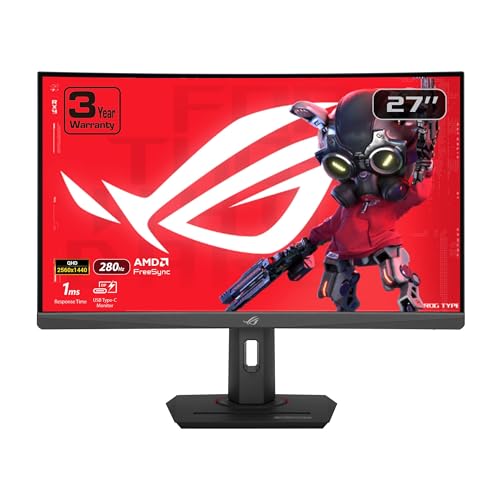
ASUS ROG XG27WCMS 27 Inch 1440p 280Hz Curved USB-C G-SYNC Gaming Monitor | 1ms, ELMB Sync, Tripod Socket, AI Gaming, Fast VA, FreeSync Premium, DisplayHDR 400, for PS5 and Xbox
One of the consumer electronics options compared in this guide.
View on Amazon| Product | Best for | Key spec from the title |
|---|---|---|
| Alienware AW3425DW | OLED ultrawide with fast response | 34.2-inch QD-OLED, 240Hz, 1800R |
| LXZ 34-inch Curved | Budget-minded ultrawide | 165Hz, 3440×1440, 1500R VA, FreeSync and G-Sync |
| Samsung Odyssey OLED G9 (G91SD) | Super-wide immersion | 49-inch dual QHD QD-OLED, G-Sync Compatible |
| Alienware AW3426DW | Top refresh and HDR | 280Hz QD-OLED, G-SYNC, DisplayHDR True Black 500 |
| LG 34GS95QE | Rapid OLED with HDMI 2.1 | 34-inch OLED, 800R, 240Hz, G-Sync |
| SANSUI 34-inch Curved | Entry ultrawide gaming | 3440×1440, 200Hz, 1ms overdrive |
| ASUS ROG XG27WCMS | Compact 27-inch curved | 1440p, 280Hz, USB-C, G-SYNC |
| Alienware AW3425DWM | Value ultrawide | 34-inch WQHD, 180Hz, 1500R |
How to Choose
Which G-Sync label you are getting
Listings use G-SYNC for monitors with NVIDIA’s validation or module, “G-Sync Compatible” for adaptive-sync displays that NVIDIA has certified, and sometimes a vague “FreeSync and G-Sync” claim for monitors that simply work with variable refresh over DisplayPort. All three can eliminate tearing on a GeForce card, but the certified labels offer more predictable behavior. A monitor that lists only FreeSync or VESA AdaptiveSync may still work, yet it carries no certification, so check the product page for the sync note.
Resolution, size, and curve radius
Resolution and size set your pixel density. A 34-inch ultrawide at 3440×1440 gives a sharp image without punishing a mid-range graphics card, while a 49-inch dual QHD model asks much more from the GPU. Curve ratings such as 800R, 1500R, and 1800R describe how tight the arc is; a lower number means a deeper curve. Tighter curves suit shorter desk depth and closer seating, while gentler ones feel more like a flat screen.
Panel type and refresh rate
OLED and QD-OLED panels list a 0.03ms response and deep blacks, which suits fast shooters and dark games. VA panels offer strong contrast at a lower price but can smear in dark scenes. Higher refresh rates, from 165Hz up to 280Hz, reward powerful graphics cards; you only see the benefit if the frame rate follows. For many players, 144Hz to 200Hz is the practical sweet spot.
Ports and extras
Look for DisplayPort for full G-Sync support, HDMI 2.1 if you plan to connect a console, and USB-C if you want single-cable laptop charging, as the ASUS and Alienware AW3426DW listings mention. Picture-in-picture and PBP modes help with multitasking. Ignore marketing contrast ratios and sRGB percentages beyond a quick sanity check, and watch where budget models skimp: brightness levels, stand adjustment, and HDR processing. Also plan desk space for the stand, since wide curved panels often have a broad base.
The 8 Best Options
Alienware AW3425DW
A 34.2-inch curved QD-OLED with a WQHD 3440×1440 resolution, 240Hz refresh, 0.03ms response, and an 1800R curve. The title cites FreeSync Premium Pro and VESA support, so verify the G-Sync status on the product page. It is aimed at gamers who want an OLED ultrawide with a gentle curve that works well for both play and productivity. A 34-inch width at this resolution gives spreadsheets and timelines plenty of horizontal room, so the same screen can serve a work-from-home day and an evening session without a second display.
- Strength: QD-OLED panel with 240Hz speed.
- Strength: moderate 1800R curve avoids visual distortion.
- Trade-off: the title highlights FreeSync, not G-Sync, so confirm compatibility.
Skip it if a certified G-SYNC label is non-negotiable. Anyone planning to run a console beside the PC should also check the input list first.
LXZ 34-Inch Curved Ultrawide
A VA ultrawide at 3440×1440 with 165Hz, 1500R curvature, 1ms MPRT, and a claim of FreeSync and G-Sync support. Listed extras include PIP and PBP, 3500:1 contrast, 120% sRGB, and HDMI and DisplayPort inputs. It is the budget path to an ultrawide for a player on a limited allowance. Buyers should treat the dual FreeSync and G-Sync wording as a compatibility claim rather than a certification, and plan to switch the feature on manually in the NVIDIA control panel.
- Strength: UWQHD resolution with 165Hz at a lower tier.
- Strength: PIP and PBP help with multitasking.
- Trade-off: VA panels may smear in dark scenes, and the sync claim is uncertified.
Skip it if you want OLED contrast or certified adaptive sync.
Samsung Odyssey OLED G9 (G91SD)
The largest screen here: a 49-inch dual QHD QD-OLED curved panel at 144Hz with 0.03ms response, labeled G-Sync Compatible and FreeSync Premium Pro. This is a statement piece for sim racers and flight-sim fans who want sweeping peripheral vision and have the desk depth for it. At this width the image can fill your peripheral vision, which suits driving and flight titles, but windowed desktop work requires more head movement than on a 34-inch model.
- Strength: massive dual QHD workspace and immersive curve.
- Strength: G-Sync Compatible label is stated in the title.
- Trade-off: size demands a deep desk and a powerful graphics card.
Skip it if your desk is shallow or your GPU is mid-range.
Alienware AW3426DW
A UWQHD QD-OLED at 280Hz and 0.03ms with G-SYNC explicitly in the title, plus DisplayHDR True Black 500, 99% DCI-P3, and USB-C with 15W of power delivery. It is the strongest all-round curved G-Sync option in the group for players who want maximum refresh and wide color. The HDR tier named in the title also suggests bright highlights against deep blacks, a pairing that suits cinematic single-player games as well as fast shooters.
- Strength: 280Hz with explicit G-SYNC support.
- Strength: USB-C helps single-cable laptop use.
- Trade-off: premium tier cost compared with VA alternatives.
Skip it if your graphics card cannot push high frame rates.
LG 34GS95QE
An UltraGear 34-inch curved OLED at WQHD, 800R, 240Hz, and 0.03ms, with FreeSync Premium Pro and G-Sync both named, plus HDMI 2.1 and DisplayPort. The 800R curve is the tightest listed here, which makes it a pick for buyers who sit close and want wraparound immersion. Console owners may also value the HDMI 2.1 port, since it allows a high-bandwidth connection without giving up the desktop PC input.
- Strength: HDMI 2.1 helps console and PC dual use.
- Strength: deep 800R curve wraps the field of view.
- Trade-off: a tight curve can feel strange for shared viewing or work with straight lines.
Skip it if you want a gentle curve.
SANSUI 34-Inch Curved
A 34-inch UWQHD curved monitor at 200Hz with 1ms overdrive, HDR, 300 nits, 130% sRGB, and PBP. The title does not state G-Sync support in the visible portion, so check before buying. It targets players who want an affordable ultrawide with a high refresh rate and are comfortable with a modest panel. Starting from a lower tier, it makes sense to spend the saved money on a decent graphics card, since a 200Hz refresh only pays off when the frame rate climbs close to it.
- Strength: 200Hz at ultrawide resolution.
- Strength: PBP supports split-input work.
- Trade-off: 300 nits is modest, so HDR will look limited.
Skip it if certified G-Sync matters or you game in a bright room.
ASUS ROG XG27WCMS
A 27-inch curved 1440p Fast VA monitor at 280Hz with G-SYNC named, 1ms, ELMB Sync, USB-C, FreeSync Premium, and a tripod socket. It is the compact pick, suited to competitive players who prefer a normal-width screen for esports. The smaller footprint leaves room for a mouse mat and keyboard, and the tripod socket hints at accessory mounting.
- Strength: 280Hz with explicit G-SYNC.
- Strength: USB-C and ELMB Sync add flexibility.
- Trade-off: 27 inches offers less immersion than ultrawides.
Skip it if you want an ultrawide field of view.
Alienware AW3425DWM
A 34-inch curved WQHD panel at 180Hz with 1ms response, a 1500R curve, and FreeSync Premium with VESA AdaptiveSync noted. G-Sync is not mentioned in the visible title, so treat it as an adaptive-sync model and verify compatibility. It suits those wanting a branded ultrawide without stepping up to OLED. A 1500R curve is gentle enough for shared desks, and the 180Hz refresh covers most mid-range builds comfortably.
- Strength: 3440×1440-class width with 180Hz.
- Strength: moderate 1500R curve.
- Trade-off: no G-Sync label appears in the title.
Skip it if a G-Sync-certified badge is required.
Which One Fits Your Situation
You want certified G-SYNC and top speed
The Alienware AW3426DW and ASUS ROG XG27WCMS both name G-SYNC and list 280Hz. Pick the Alienware for ultrawide, the ASUS for compact.
You play immersive sims and racing
The Samsung Odyssey OLED G9 gives the widest view, and the LG 34GS95QE offers a tight 800R curve for closer seating.
You are on a limited allowance
The LXZ and SANSUI ultrawides bring high refresh to a lower tier, though you must verify the sync behavior.
You split time between work and games
The Alienware AW3425DW adds a gentle 1800R curve, while the AW3426DW adds USB-C for laptop docking.
Common Mistakes
- Treating FreeSync and G-Sync as interchangeable without checking the label.
- Buying a 49-inch panel without measuring desk depth.
- Chasing 280Hz with a graphics card that cannot sustain the frame rate.
- Ignoring the curve radius, then finding it too deep or too shallow.
- Forgetting that full G-Sync support usually needs a DisplayPort connection.
Related guides
- Aio Liquid Coolers For High Performance Gaming
- Gaming Chair Accessories And Replacement Parts
- Video Doorbell Cameras Without Subscription
Frequently Asked Questions
Does G-Sync Compatible work as well as G-SYNC?
For most players the difference is small. Compatible displays use adaptive sync that NVIDIA has validated, while G-SYNC models add module or stricter certification.
Is a curved screen better for gaming?
It is a preference. Curves help on wide panels by keeping edges at a similar distance from your eyes, but they matter less on 27-inch screens.
What does 1800R mean?
The number is the radius of the curve in millimeters. A lower number means a tighter arc, so 800R is a deeper curve than 1800R. Practical tip: sit about an arm’s length away when judging a curve, because a deep arc that feels immersive at close range can look exaggerated from the back of a room.
Do I need a DisplayPort cable?
For full variable-refresh features at high refresh rates, yes. HDMI 2.1 can also work on supported displays and cards, but DisplayPort is the safer default. Also confirm that your graphics card generation supports the mode you intend to use, and enable the feature inside the NVIDIA control panel, since it is not always switched on automatically when you plug the monitor in.