Key takeaways
- Standard desk height 28 to 30 inches: Set seat at 19 to 21 inches so your elbows sit at 90° with armrests level to the desk. Leaves 7 to 9 inches of thigh clearance.
- Counter-height gaming desk 34 to 36 inches: Set seat at 22 to 22.5 inches maximum. If you are under 5’8″, your feet may not fully plant, so a footrest or foot-ring helps.
- For users over 6’0″: The 22.5-inch top height keeps knees from angling upward, which reduces pressure on the hamstrings.
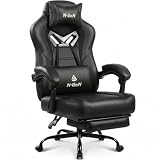
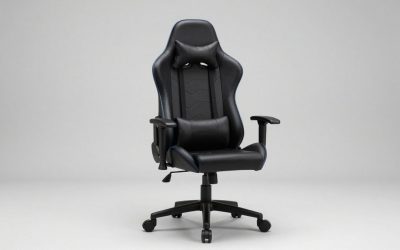
The hanover commando ergonomic gaming chair requires about 20 to 35 minutes for one person to assemble with the included Allen keys, needs roughly 30 x 35 inches of floor space upright and up to 62 inches deep when fully reclined with the footrest extended, and is built around a steel frame with a Class 4 gas lift and a five-point aluminum-alloy star base.
Core Build Specs at a Glance
The Commando is positioned as a mid-range ergonomic racing-style chair, usually $280–$450 in 2026, with a focus on stability and recline rather than ultra-light construction. Expect a shipped box weight of 52 to 58 lbs and dimensions around 33 x 26 x 14 inches, which will fit through any standard 28 to 32-inch interior doorway but is awkward to carry up tight apartment stairwells alone.
| Component | Specification (Hanover Commando) | What It Means in Use |
|---|---|---|
| Frame | Welded steel inner frame | Prevents flex and creaking when reclining; heavier than plastic-frame chairs |
| Base | 5-star aluminum alloy, 27.5-inch diameter | More stable than nylon bases, resists cracking under load |
| Gas Lift | Class 4, 100mm stroke | Seat height range approx. 18.5 to 22.5 inches; rated for daily height adjustment |
| Casters | 60mm PU (polyurethane) dual-wheel | Rolls on hardwood, laminate, and low-pile carpet without scratching |
| Recline | 90° to 155° with tilt lock | Upright for desk work to near-flat for resting |
| Footrest | Retractable plastic panel with steel rails, 19 x 10 inches | Supports calves, not full leg weight; folds under seat when not in use |
| Weight Capacity | 300 to 330 lbs (136-150 kg) static | Recommended user weight under 280 lbs for long-term gas lift durability |
| Seat Dimensions | 20.5″ W x 19.5″ D; Backrest 22″ W x 32″ H | Fits users 5’6″ to 6’2″ comfortably; narrower than XL Big & Tall chairs |
Metal Base and Gas Lift: Why They Matter
Many chairs in this price bracket use a nylon or nylon-composite star base to save weight and cost. The Commando’s aluminum-alloy base adds about 4 to 6 lbs but significantly improves torsional rigidity. If you lean hard into the recline or shift weight to one side to reach a side table, a metal base resists the micro-flex that eventually loosens caster sockets on plastic bases.
The Class 4 gas lift is the current standard for chairs over $250. It is a sealed nitrogen cylinder with a thicker tube wall and a higher cycle rating (typically 80,000 to 120,000 lifts) compared to Class 3. For the Commando, the 100mm stroke gives you a 4-inch seat height window. To match a standard desk:
- Standard desk height 28 to 30 inches: Set seat at 19 to 21 inches so your elbows sit at 90° with armrests level to the desk. Leaves 7 to 9 inches of thigh clearance.
- Counter-height gaming desk 34 to 36 inches: Set seat at 22 to 22.5 inches maximum. If you are under 5’8″, your feet may not fully plant, so a footrest or foot-ring helps.
- For users over 6’0″: The 22.5-inch top height keeps knees from angling upward, which reduces pressure on the hamstrings.
Frame, Foam, and Upholstery Trade-offs
The Commando typically ships in PU leather or a PU leather + carbon-fiber texture blend. Understanding the material choice helps set expectations for durability in different homes.
| Material | Pros | Cons | Best For |
|---|---|---|---|
| PU Leather (as used on Commando) | Easy to wipe clean, uniform look, no break-in | Can peel/flake after 2-4 years in hot, sunny rooms; less breathable than fabric | Dedicated gaming rooms, users who eat at the desk |
| Fabric Mesh / Woven Fabric (e.g., Corsair TC200, Anda Seat models) | Breathable in summer, resists peeling | Absorbs spills and pet hair, harder to spot-clean | Warm climates, pet owners, long work-from-home sessions |
| High-Density Cold-Cure Foam (50-55 kg/m³) | Holds shape 3-5 years, firmer support | Firmer initial feel than memory foam | Back support, heavier users |
| Standard Cut Foam (35-40 kg/m³) | Softer, cheaper | Compresses in 12-18 months under daily use | Occasional use, guest chairs |
The Commando uses molded foam in the 48 to 53 kg/m³ range. It will feel firm for the first week and then settle. The lumbar pillow is adjustable and removable, which is preferable to fixed built-in lumbar if you have existing lower-back sensitivity, since you can position it exactly at L4-L5 height.
Realistic Assembly: Time, Tools, and Process
You do not need a drill or extra tools. Everything is included, but having your own Phillips screwdriver and a second person for step 4 makes it smoother. On a hardwood or carpeted floor, lay down the box cardboard to avoid scratching the base.
Step-by-Step Assembly
Step 1: Install casters and gas lift (5 minutes). Flip the aluminum star base upside down, press each 60mm caster firmly into the socket until it clicks. Insert the Class 4 gas lift cylinder into the center hole. Slide the telescopic plastic cover over the cylinder. No bolts needed here; weight locks it in.
Step 2: Attach armrests to seat base (7-10 minutes). The seat cushion arrives with pre-threaded inserts. Align each 2D or 4D armrest (depending on production year) with the side holes and hand-tighten the M8 bolts with the included Allen key, then torque firmly. Do not fully tighten one side before the other or the holes will misalign.
Step 3: Connect backrest to seat (5-8 minutes). This is the alignment step that takes longest. Slide the backrest brackets into the seat hinges. You will need to hold the 25-lb backrest upright while threading two M8 bolts per side. A second person to hold the backrest prevents cross-threading. Leave bolts loose until all four are started, then tighten in a cross pattern.
Step 4: Mount seat assembly to base and add footrest (5-7 minutes). Lift the assembled seat/backrest (about 35 lbs at this stage) and lower its center receiver onto the gas lift. It should seat with a firm push. Attach the retractable footrest frame under the seat with four short screws. Test the pull-out action before sitting. Attach the included headrest pillow and lumbar cushion via elastic straps.
Step 5: Final checks (2 minutes). Tighten all Allen bolts once more, sit and test the height lever, recline lever, and tilt tension knob under the seat. If the chair sinks immediately, the gas lift was not fully seated; stand, lift the seat off, and re-seat it with a sharper drop.
Total active time is 20 to 35 minutes for one experienced person, 35 to 50 minutes if it is your first gaming chair build. Disassembly for moving requires reversing step 4 and 3; the gas lift can be stubborn to separate from the base and may need a rubber mallet tap from underneath. The chair does not fold flat, so you need a doorway clearance of at least 27 inches to move it assembled.
How the Footrest and Recline Affect Floor Space
This is where buyers in small rooms misjudge. The chair’s static footprint is modest, but its functional footprint changes dramatically when you use its ergonomic features.
- Upright position (90°-110°): 27.5 inches wide (caster to caster) x 30 to 35 inches deep. You need at least 36 inches from the desk edge to the wall behind to push back and stand.
- Reclined 135° without footrest: Depth extends to 52 to 55 inches from the front casters to the top of the backrest. Clear 20 inches behind the chair from the wall to avoid hitting the wall.
- Fully reclined 155° with footrest extended: Total linear length hits 60 to 62 inches. That is the length of a twin bed. You need 24 to 26 inches of clear space in front of the seat edge for the footrest to slide out, plus the rear recline clearance.
In a 10 x 12 ft room with a 60-inch desk along one wall, an upright Commando leaves a comfortable 4 to 5 ft walkway. When fully reclined with the footrest out, it will occupy nearly half the room’s depth and will block the path to a closet or bed if placed centrally. For reference, allow a 30-inch radius around the chair’s center post as a no-furniture zone if you plan to use recline daily.
Ceiling and desk height also matter: At 155°, the headrest rises only 38 to 40 inches off the floor, so it will slide under a 48-inch high wall shelf, but the footrest at 11 to 13 inches off the floor can collide with low PC towers, heater vents, or storage boxes under the desk.
Is the Commando Right for Your Setup?
| Your Situation | Verdict on the Commando | Why |
|---|---|---|
| Small apartment / bedroom under 100 sq ft | Usable, but limited | Use it without the footrest extended to save 20″ of depth; consider a 135° limit if the chair back faces a wall |
| Renter who moves annually | Good | Steel frame and metal base survive moves better than plastic; but keep the original box due to 55 lb weight and non-folding shape |
| Kids and pets (cats, dogs) | Mixed | PU leather wipes clean but cat claws will puncture it quickly; fabric chairs hide scratches better. PU casters are pet-hair friendly |
| Back pain from long sessions (4+ hours) | Good if you use adjustments | Class 4 lift lets you fine-tune seat height, lumbar pillow is positional, tilt lock lets you rock to reduce spinal load; firm foam supports better than soft foam long-term |
| Hardwood floors, no rug | Excellent | PU casters and aluminum base will not rust or leave black marks like cheaper nylon wheels can |
| Need to nap/recline between sessions | Excellent | 155° + footrest creates a temporary lounger without buying a separate ottoman |
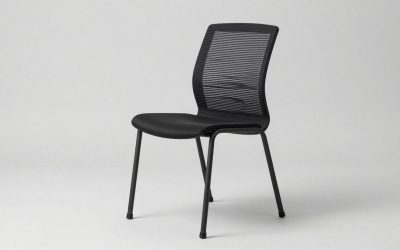
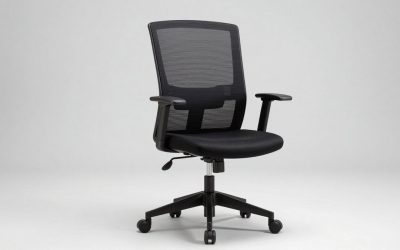
If your primary use is 6 to 8 hours of upright desk work in a tight space and you will never recline past 120°, a smaller-profile ergonomic mesh chair without a footrest will save 12 to 15 inches of depth and stay cooler. If you want one chair to work, game, and rest without adding a separate recliner, the Commando’s space trade-off is justified.
Moving and Long-Term Durability Notes
What wears first on this class of chair is rarely the steel frame. The PU leather surface on the seat edges and armrest tops will show creasing and, in dry or sun-exposed rooms, surface cracking after 24 to 36 months. Keep it out of direct window sun and wipe with a damp cloth, not chemical cleaners. The foam will soften about 10 to 15% in the first year, which is normal. The Class 4 gas lift and aluminum base typically outlast the upholstery by several years, so a chair cover can extend its presentable life if you plan to keep it 4+ years.
For moving, remove the backrest (four bolts) to reduce the assembly to two manageable pieces under 30 lbs each. The base with gas lift can stay as one unit. Keep the caster stems clean; hair wrapped around the axle is the most common cause of rolling resistance.
FAQ
Can one person safely assemble the Hanover Commando?
Yes. All steps except holding the backrest during bolt alignment can be done solo. If you are assembling alone, lean the backrest against a wall at the correct height to start the bolts, then lift the seat to join them.
Will the footrest hold a full adult’s weight?
No. The footrest is designed for lower-leg and calf support, typically rated for 30 to 50 lbs of distributed pressure. Do not stand on it or sit on its edge; the steel rails will bend and the plastic panel can crack.
How high should my desk be for this chair?
With the seat at 19 to 21 inches, a 29 to 30-inch desk allows neutral arm position for most users 5’7″ to 6’0″. If your desk is fixed at 28 inches, set the seat to 19 inches and use the armrests to keep your forearms parallel to the floor.