Key takeaways
- Choosing between T-shaped legs and a C-frame standing desk is less about which design looks better and more about how you use your workspace. A fixed-height table with T-shaped legs can deliver excellent stability, a clean industrial look, and a…
Choosing between T-shaped legs and a C-frame standing desk is less about which design looks better and more about how you use your workspace. A fixed-height table with T-shaped legs can deliver excellent stability, a clean industrial look, and a lower upfront cost. A C-frame standing desk, by contrast, gives you electric height adjustment, sitting and standing flexibility, and better ergonomics for a workstation that changes throughout the day.
The right choice depends on whether you are building a durable desk around one preferred height or buying an active workstation for multiple users, monitors, and long work sessions. Desk width, floor space, cable management, noise, and the possibility of moving homes also matter. Here is how the two designs compare for a home office in 2026.
Our top picks


As an Amazon Associate we earn from qualifying purchases at no extra cost to you. Ratings are shown as listed on Amazon.
Quick Verdict
Choose T-shaped legs if you want the simplest, most affordable, and potentially most rugged base for a fixed-height desk. They suit DIY desktops, dining-work tables, craft surfaces, and workbenches. A well-built pair can support substantial weight without motors, control boxes, or moving columns.
Choose a C-frame standing desk if you will regularly alternate between sitting and standing, share the desk with people of different heights, or want precise ergonomic control. Electric C-frame bases typically adjust through roughly 27 to 47 inches, depending on the model and desktop thickness. They cost more and require more components, but the flexibility can justify the difference for a daily computer workstation.
Side by Side
| Factor | T-shaped legs | C-frame standing desk |
|---|---|---|
| Comfort | Comfortable at one carefully selected height; add an adjustable chair or monitor arm. | Best for alternating positions and accommodating users of different heights. |
| Durability | Few or no moving parts; steel legs can be highly durable when properly attached. | Strong, but motors, columns, electronics, and moving joints add potential wear points. |
| Price range | About $70 to $250 for legs, before the desktop and hardware. | About $200 to $600 for a powered frame, before the desktop. |
| Maintenance | Tighten bolts occasionally and protect the desktop from moisture. | Check fasteners, keep cables clear, and replace electronic or motor components if needed. |
| Space needed | Usually compact front to back; the desktop determines most of the footprint. | Needs clearance for feet, moving columns, power cords, and the lowest sitting position. |
| Look | Industrial, architectural, and easy to customize with a wood top. | Modern office appearance with a more technical under-desk structure. |
| Resale | Easy to sell or repurpose as a dining table, console, or workbench. | Appeals strongly to office buyers, but compatibility with a desktop and working electronics matters. |
| Best for | Fixed-height desks, DIY projects, dining tables, and heavy-duty surfaces. | Home offices, shared workstations, long computer sessions, and sit-stand routines. |
| Noise and power | Silent and requires no electricity. | Electric models generally draw power only while adjusting, with a motor sound during movement. |
Where T Shaped Legs Wins
The main advantage of T-shaped legs is structural simplicity. A pair of steel legs spreads support across the desktop without requiring a motorized column or control system. That makes the desk quiet, dependable, and easy to understand. If your ideal working height is around 28 to 30 inches, a fixed base may do everything you need.
T legs are also a strong option for unusually heavy desktops. Solid wood tops, butcher block, tools, speakers, and multiple monitors can create a substantial load. Always check the leg manufacturer’s stated capacity and the strength of the desktop, screws, and mounting surface; a high capacity printed on the legs does not automatically make the complete desk safe at that weight.
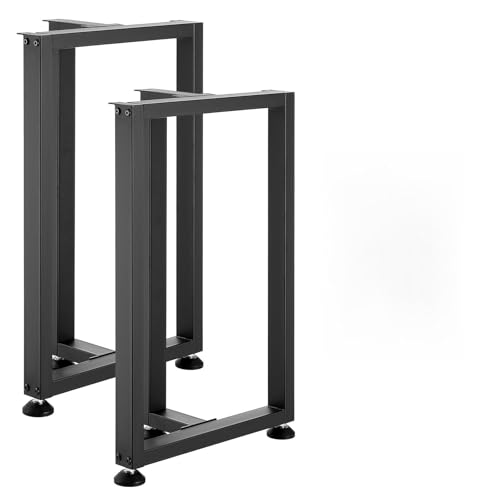
For example, the VEVOR square T-shaped steel legs measure 29.1 inches high by 17.7 inches wide and are listed with a 2,204-pound maximum load. At $70.90 for a set of two, they illustrate why fixed T legs are attractive for a budget-conscious DIY build. The MBQQ T-shaped metal legs, listed at 28 inches high and 35 inches wide, cost $122.70 and take a more visibly substantial, industrial approach. These are leg components rather than complete desks, so the desktop, fasteners, and final assembly determine the finished result.
Another advantage is design freedom. You can choose a 48-inch top for a compact office, a 72-inch top for two monitors, or a custom slab for a dining-work table. A T-shaped base can also be reused after a move or converted into another piece of furniture. It does not lock you into a particular control panel, motor system, or frame width.
The limitation is ergonomic. Once assembled, the desk does not adapt to your elbows, chair, monitor, or another household member. A 29-inch surface may feel fine to a taller user but too high for someone shorter. You can improve the setup with a footrest, keyboard tray, monitor riser, or adjustable chair, but those additions cannot match the instant range of a powered desk.
Where C Frame Standing Desk Wins
A C-frame standing desk puts the supporting structure closer to the rear of the desktop. This can leave more open legroom at the front and reduce interference with your knees, especially when the desk has a crossbar positioned toward the back. The design is particularly useful when you sit close to the desk for typing or use a rolling office chair.
Height adjustment is the decisive benefit. With the push of a button, you can lower the surface for seated work and raise it for standing, stretching, or collaborative tasks. A typical electric frame may cover approximately 27 to 47 inches, while some three-stage designs offer a broader range. The exact usable height depends on the frame, desktop thickness, casters, and whether the stated dimensions refer to the frame or the completed desk.
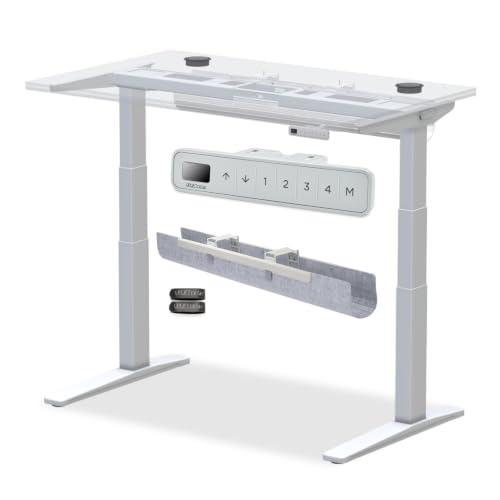
Powered frames also make it easier to create an ergonomic setup for more than one person. Memory presets can save seated and standing heights, although the number of presets varies. USB ports, wire grommets, and cable managers can keep a monitor-and-laptop setup more orderly. The UPLIFT DESK V3 two-leg frame, for instance, is listed at $469 and includes an advanced keypad, wire grommets, a FlexMount cable manager, and 27.5-inch C-frame feet. It is a frame rather than a complete desktop, so account for the top and accessories separately.
Lower-priced choices can still offer useful flexibility. The Fromann dual-motor, three-tier standing desk frame is listed at $228.04 and includes a handset with USB-A and USB-C ports. A dual-motor, three-tier design can be appealing when you want a wider adjustment range without moving into the highest price tier, but verify its weight rating, speed, noise information, warranty, and desktop compatibility before buying.
The trade-offs are complexity and clearance. Motors and control electronics can eventually fail, and moving columns may develop play if the frame is overloaded or assembled poorly. You also need an outlet near the desk, enough slack in every cable, and room for the surface to rise without hitting shelves, windows, or wall-mounted screens. A standing desk should not be judged by motor capacity alone: stability at maximum height is equally important.
Cost Over 5 Years
A realistic five-year comparison starts with the complete setup, not just the base. A T-shaped build might cost $70 to $125 for economical steel legs, $150 to $450 for a suitable desktop, and $20 to $60 for fasteners, floor protection, and cable accessories. That places the initial total around $240 to $635. If the legs remain usable and the top needs no replacement, the five-year ownership cost can be close to the original purchase.
A powered C-frame generally costs $200 to $600, while a desktop may add $150 to $450. Include $20 to $80 for a surge protector, cable management, and replacement hardware, producing an approximate starting total of $370 to $1,130. Electricity is usually a minor expense because the motor runs only during adjustments, but standby consumption varies by controller. A realistic allowance for eventual repairs or replacement electronics is $50 to $200 over five years, though a warranty may cover eligible failures.
In other words, T legs usually win on upfront and long-term simplicity. C frames can offer better value if the adjustment range prevents you from buying a second desk, ergonomic accessories, or a separate standing workstation.
Which One for Your Home
Small apartment
Pick T-shaped legs if the desk will stay against one wall and you need the smallest, quietest solution. A 48- to 60-inch desktop can provide useful workspace without motors or a control cable. Choose a C frame if the desk must serve as both a seated office and a standing station, but measure the full height and make sure the elevated surface will not collide with shelves or lighting.
Family with kids or pets
A T-shaped base has fewer moving parts and no exposed motor controls, making it straightforward to secure against a wall and inspect. A C frame is better when several people share the desk, but keep the handset locked or positioned out of reach, route cables away from pets, and check that the desktop remains stable at its highest setting.
Rental
Either style can work, but a C-frame may be the better investment if you expect to move frequently and want one workstation that adapts to different rooms. Select a frame that can accept a replacement desktop, and avoid drilling into walls for cable management. T legs are easier to disassemble and may be less expensive to transport or replace if the desktop does not fit your next home.
Long-term home
For a permanent office, choose based on routine rather than resale. T legs are ideal for a dedicated craft room, writing desk, dining-work table, or heavy computer surface at one height. Choose a C frame if you work at the desk daily, experience discomfort from prolonged sitting, or expect multiple users. Pay for a stable frame, a quality controller, and a desktop deep enough to position monitors at a comfortable viewing distance.
FAQ
Are T-shaped desk legs more stable than C-frame legs?
Not automatically. Stability depends on the steel thickness, foot dimensions, frame width, desktop weight, fasteners, and the desk’s height. Fixed T legs often feel very solid because they have no moving columns, while a quality C frame can remain stable when correctly assembled and kept within its load rating. Test for side-to-side movement at the maximum height before attaching delicate equipment.
Can I use any desktop with a C-frame standing desk?
No. Check the frame’s supported width, depth, mounting pattern, minimum and maximum weight, and whether the top can accept the supplied screws. A top that is too narrow may leave the frame exposed, while a very heavy solid-wood top can reduce the usable payload for monitors and accessories.
Are fixed T legs better for heavy monitors?
They can be, especially when you want a heavy desktop and never need height adjustment. However, a C frame with an appropriate load rating can support multiple monitors as well. Use a reinforced mounting area for clamp-on monitor arms and stay below the complete frame’s stated capacity, including the desktop.
Can I convert T-shaped legs into a standing desk?
Not without replacing or modifying the base. T legs are normally fixed-height components. You could add a desktop riser or a separate sit-stand converter, but that increases weight and reduces available work surface. If regular adjustment is central to your routine, starting with a C-frame standing desk is usually cleaner and more practical.