Key takeaways
- GPU load: 4K demands roughly 2.25× the rendering work of 1440p at native resolution, which often means the difference between a locked 144fps and a variable 70–90fps in modern titles.
- Refresh ceilings: Affordable 1440p panels routinely hit 180Hz or higher, while mainstream 4K sits around 160–165Hz — and budget 4K models like the KTC M27U6 top out at 75Hz in UHD mode.
- Pixel density: At 27 inches, 4K delivers about 163 PPI versus 109 PPI for 1440p, a visible upgrade for text, UI elements and fine detail such as distant foliage or wire meshes.
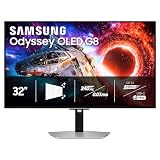
- Screen size scaling: 1440p starts to look soft beyond 27 inches; 4K stays crisp up to 32 inches and above, which is why panels like the Samsung M8 (M80F) and Odyssey G7 use it.
- HDR quality: Serious HDR is now concentrated in the 4K tier — DisplayHDR 600 on the Odyssey G7 and mini-LED HDR 1000 on the KTC M27U6 versus basic HDR10 on most 1440p screens.
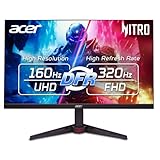
- Flexibility: Dual-mode 4K displays let you drop resolution for a refresh boost, such as the Acer Nitro VG270K V4’s 320Hz DFR mode.
Choosing between 1440p and 4K used to be straightforward: QHD was the sensible sweet spot, and 4K was a luxury reserved for people with halo-tier graphics cards. In 2026 that line has blurred badly. High-refresh 4K panels now land at prices that were solidly 1440p territory two years ago, HDMI 2.1 is standard rather than a premium bullet point, and dual-refresh modes let one display behave like two depending on what you launch.
The decision still matters, though — arguably more than before. Resolution drives GPU load harder than almost any other setting, and 3840×2160 asks your card to push 2.25× the pixels of 2560×1440. Upscalers like DLSS and FSR have narrowed that penalty, but they haven’t erased it, and image quality at aggressive upscaling presets is still a compromise. Below we break down where each resolution genuinely wins, which panels are worth your money, and how to match a monitor to the GPU you actually own.
Our top picks
 Acer Nitro 27in 4K 3840x2160 IPS 160Hz
- Quality Visuals: The VG270K 27" IPS monitor with…
- AMD FreeSync Premium Technology: Say “goodbye” to stuttering…
- Quick Refresh Rate: Different content has different refresh…
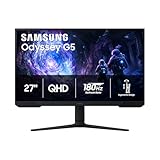
 Samsung 27" Odyssey G5
- QHD Resolution (2560 x 1440) has 1.7 times…
- HDR10 provides brighter highlights and nuanced shadow for…
- The 180Hz refresh rate minimizes lag for gameplay…
 KTC 27 Inch 4K Gaming Monitor
- [4K UHD Gaming Monitor] This 27-inch 4K monitor…
- [Smooth Gaming Experience] 160Hz refresh rate allowing you…
- [Vivid and Accurate Colors] This UHD gaming monitor…
| Product | Key specs | |
|---|---|---|
| Acer Nitro 27in 4K 3840x2160 IPS 160Hz | Quality Visuals: The VG270K 27" IPS monitor with… AMD FreeSync Premium Technology: Say “goodbye” to stuttering… Quick Refresh Rate: Different content has different refresh… | Check price |
| Samsung 27" Odyssey G5 | QHD Resolution (2560 x 1440) has 1.7 times… HDR10 provides brighter highlights and nuanced shadow for… The 180Hz refresh rate minimizes lag for gameplay… | Check price |
| KTC 27 Inch 4K Gaming Monitor | [4K UHD Gaming Monitor] This 27-inch 4K monitor… [Smooth Gaming Experience] 160Hz refresh rate allowing you… [Vivid and Accurate Colors] This UHD gaming monitor… | Check price |
 Samsung 32” M8 Samsung 32” M8 | Check price | |
 KTC 27 Inch 4K Mini-LED Gaming Monitor KTC 27 Inch 4K Mini-LED Gaming Monitor | Dual Mode 4K Gaming Monitor: Switch seamlessly between… QD-Mini LED Gaming Monitor: 1152 independent local dimming… The Ultimate Color Experience: Fast IPS delivers vivid,… | Check price |
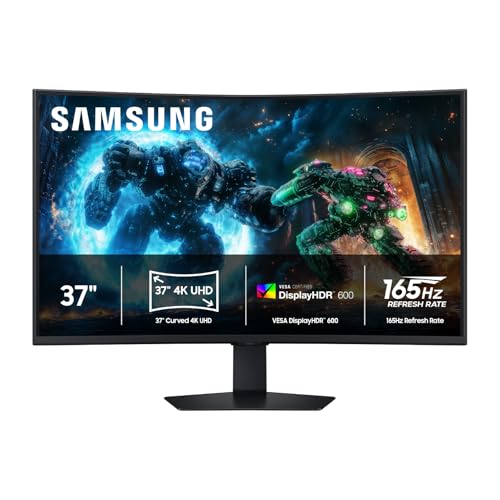 Samsung 37” Odyssey G7 Samsung 37” Odyssey G7 | Samsung’s 37” 4K UHD Odyssey G7 Curved Gaming… 37” 1000R curved display with 4K UHD resolution… VESA DisplayHDR 600 delivers more contrast, with deeper… | Check price |
 Samsung 57" Odyssey Neo G9 Samsung 57" Odyssey Neo G9 | 57" DUHD resolution brings you a display as… Experience the next level of heart-pounding gaming with… 240HZ and 1ms (GTG) w/ DP 2.1 INPUT:… | Check price |
 ZZA 34 Inch Ultrawide Curved Monitor Built ZZA 34 Inch Ultrawide Curved Monitor Built | 34-inch ultra-wide curved monitor with 3800R curvature and… 100Hz refresh rate ensures fluid motion and reduced… 100% sRGB color gamut coverage produces rich, true-to-life… | Check price |
As an Amazon Associate we earn from qualifying purchases at no extra cost to you.
⚡ Save on Your Next PC — Amazon Prime
Prime members get fast free shipping on the systems above, plus early access to Prime Day & Black Friday PC deals. New members get a 30-day free trial.
Watch: 1440p vs 4K Gaming Monitor: 2026 Guide — Video Review
Quick Verdict
Pick 1440p if you play competitive shooters, want frame rates you can sustain without leaning on upscaling, or run a mid-range GPU — the Samsung Odyssey G5 (G51F) at 180Hz is the archetype. Pick 4K if you favour cinematic single-player games, do creative or productivity work alongside gaming, or want a larger panel where pixel density becomes essential; the Acer Nitro VG270K V4, KTC U27T6 and 37-inch Samsung Odyssey G7 (G75F) all make strong cases.
Key Differences
- GPU load: 4K demands roughly 2.25× the rendering work of 1440p at native resolution, which often means the difference between a locked 144fps and a variable 70–90fps in modern titles.
- Refresh ceilings: Affordable 1440p panels routinely hit 180Hz or higher, while mainstream 4K sits around 160–165Hz — and budget 4K models like the KTC M27U6 top out at 75Hz in UHD mode.
- Pixel density: At 27 inches, 4K delivers about 163 PPI versus 109 PPI for 1440p, a visible upgrade for text, UI elements and fine detail such as distant foliage or wire meshes.
- Screen size scaling: 1440p starts to look soft beyond 27 inches; 4K stays crisp up to 32 inches and above, which is why panels like the Samsung M8 (M80F) and Odyssey G7 use it.
- HDR quality: Serious HDR is now concentrated in the 4K tier — DisplayHDR 600 on the Odyssey G7 and mini-LED HDR 1000 on the KTC M27U6 versus basic HDR10 on most 1440p screens.
- Flexibility: Dual-mode 4K displays let you drop resolution for a refresh boost, such as the Acer Nitro VG270K V4’s 320Hz DFR mode.
1440p: The Frame-Rate Sweet Spot
1440p remains the resolution most gamers should default to. It’s sharp enough that you’ll rarely notice aliasing at normal viewing distances on a 27-inch panel, yet forgiving enough that a mid-tier GPU can drive high refresh rates at native resolution — no upscaling required. That native-render advantage matters in fast competitive titles, where upscaling artefacts and added latency are genuinely felt.
The Samsung Odyssey G5 (G51F) illustrates the appeal well: 180Hz, 1ms response, FreeSync, plus competitive extras like Black Equalizer for lifting shadow detail and a Virtual Aim Point overlay. A height-adjustable stand is included, which budget panels frequently skip. If your library skews toward shooters, fighters or racing sims — anything where a stable, high frame rate outweighs pixel count — this is the smarter buy, and it leaves headroom in the budget for a better GPU.
4K: Detail, Density and Desktop Space
4K’s advantage isn’t subtle once you’ve lived with it. Textures resolve properly, distant detail stops shimmering, and your desktop gains genuinely usable workspace for editing timelines, spreadsheets or side-by-side windows. For slower-paced, visually rich games — RPGs, strategy, flight sims, anything with photogrammetry-heavy environments — the difference is immediately obvious.
The 4K field in 2026 is unusually varied. The Acer Nitro VG270K V4 pairs 160Hz UHD with a 320Hz dual-refresh mode and dual HDMI 2.1 ports, making it a strong all-rounder. The KTC U27T6 offers a straightforward high-refresh Fast IPS package with full ergonomic adjustment. The KTC M27U6 trades refresh rate for mini-LED HDR 1000 and 148% sRGB coverage, favouring image quality. The 37-inch Samsung Odyssey G7 (G75F) prioritises immersion with a curved panel and DisplayHDR 600, while the Samsung M8 (M80F) leans toward smart-TV apps, USB-C and mixed-use desks rather than pure gaming.
Which Should You Buy?
- For competitive FPS: Pick 1440p — the Odyssey G5 (G51F) and its 180Hz refresh beat pixel count every time.
- For a mid-range GPU: Pick 1440p, or a 4K panel with a dual-mode fallback like the Acer Nitro VG270K V4.
- For single-player and visual fidelity: Pick 4K — the KTC U27T6 for value, the M27U6 if HDR and colour accuracy top your list.
- For large screens over 30 inches: Pick 4K; the Odyssey G7 (G75F) keeps density intact at 37 inches where 1440p would look coarse.
- For work, streaming and console use: Pick 4K — the Samsung M8 (M80F) covers smart apps, USB-C and gaming duties in one panel.
Frequently Asked Questions
Is 4K worth it at 27 inches?
Yes, if your GPU can drive it. At 27 inches 4K delivers around 163 PPI, which no