Key takeaways
- Latency: Wired is effectively zero. Modern 2.4GHz wireless lands around 20–30ms — the NUBWO advertises 23ms sync, which is below the threshold most players can detect. Bluetooth is the exception and still lags too much for competitive shooters.
- Reliability: A cable cannot desync, run flat, or lose its dongle. Wireless adds three new points of failure, though a good headset lets you fall back to USB-C or 3.5mm when the battery dies.
- Sound per dollar: Wired headsets spend nothing on radios, batteries, or DACs, so more of the budget goes into drivers and padding. At the same price, a wired set generally sounds better.
- Battery management: Wireless means charging. The floor has risen sharply — 40 hours on the Ozeino, 60 on the Arctis Nova 5, 70 on the BlackShark V3 X, 80 on the Stealth 600, and 100-hour claims on the NUBWO — but it’s still a habit you have to keep.
- Multi-device use: Wireless wins outright. Triple-mode sets pair to a PC dongle and a phone simultaneously, so you can take a call mid-match. A wired headset does one thing at a time.
- Platform compatibility: Wired works with everything that has a 3.5mm jack. Wireless is fussier — Xbox needs specific support, which the Stealth 600 has and most PlayStation-focused sets, including several budget 7.1 surround models, explicitly do not.
The wireless-versus-wired debate used to have an easy answer: if you cared about audio quality and zero latency, you plugged in. That answer stopped being obvious somewhere around 2023, and in 2026 it’s genuinely close. Low-latency 2.4GHz dongles now push sync times into the 20–25ms range, battery life on mid-range sets runs from 40 to 100 hours, and multi-mode headsets happily juggle a USB-C dongle, Bluetooth 5.4, and a 3.5mm cable from the same earcup. Meanwhile, wired headsets have quietly gotten better too — and cheaper for the same driver quality.
So the choice matters more than it used to, because you’re no longer trading away performance for convenience. You’re trading between two mature designs with different failure modes. Wireless buys you freedom, multi-device flexibility, and a tidier desk, at the cost of charging habits and occasional pairing friction. Wired buys you absolute reliability, lower weight, and more headphone for your money, at the cost of a leash. Below is how the two actually compare in 2026, and which specific models are worth your shortlist.
Our top picks


As an Amazon Associate we earn from qualifying purchases at no extra cost to you. Ratings are shown as listed on Amazon.
⚡ Save on Your Next PC — Amazon Prime
Prime members get fast free shipping on the systems above, plus early access to Prime Day & Black Friday PC deals. New members get a 30-day free trial.
Watch: Wireless vs Wired Gaming Headset in 2026 — Video Review
Quick Verdict
Buy wireless if you play on more than one system, move around while you play, or want a single headset for gaming, calls, and phone audio — the Razer BlackShark V3 X HyperSpeed and SteelSeries Arctis Nova 5 are the standouts for competitive and all-round use respectively, while the Turtle Beach Stealth 600 is the pick if Xbox is in the mix. Buy wired if you want the most sound quality per dollar, never want to think about a battery again, or play in tournament settings where a dropout is unacceptable. For most people in 2026, wireless is the default and wired is the deliberate choice.
Key Differences
- Latency: Wired is effectively zero. Modern 2.4GHz wireless lands around 20–30ms — the NUBWO advertises 23ms sync, which is below the threshold most players can detect. Bluetooth is the exception and still lags too much for competitive shooters.
- Reliability: A cable cannot desync, run flat, or lose its dongle. Wireless adds three new points of failure, though a good headset lets you fall back to USB-C or 3.5mm when the battery dies.
- Sound per dollar: Wired headsets spend nothing on radios, batteries, or DACs, so more of the budget goes into drivers and padding. At the same price, a wired set generally sounds better.
- Battery management: Wireless means charging. The floor has risen sharply — 40 hours on the Ozeino, 60 on the Arctis Nova 5, 70 on the BlackShark V3 X, 80 on the Stealth 600, and 100-hour claims on the NUBWO — but it’s still a habit you have to keep.
- Multi-device use: Wireless wins outright. Triple-mode sets pair to a PC dongle and a phone simultaneously, so you can take a call mid-match. A wired headset does one thing at a time.
- Platform compatibility: Wired works with everything that has a 3.5mm jack. Wireless is fussier — Xbox needs specific support, which the Stealth 600 has and most PlayStation-focused sets, including several budget 7.1 surround models, explicitly do not.
Wireless Gaming Headsets: Freedom Without the Old Compromises
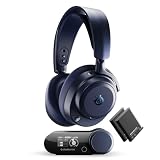
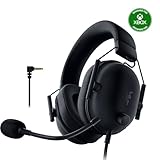
The case for wireless in 2026 is that the compromises are mostly gone. The Razer BlackShark V3 X HyperSpeed pairs 50mm drivers with a cardioid mic and offers 2.4GHz, Bluetooth, and USB in one package — it’s the closest thing to a no-caveats competitive pick at a sensible price. The SteelSeries Arctis Nova 5 takes a different angle with neodymium drivers and a companion app carrying 100+ game-specific audio presets, which is genuinely useful if you rotate between shooters, RPGs, and music.
Below that tier, the value is real but the spec sheets need reading. The Turtle Beach Stealth 600 is the practical multiplatform choice because it covers Xbox Series X|S and Xbox One alongside PS5 and PC, with an 80-hour battery and a flip-to-mute mic. The Ozeino leans on lossless 2.4GHz audio and a play-and-charge design, so a flat battery doesn’t end your session. The NUBWO targets FPS players specifically with its 23ms sync and 100-hour rating. Just check platform support before you buy — several budget wireless sets, including popular RGB 7.1 surround models, are explicitly not Xbox compatible.
Wired Gaming Headsets: Still the Reliability Champion
Wired headsets survive because they solve problems wireless can’t. There is no pairing step, no firmware update that breaks your dongle, no scramble for a USB-C cable ten minutes before a scrim. Plug in and it works, on any console, handheld, or laptop with a 3.5mm jack. That predictability is why LAN events and esports venues still run wired almost universally, and why plenty of PC players who own a wireless set keep a wired backup.
The other argument is acoustic value. Strip out the battery, radio, and charging circuitry and the entire budget goes into drivers, earpads, and headband construction. A wired headset at a given price typically sounds cleaner, weighs less, and has a better boom mic than its wireless equivalent — meaningful if you record, stream, or simply want accurate footstep positioning without processing. The tradeoff is exactly one thing: the cable, which snags, tugs at your headband, and picks up microphonic noise when it brushes your chair.
Which Should You Buy?
- For competitive FPS on PC: Pick the Razer BlackShark V3 X HyperSpeed for low-latency 2.4GHz with a clean cardioid mic, or a wired set if you compete at LAN events.
- For Xbox players: Pick the Turtle Beach Stealth 600 — it’s the only headset here with confirmed Xbox Series X|S and Xbox One support alongside PlayStation and PC.
- For one headset across everything: Pick the SteelSeries Arctis Nova 5 for its 2.4GHz-plus-Bluetooth switching and deep preset library across PC, PS5, Switch, and mobile.
- For marathon sessions on a budget: Pick the NUBWO for its 100-hour battery and 23ms sync, or the Ozeino if play-and-charge and lossless 2.4GHz matter more to you.
- For maximum audio quality per dollar: Go wired. You’ll get better drivers, lighter weight, and zero maintenance for the same spend.
Frequently Asked Questions
Is wireless latency still a problem for competitive gaming?
Not on 2.4GHz. Current dongle-based headsets sit in the 20–30ms range, which is below what almost anyone can perceive in-game. Bluetooth is a different story — it’s fine for music and calls but still too laggy for shooters, so use the dongle when it counts.
Do wireless gaming headsets sound worse than wired ones?
Not inherently, but they cost more to build. At the same price, a wired headset usually has better drivers and padding because none of the budget goes to batteries and radios. Compare at your actual price point rather than assuming wireless is worse.
Can I use a wireless headset while it’s charging?
On most modern sets, yes. The Ozeino markets this as play-and-charge, and many multi-mode headsets also fall back to USB-C or 3.5mm wired audio when the battery is empty. Check for it — a few cheaper models still won’t let you play while charging.
Will any wireless headset work with Xbox?
No, and this catches people out constantly. Xbox uses its own wireless protocol, so a headset must specifically support it. The Turtle Beach Stealth 600 does; several PS5-and-PC-focused models, including many budget 7.1 surround sets, state outright that they don’t.
Final Verdict
In 2026, wireless is the right default for most gamers — the latency gap has closed, batteries now outlast the sessions you’ll actually play, and multi-device switching is a genuine daily convenience that a cable simply can’t offer. Choose the Razer BlackShark V3 X HyperSpeed for competitive PC play, the SteelSeries Arctis Nova 5 for versatility across platforms, or the Turtle Beach Stealth 600 if you need Xbox in the mix. Go wired only if you’re buying purely on sound quality per dollar, compete in venues where wireless is banned, or know yourself well enough to admit you’ll never remember to charge it.