Key takeaways
- Refresh rate: 144Hz to 165Hz is the practical sweet spot. A 165Hz FHD+ panel like the ROG Strix G16’s feels dramatically smoother than 60Hz. Competitive players may want 240Hz.
- Resolution: 1920×1200 (WUXGA) is ideal for mainstream GPUs. Jump to 2.5K only if you have a 5070-class chip to drive it.
- Panel: Favor IPS or Nebula-type displays with good color coverage. The 16:10 aspect ratio common in 2026 gives extra vertical space for both games and work.
Buying a gaming laptop is trickier than buying a desktop because everything is fixed at purchase. You cannot swap the graphics card later, cooling is baked into the chassis, and the screen you choose is the screen you live with for years. That makes the spec sheet matter far more, and it is exactly where marketing language tends to blur the details that decide whether a machine feels fast or frustrating.
This guide breaks down what actually matters in a 2026 gaming laptop: the GPU tier, the display, cooling and thermals, memory and storage, and the small features that separate a good buy from a regret. You will finish knowing which specs to prioritize for your budget and which numbers are safe to ignore.
Our top picks


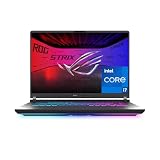
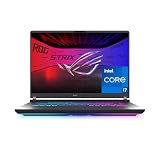
 ASUS ROG Strix G16
- Product Group: Personal Computer
- Binding: Personal Computers


As an Amazon Associate we earn from qualifying purchases at no extra cost to you. Ratings are shown as listed on Amazon.
⚡ Save on Your Next PC — Amazon Prime
Prime members get fast free shipping on the systems above, plus early access to Prime Day & Black Friday PC deals. New members get a 30-day free trial.
Watch: What to Look for in a Gaming Laptop — Video Review
Start With the GPU Tier
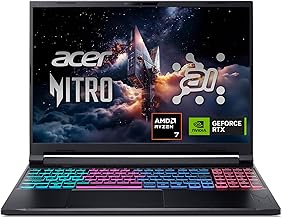
The graphics chip is the single biggest factor in gaming performance, and in a laptop it cannot be upgraded, so choose carefully. An RTX 5050 or 5060 class GPU, as found in the Acer Nitro V or the GIGABYTE Gaming A16, handles 1080p and 1200p high settings comfortably. Step up to an RTX 5070 Ti in a machine like the ASUS ROG Strix G16 (2025) if you want high refresh rates at 2.5K or plan to keep the laptop for several years. Match the GPU to your target resolution rather than buying the biggest number you can afford.
Display: Resolution, Refresh, and Panel Quality
- Refresh rate: 144Hz to 165Hz is the practical sweet spot. A 165Hz FHD+ panel like the ROG Strix G16’s feels dramatically smoother than 60Hz. Competitive players may want 240Hz.
- Resolution: 1920×1200 (WUXGA) is ideal for mainstream GPUs. Jump to 2.5K only if you have a 5070-class chip to drive it.
- Panel: Favor IPS or Nebula-type displays with good color coverage. The 16:10 aspect ratio common in 2026 gives extra vertical space for both games and work.
Cooling and Sustained Performance
Two laptops with identical GPUs can perform very differently if one throttles under load. Thin machines look great but often cannot sustain peak clocks during long sessions, which shows up as frame drops after 20 minutes. Larger chassis such as the ASUS ROG Strix G18 have more room for heat pipes and fans, so they hold performance better. If you plan marathon sessions, prioritize a laptop known for strong thermals over one that is merely slim, and read reviews that measure sustained rather than burst performance.
Memory, Storage, and CPU
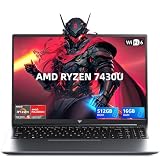
Aim for 16GB of DDR5 as a minimum and 32GB if you multitask, stream, or want longer-term headroom. Machines like the KAIGERR 2026 with 24GB or the Strix G16 with 32GB give more breathing room than the old 8GB baseline. For storage, a 1TB Gen4 SSD is the comfortable target since games are large and you cannot always add a second drive easily. On the CPU side, a modern Intel Core Ultra or Ryzen 7 chip pairs well with these GPUs without becoming a bottleneck.
Ports, Battery, and Build Quality
Gaming laptops rarely have great battery life, but full-function USB-C, USB-A, HDMI, and Wi-Fi 6 or Wi-Fi 7 make a real difference to daily use. Look for a machine with enough ports that you are not living in a dongle, and check that the charging is fast if you travel. Build quality matters too. A sturdy hinge and a backlit keyboard with decent key travel, common on the TUF and Nitro lines, hold up better over years of use than a flexy budget shell.
Tips
- Decide your target resolution first, then buy the smallest GPU that hits your desired frame rate there. It saves money and battery.
- Check the laptop’s real-world thermals in reviews. A cooler design at the same GPU tier will feel faster over time.
- Prioritize 16GB or more RAM and a 1TB SSD, since these are the specs you will notice filling up first.
- Do not pay a premium for a 4K screen on a mainstream GPU. High refresh at 1200p or 2.5K is a better gaming experience.
Frequently Asked Questions
How much should I spend on a gaming laptop in 2026?
Solid 1080p machines with an RTX 5050 or 5060 sit in the mid range, while 5070-class laptops with higher refresh screens cost more. Buy the tier that matches your target resolution rather than stretching for the top model.
Is 16GB of RAM enough for gaming?
Yes for most games today, but 32GB gives useful headroom if you stream, keep many tabs open, or want the laptop to age gracefully. If the machine lets you upgrade RAM later, 16GB now is a reasonable start.
Does refresh rate matter more than resolution?
For most gamers, yes. A smooth 144Hz to 165Hz panel feels better in fast games than a higher resolution at 60Hz, and it is easier for a laptop GPU to drive. Balance the two based on your GPU tier.
Can I upgrade a gaming laptop later?
Usually only the RAM and storage, and not always. The GPU and screen are fixed, so buy those correctly the first time. Check the specific model, since some thin laptops solder the memory in place.
Conclusion
A great gaming laptop is about balance rather than one headline spec. Choose a GPU that suits your resolution, pair it with a high refresh display, confirm the cooling can sustain performance, and make sure memory and storage will not bottleneck you in a year. Get those right and the machine will stay enjoyable long after the sticker excitement fades.