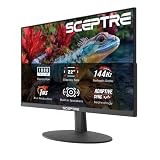
Key takeaways
- Pro: 120Hz refresh at 4K IPS for well under $250 is uncommon and benefits both gaming and smooth scrolling
- Pro: FreeSync Premium support eliminates tearing in supported GPU setups without adding cost
- Con: The 5ms response time is average for IPS; fast competitive play may still show some ghosting
What's inside
Buying a 4k monitor 27 inch for the first time usually means you want crisp text on a productivity machine or a sharper picture in a game without the cost of a 32-inch panel. At this size, pixel density hits around 163 PPI, which is high enough that panel quality, motion handling, and uniformity become the real differentiators rather than the resolution number itself. Yet the market is crowded with models that look identical on a spec sheet and perform very differently in a dim room or fast-paced title.
What separates a worthwhile 4K 27-inch display from a mediocre one comes down to three things: whether the refresh rate and response time claims hold up together, whether color coverage is verified by panel type rather than marketing language, and whether the price reflects a real advantage over competing models. We compared published specs, listed prices, and aggregated owner feedback across the eight monitors below to cut through the noise and surface the options that make sense in 2026.
As an Amazon Associate we earn from qualifying purchases at no extra cost to you. Product prices and availability are accurate as of the date shown and are subject to change.



Quick Picks
| Product | Best For | Price |
|---|---|---|
| Dell S2725QS | Smooth gaming on a budget | $249.99 |
| Samsung ViewFinity S70H | Everyday productivity | $199.99 |
| ASUS VY27UQ | Clean desk setups with speakers | $179 |
| Dell S2725QC | Color accuracy with high refresh | $299.99 |
| Acer Nitro VG270K L1 | Gaming flexibility with DFR | $179.99 |
| LG 27US500-W | Eye comfort and borderless design | $219.90 |
| LG 27UP850K-W | HDR content consumption | $299.99 |
| Philips 27E1N1800A | Multimedia on a tight budget | $189.99 |
How We Picked
We evaluated each monitor on four criteria: first, whether the refresh rate and response time pairing is realistic for the panel type rather than a marketing best-case figure; second, color coverage relative to panel technology and price tier; third, connectivity and built-in features that reduce desk clutter; and fourth, overall value—meaning the price represents a tangible spec advantage over the next closest competitor rather than a minor branding premium.
The 8 Best 4K Monitor 27 Inch in 2026
Dell 27 Monitor S2725QS
This is the entry point for anyone who wants a genuine 120Hz IPS panel at 4K without paying flagship prices. The S2725QS combines 4K UHD resolution with 120Hz refresh and a 5ms response time, plus FreeSync Premium for tear-free gaming. Owner feedback frequently praises the panel uniformity and the stand’s ergonomics for a monitor at this price tier.
- Pro: 120Hz refresh at 4K IPS for well under $250 is uncommon and benefits both gaming and smooth scrolling
- Pro: FreeSync Premium support eliminates tearing in supported GPU setups without adding cost
- Con: The 5ms response time is average for IPS; fast competitive play may still show some ghosting
Skip this if your primary workload is professional color grading and you need wider gamut coverage than a standard IPS panel delivers at this price.
Samsung 27″ ViewFinity S7 (S70H)
The ViewFinity S7 targets office and home-office users who want a clean 4K panel without gaming-specific features they won’t use. At $199.99, it undercuts most 120Hz competitors while delivering the sharp text and wide viewing angles that matter for spreadsheet work and long reading sessions. The design language is minimal and pairs well with Samsung ecosystem docks.
- Pro: Lowest 4K 27-inch price from a major brand with consistent panel quality reports
- Pro: Matte finish reduces reflections in bright rooms without sacrificing perceived sharpness
- Con: Standard refresh rate limits motion smoothness for gaming or video scrubbing
Skip this if you game at all or need a high refresh rate for smooth cursor work; the price advantage disappears when you factor in your primary use case.
ASUS VY27UQ 27 Inch
The VY27UQ earns the $179 price point by bundling HDMI, DisplayPort, and built-in speakers into a 4K IPS panel—making it ideal for anyone replacing a monitor with separate speakers in a compact workspace. ASUS pairs a no-fuss design with the connectivity options most users actually need, and the integrated audio is adequate for calls and casual media.
- Pro: Built-in speakers remove a peripheral and reduce desk cable clutter
- Pro: Full HDMI and DisplayPort connectivity without needing adapters
- Con: No high refresh rate or adaptive sync means gaming performance is limited
Skip this if you own quality external audio already and would prefer those savings redirected toward panel performance features like higher refresh or better color coverage.
Dell 27 Monitor S2725QC
The S2725QC steps up from its sibling by adding 99% sRGB coverage and improving response time to 4ms while keeping the 120Hz refresh and FreeSync Premium. At $299.99, it bridges the gap between pure gaming monitors and professional displays, making it a strong choice for hybrid users who both edit photos and play games on the same setup.
- Pro: 99% sRGB coverage at a gaming refresh rate makes it genuinely versatile for mixed workloads
- Pro: 4ms response time is noticeably better than the 5ms sibling for fast motion clarity
- Con: The $50 premium over the S2725QS only pays off if color accuracy is a real priority
Skip this if you only game and don’t care about sRGB accuracy—the S2725QS delivers the same core experience for less money.
Acer Nitro 27in VG270K L1
Acer’s Nitro VG270K L1 offers a 4K IPS panel with a DFR mode that lets you switch between native 72Hz at full 3840×2160 resolution and 144Hz at a lower resolution. This flexibility is useful for competitive players who prioritize frame rate in multiplayer titles but want crisp 4K for single-player games and desktop use.
- Pro: DFR gives you two refresh options depending on whether resolution or speed matters more in the moment
- Pro: At $179.99 it is one of the cheapest ways to get 4K IPS with a gaming-oriented feature set
- Con: Native 72Hz is a compromise for pure 4K gaming; you need DFR for smoothness
Skip this if you want true 4K at 120Hz or higher without resolution reduction; the DFR trick works but isn’t the same as native high refresh.
LG 27US500-W Ultrafine
The LG 27US500-W differentiates itself with a borderless design, HDR10 support, Reader Mode, and Flicker Safe technology—features that prioritize long-session comfort over raw speed. At $219.90, it sits between productivity and entertainment, and the white finish makes it a visible design statement on lighter desks. Switch App integration adds smart-home and multi-device connectivity.
- Pro: Reader Mode and Flicker Safe reduce eye strain during long text-heavy sessions
- Pro: Borderless bezels create a clean multi-monitor setup appearance
- Con: No high refresh rate or gaming sync features; this is not a performance display
Skip this if you care about motion clarity or gaming response; the comfort features are real but come at the expense of performance specs.
LG 27UP850K-W 27-inch Ultrafine
The 27UP850K-W carries a DisplayHDR 400 certification, which means it can hit higher peak brightness levels than SDR-only competitors for HDR video content and games. Combined with LG’s IPS panel and 4K resolution, it makes HDR material actually look punchy rather than just technically present. The white Ultrafine design language also positions it as a creative-studio display.
- Pro: DisplayHDR 400 delivers visible brightness improvement in supported HDR content compared to uncertified panels
- Pro: Consistent color accuracy across viewing angles typical of quality LG IPS panels
- Con: At $299.99 it competes with the Dell S2725QC, which offers gaming features at the same price
Skip this if you primarily game rather than consume HDR video or edit content; the Dell sibling at the same price brings refresh rate advantages.
Philips 27″ Computer Monitor 27E1N1800A
Philips packs a 4K UHD IPS panel with HDR support and built-in speakers into a $189.99 chassis, making it a strong all-in-one value for budget-conscious buyers who want both picture quality and sound without separate peripherals. The no-frills design focuses on the panel itself rather than stands or extra connectivity, which keeps the cost down.
- Pro: Built-in speakers at this price remove a $20-30 peripheral from your setup budget
- Pro: IPS panel with HDR support delivers solid color and contrast for media consumption
- Con: Lacks the refresh rate or sync features needed for competitive or even casual gaming
Skip this if your primary use is gaming; the feature set is tuned for media and productivity, and the price savings vanish when you add a separate speaker system.
Buying Guide
Refresh Rate vs. Response Time: Why Both Matter
A 120Hz panel feels smooth for gaming and desktop scrolling, but only if the response time keeps up. Look for 5ms or lower at IPS panels for noticeable motion clarity; anything above that will show smearing in fast scenes. Don’t confuse DFR marketing—where a monitor drops resolution to hit higher refresh—with true native performance.
Color Coverage Claims and What They Mean in Practice
Percentages like 99% sRGB are only useful when the panel type supports them consistently. An IPS panel with verified sRGB coverage will deliver accurate color across viewing angles; a VA or TN panel might claim similar numbers but shift visibly off-axis. If color accuracy matters for your work, verify panel type before trusting the coverage figure.
Built-in Features That Save Money vs. Ones That Don’t
Speakers, HDR certification, and ergonomic stands all add cost. Speakers are fine for calls but replaceable cheaply, so only factor them into value if you would otherwise buy audio gear anyway. DisplayHDR 400 is a genuine brightness tier that makes HDR content visible; unverified HDR claims are marketing. Prioritize ergonomic stands over decorative features at this size.
Our Verdict
Top pick: The Dell S2725QS delivers the best balance of 4K resolution, 120Hz refresh, and reasonable price under $250, making it the right call for most readers who want a single monitor for both games and work.
Budget pick: The ASUS VY27UQ at $179 offers the lowest entry price for 4K IPS with usable built-in speakers and full connectivity, ideal for someone keeping a tight budget and a clean desk.
When another wins: If your priority is HDR video or content creation over gaming, the LG 27UP850K-W’s DisplayHDR 400 certification and color consistency justify its $299.99 price over gaming-focused alternatives at the same tier.
FAQ
Is 4K worth it on a 27-inch monitor?
Yes, if you use scaling properly. At 27 inches, 4K gives roughly 163 PPI, which makes text noticeably crisper than 1080p at the same size. The tradeoff is that you will need to use OS scaling (125-150%) for comfortable text size, and some older games do not render well at 4K without upscaling.
Do I need a 120Hz 4K monitor for productivity?
Not strictly, but it helps. Higher refresh makes scrolling, window dragging, and cursor movement feel smoother, which reduces perceived lag during long work sessions. A 60Hz 4K panel is perfectly usable for spreadsheets and reading; the benefit is most noticeable if you switch between tasks frequently or use the monitor for casual video.
Is DisplayHDR 400 a meaningful certification?
It requires a minimum peak brightness of 400 nits and basic local dimming or edge-lit contrast ratios, which is enough to make HDR content visibly brighter than SDR. It is not the highest tier, but unlike uncertified HDR claims, it provides a verifiable floor that guarantees you will see the difference.
What panel type should I choose at 27 inches?
IPS is the clear default at this size for gaming and productivity because of consistent viewing angles and color reproduction. VA panels offer higher contrast but can exhibit ghosting in dark transitions. TN panels are essentially extinct at 4K 27-inch and are not worth considering unless price is the only factor.