Key takeaways
- Table of Contents 7 sections 10 min read 1 Quick Verdict 2 Side by Side 3 Where Fabric Gaming Chair Wins 4 Where Real Leather Gaming Chair Wins 5 Cost Over 5 Years 6 Which One for Your Home 6.1…
What's inside
Choosing between a fabric gaming chair and a real leather gaming chair is less about which material looks more premium and more about how the chair will live in your home. Will it sit in a warm bedroom, a compact apartment, or a busy family room? Do you snack at your desk, share the chair with pets, or plan to keep it for a decade? The right upholstery affects comfort, cleaning, appearance, noise, and the total cost of ownership.
Fabric gaming chairs usually offer a softer, cooler sitting experience at a lower price. Real leather gaming chairs bring a smoother finish, easier wipe-clean maintenance, and a more substantial furniture-like appearance, but they cost more and need protection from heat, sunlight, and careless spills. This comparison breaks down the practical differences so you can choose confidently in 2026.
As an Amazon Associate we earn from qualifying purchases at no extra cost to you. Product prices and availability are accurate as of the date shown and are subject to change.



Quick Verdict
Choose a fabric gaming chair if you prioritize breathability, softness, lower upfront cost, and comfort during long sessions. Fabric is particularly appealing for warm rooms, bedrooms, and buyers who want a chair that feels less like office equipment and more like a cushioned lounge seat.
Choose a real leather gaming chair if you want a polished look, fast cleanup, and upholstery that can develop character over time. Leather is a better match for a dedicated office, a visible living space, or someone willing to spend more initially and maintain the material properly.
One important buying detail: “leather gaming chair” listings often describe PU, faux, or bonded leather rather than real animal hide. The Dowinx Breathable PU Leather Gamer Chair, listed at $149.99, is an example of a synthetic-leather option rather than a real leather comparison. Always check whether a listing says genuine, top-grain, full-grain, bonded, or PU leather before comparing prices.
Side by Side
| Factor | Fabric gaming chair | Real leather gaming chair |
|---|---|---|
| Comfort | Soft, less slippery, and usually more breathable | Smooth, supportive, and often firmer; can feel warm |
| Durability | Resists peeling but can snag, stain, or flatten | Can last many years with care; may scratch, crack, or dry out |
| Typical price range | About $80–$250 for common gaming models | About $300–$900 or more for genuine leather models |
| Maintenance | Vacuuming and spot-cleaning; stains may require upholstery treatment | Quick wipe-downs plus leather conditioner every 6–12 months |
| Heat and moisture | Generally cooler and more forgiving in humid rooms | Can feel hot and sticky; moisture should be wiped away promptly |
| Space needed | Usually a 26–30-inch-wide footprint, plus recline clearance | Similar footprint, but heavier frames may be harder to move |
| Look | Casual, soft, and available in understated colors | Polished, executive, and more furniture-like |
| Resale | Moderate if clean and odor-free | Potentially stronger if the hide remains in excellent condition |
| Best for | Warm rooms, long sessions, budgets, and relaxed home offices | Visible offices, easy cleanup, and long-term furniture buyers |
Where Fabric Gaming Chair Wins
Fabric feels cooler during long sessions. Woven upholstery allows more air movement than leather, so it is less likely to feel sticky against bare legs or a T-shirt. That difference matters if you play or work for four to eight hours at a time, especially in a room without strong air conditioning.
It provides a softer, less slippery seat. Leather can allow clothing to shift when you recline, while fabric tends to hold you in place. The surface also feels less formal and more comfortable in a bedroom or multipurpose room. Many fabric chairs use thick foam or pocket-spring cushions, which can improve initial cushioning, although the frame, foam density, and adjustment range still matter more than the upholstery alone.
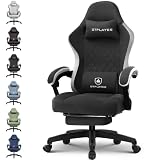
Fabric often delivers more chair for the money. Current examples show how competitive this category is: the GTPLAYER fabric chair with a pocket-spring cushion, footrest, and 350-pound capacity is listed at $113.33. A second GTPLAYER model with a pocket-spring cushion, linkage armrests, and footrest is listed at $109.15. Those prices leave room in a modest budget for a floor mat, monitor arm, or replacement casters.
It avoids the peeling problem associated with cheap synthetic leather. Fabric can wear, stain, or develop flattened areas, but it does not typically flake into small vinyl pieces. That distinction is valuable when comparing fabric with budget PU chairs rather than genuine leather. For households that dislike the appearance of peeling upholstery, fabric may age more gracefully.
The trade-off is cleanup. Dust, crumbs, body oils, and pet hair can settle into the weave. A fabric chair benefits from weekly vacuuming with an upholstery attachment and immediate blotting when a spill occurs. Avoid soaking the cushion, since moisture can linger inside the padding.
Where Real Leather Gaming Chair Wins
Real leather is easier to clean after everyday accidents. A fresh drink spill, snack crumb, or light dust layer can usually be removed with a soft cloth. That convenience is one of leather’s strongest advantages in an office where food and beverages are common. It does not make leather stain-proof: ink, dye transfer, grease, and standing moisture can still cause permanent damage.
It offers a more refined appearance. A well-made leather chair can blend with a wood desk, bookcase, or traditional home office more naturally than a brightly styled gaming chair. Neutral black or brown leather is less visually tied to a particular gaming setup and may remain attractive if your room changes later.
Quality leather can improve with age. Genuine leather may develop a patina, meaning subtle changes in color and surface character caused by use. This is different from synthetic leather, which may crack or peel when its surface coating breaks down. However, real leather quality varies widely. Corrected-grain and heavily coated hides may not age like full-grain leather, so ask for the leather grade rather than relying on the word “leather” in a product title.
Leather’s disadvantages are heat, weight, and price. A genuine leather chair commonly costs several hundred dollars more than an entry-level fabric model. It may also weigh 45–70 pounds, compared with roughly 35–55 pounds for many fabric gaming chairs, though construction varies. Make sure your floor can accommodate a wide base and that you have at least 24–36 inches behind the chair if you plan to use a reclining backrest.
Cost Over 5 Years
Upfront price is only part of the calculation. Fabric gaming chairs currently span roughly $80–$250 for common consumer models, with the N-GEN GAMING high-back chair listed at $79.96 as a budget reference. A genuine leather chair may cost approximately $300–$900 or more, depending on the hide, mechanism, cushioning, and warranty. Do not use the $149.99 Dowinx PU chair as a genuine-leather price benchmark; synthetic leather is a different material category.
Over five years, a $120 fabric chair costs about $2 per month before replacement parts. If it lasts three years and you buy a second chair, the five-year upholstery cost is closer to $240. A $500 real leather chair costs about $8.33 per month over five years, excluding conditioning products. If the leather remains comfortable and structurally sound for eight to ten years, its annual cost can become competitive with replacing lower-priced chairs repeatedly.
Also budget $20–$60 for a chair mat if you have hard flooring, $10–$25 for a fabric-safe cleaner or leather conditioner, and possible replacement casters costing about $20–$50. These accessories protect both chair and floor regardless of upholstery.
Which One for Your Home
Small apartment
Fabric is usually the better choice for a small apartment because it feels lighter visually and is often easier to move. Measure the desk area first: allow approximately 26–30 inches of chair width and enough clearance to pull out from the desk without blocking a walkway. A footrest or deep recline can require additional floor space, so treat those features as optional if every inch matters.
Family with kids or pets
Real leather wins for quick cleanup, but only if you are buying genuine, well-finished leather and can prevent scratching. Cats’ claws can puncture leather, while dogs and children can stain fabric. If pets regularly climb on the chair, a durable fabric cover may be less stressful and less expensive to replace. In either case, choose a dark, tightly finished upholstery and keep drinks away from the desk.
Rental
Fabric is the safer rental choice for most people. It usually costs less to replace, and a lighter chair is easier to move during a lease change. Use a protective mat on hard floors and check the chair’s maximum height so it fits under the existing desk. If the chair will sit in a living room, choose a neutral fabric rather than oversized racing stripes or bright accent panels.
Long-term home
Real leather makes more sense when the chair is part of a permanent office and you value furniture that can stay with you. Spend more attention on the mechanism, warranty, seat width, lumbar adjustment, and armrest range than on upholstery alone. A beautiful hide cannot compensate for a seat that is too narrow or a backrest that leaves your shoulders unsupported.
FAQ
Is fabric or real leather better for long gaming sessions?
Fabric is generally better for heat management and a non-slip feel. Real leather can be equally supportive, but it may feel warmer and stickier after several hours. Cushion shape, seat depth, lumbar support, and the ability to recline are more important than material if your posture is the main concern.
Does real leather gaming chair upholstery peel?
High-quality real leather does not peel in the same way as a thin PU coating, although it can crack, dry, scratch, or wear through if neglected. Many chairs advertised as leather use PU, faux, or bonded leather, which can peel as the surface coating ages. Read the material specification carefully.
Can fabric gaming chairs be cleaned?
Yes. Vacuum regularly, blot spills instead of rubbing them, and use a cleaner labeled for the specific upholstery. Test any product on a hidden area first. Avoid saturating the foam, and allow the chair to dry completely before using it.
What should matter more than upholstery?
Check the seat width and depth, height range, weight capacity, base stability, recline lock, armrest adjustments, warranty, and return policy. As a practical starting point, look for a seat that leaves about 1–2 inches between your knees and the edge, supports your weight with margin, and fits your desk without forcing your shoulders upward.