Key takeaways
- Adobe Photoshop and Illustrator: prioritize pressure-sensitive brush support, stable drivers, and application-specific shortcut profiles.
- Clip Studio Paint: tilt, rotation, pen pressure curves, and many customizable keys are useful for comics and line art.
- Krita: verify current driver behavior and pressure recognition on your operating system before relying on a tablet for professional work.
- Blender and 3D applications: a screenless tablet can be efficient for sculpting and texture work, but shortcut customization is more important than display resolution.
- ChromeOS or Android: check for explicit support rather than assuming a USB-C port will provide pen input.
The best drawing tablets for digital artists depend on one practical choice: choose a screenless tablet for value and portability, a pen display for direct-on-canvas control, or a larger professional tablet when active area, shortcut access, and pen precision matter more than desk space.
Quick picks by artist and workspace
| Situation | Best tablet type | Useful target specifications | Why it fits |
|---|---|---|---|
| Beginner, student, or small desk | Compact screenless tablet | 6 x 4 inches active area, 4,096–8,192 pressure levels | Low cost, light weight, and no display to scratch or color-calibrate |
| Illustrator who wants direct drawing | 13–16-inch pen display | 13.3–16 inches, laminated glass, 1080p or better | The cursor appears beneath the pen, reducing hand-eye adjustment |
| Comic artist or painter using a desktop | Large screenless or 22-inch pen display | 10 x 6 inches or larger active area; 21.5–22 inches for a display | More room for broad strokes, references, and complex compositions |
| Traveling artist | Small screenless tablet | Under 1.5 lb and roughly 8 x 6 inches overall | Fits beside a laptop without adding a second fragile screen |
| Artist with wrist or shoulder discomfort | Medium-to-large tablet with adjustable stand | 8 x 5 inches or larger active area; 15–30-degree drawing angle | Reduces cramped strokes and lets the forearm work more naturally |
Screenless versus display tablets
A screenless tablet has a separate drawing surface and sends the pen position to your monitor. The main advantage is value: a good model may cost about $40–$350, leaves your view unobstructed, and usually weighs less than a pen display. It also keeps your neck at a more ergonomic distance because you look at the monitor rather than bending over a tablet.
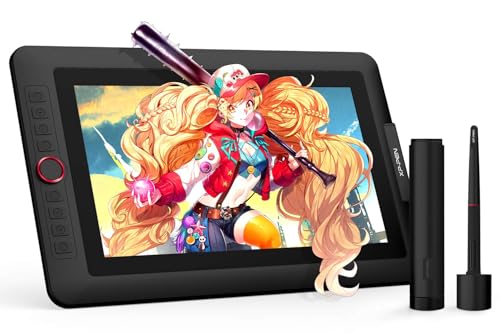
XPPen Artist 13.3 Pro V2 Drawing Tablet with Screen, 16K, Full-Laminated
Included for 'Best Drawing Tablets for Digital Artists' because the listing specifies 16K and Full-Laminated, details this guide uses to compare options.
View on Amazon
PicassoTab 10" Standalone Drawing Tablet, No Computer Needed, Portable, A10
Included for 'Best Drawing Tablets for Digital Artists' because the listing specifies No Computer Needed and Portable, details this guide uses to compare options.
View on Amazon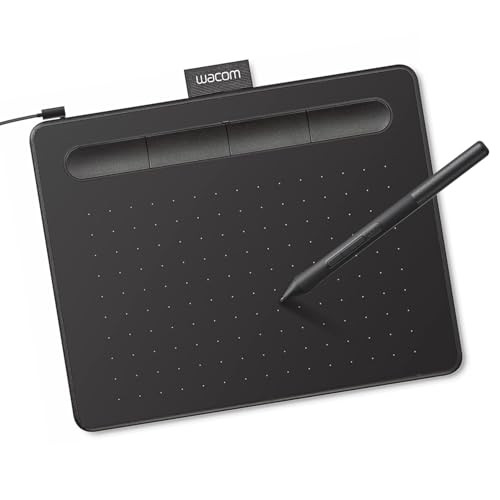
Wacom Intuos Small, Wired Graphic Drawing Tablet with Pen + Software
Included for 'Best Drawing Tablets for Digital Artists' because the listing specifies Wired Graphic Drawing Tablet with Pen + Software, details this guide uses to compare options.
View on Amazon
XPPen Artist 12 3rd 11.9" Drawing Tablet with Screen, 16K, X4 Pen, AG Glass
Included for 'Best Drawing Tablets for Digital Artists' because the listing specifies 16K and X4 Pen, details this guide uses to compare options.
View on AmazonThe adjustment period is the important trade-off. Your hand draws on the desk while your eyes follow a different surface. Most artists adapt quickly, but very small tablets can make arm movement feel restricted, while an oversized tablet may require more shoulder movement than you want. Models such as the Wacom Intuos Pro, One by Wacom, Huion Inspiroy range, and XP-Pen Deco range represent this design.
A pen display puts the artwork directly under the stylus. This is usually easier for painting, masking, handwriting, and precise line placement, especially for beginners moving from paper. The disadvantages are higher cost, extra cables, heat, glare, and a second display that needs color and brightness adjustment. Expect roughly $200–$1,500 depending on size, resolution, build, and professional features. Wacom Cintiq models, Huion Kamvas displays, and XP-Pen Artist displays are established examples.
Do not assume a display tablet is automatically more accurate. A well-calibrated screenless tablet can produce extremely precise strokes. The display mainly changes your visual workflow; pressure response, driver quality, pen tracking, and your software settings determine how the stroke feels.
Active area: match the tablet to your monitor
Active area is the part of the surface that registers the pen, excluding bezels and shortcut buttons. A 6 x 4-inch area is adequate for photo retouching, notes, and compact laptop setups. An 8 x 5-inch area is the safest general-purpose size. A 10 x 6-inch or larger area suits painters, comic artists, and people working on a 27-inch monitor.
Monitor arrangement matters. If you use two screens, map the tablet to one display when possible. Mapping it across both monitors can make each pen movement span a very wide desktop, reducing control. On a 13–16-inch pen display, the physical screen itself is the active drawing area, so the key question is whether the display is large enough for your tools and reference windows.
Measure your desk before buying. A 16-inch pen display may occupy about 15–18 inches of width and 10–12 inches of depth once its stand and cables are included. Leave at least 3 inches behind it for connectors and ventilation, plus 6–8 inches at the side for a keyboard or shortcut controller. A 22-inch display commonly needs around 22–25 inches of width and 14–17 inches of depth. In a 10 x 12-foot room, either can fit on a normal 48–60-inch desk, but a 22-inch model can crowd speakers, a keyboard, and a gaming monitor.
Pressure levels and pen accuracy: what specifications mean
Pressure levels describe how many input steps the pen can report from a light touch to maximum pressure. Modern tablets commonly list 4,096, 8,192, or higher levels. Once a tablet reaches 8,192 levels, nib control, initial activation force, software curves, and your own hand control usually matter more than a larger quoted number. For line artists, a low initial activation force is especially valuable because faint strokes begin without pressing hard.
Look for tilt support if you shade with the side of the nib or use pressure-sensitive brush engines. Around 60 degrees of tilt recognition is common. Pen accuracy is influenced by report rate, hover distance, calibration, cursor lag, and interference from the display. A laminated pen display, in which the glass and image layer are closely bonded, generally reduces visible parallax. Non-laminated screens may show a small gap between the nib and cursor, particularly near the edges.
Battery-free pens are convenient because they do not need charging. They may use electromagnetic resonance or another passive system, depending on the manufacturer. Check whether replacement nibs and a pen holder are included, and whether the pen has two programmable buttons. A comfortable barrel and stable nib can matter more during a four-hour drawing session than a headline pressure figure.
Shortcut controls and everyday workflow
Express keys can speed up undo, brush size, zoom, pan, and modifier keys such as Shift or Alt. Eight to twelve physical keys are useful when you work without a keyboard. Touch rings or dials are particularly effective for brush size and canvas rotation, but they can be less valuable if you already use a mechanical keyboard or a dedicated control pad.
Buttons are most useful when they can be assigned per application. A shortcut arrangement for Photoshop may not suit Clip Studio Paint, Krita, Illustrator, or Blender. Consider the location as well: left-side controls suit right-handed users, while reversible models are better for left-handed drawing. Touch surfaces can be convenient, but accidental gestures may interrupt a precise stroke; a model that lets you disable touch is safer for detailed work.
Software compatibility and operating-system checks
Before buying, confirm support for your operating system and the exact software you use. Widely compatible tablets generally work with Windows and macOS, while some models also support ChromeOS or Android through a USB-C connection. Compatibility with an operating system does not guarantee that every shortcut, touch gesture, or display feature will work.
- Adobe Photoshop and Illustrator: prioritize pressure-sensitive brush support, stable drivers, and application-specific shortcut profiles.
- Clip Studio Paint: tilt, rotation, pen pressure curves, and many customizable keys are useful for comics and line art.
- Krita: verify current driver behavior and pressure recognition on your operating system before relying on a tablet for professional work.
- Blender and 3D applications: a screenless tablet can be efficient for sculpting and texture work, but shortcut customization is more important than display resolution.
- ChromeOS or Android: check for explicit support rather than assuming a USB-C port will provide pen input.
Pen displays may need HDMI, DisplayPort, or USB-C video output in addition to USB data and power. A USB-C connector on the tablet does not always mean one-cable operation; your computer must support the required video mode and power delivery.
Head-to-head: screenless tablet or pen display?
| Decision factor | Screenless tablet | Pen display |
|---|---|---|
| Typical price | About $40–$350 | About $200–$1,500 |
| Desk depth needed | About 8–14 inches | About 10–20 inches including stand |
| Visual hand-eye coordination | Requires adjustment | Usually immediate and intuitive |
| Neck and heat | Typically cooler and easier to position ergonomically | Can encourage leaning forward; screen may generate heat |
| Portability | Usually lighter and more durable | More cables, larger case, and a fragile glass panel |
| Best reason to buy | Maximum control per dollar | Direct on-screen drawing and natural placement |
Buying advice for common situations
For a first tablet: choose an 8 x 5-inch screenless model with a battery-free pen, tilt support, and four to eight programmable keys. It gives enough room to learn without paying for a display before you know your preferred workflow.
For professional illustration: consider a 10 x 6-inch screenless tablet or a 16-inch pen display. Prioritize consistent drivers, low pen latency, replaceable nibs, and a stand with several angle settings over an extreme pressure-level number.
For a small apartment or shared desk: use a compact screenless tablet or a 13-inch display. Store the tablet vertically in a sleeve when not in use, and measure the desk with the keyboard, speakers, and monitor already positioned.
For long sessions: avoid placing a large display flat on the desk. Raise it with a stable stand to roughly 15–30 degrees, keep the top edge near eye level, and leave room to move the drawing arm. A tablet cannot compensate for an unsuitable chair, desk height, or cramped posture.
What wears out and what to budget for
The nib is normally the first consumable. Heavy, fast strokes can wear one down in weeks or months, while light use may extend it much longer. Screen protectors can reduce surface wear, but they also change friction and may soften the image slightly. Cables, shortcut switches, and pen buttons are the next practical failure points, especially when a tablet is repeatedly packed for travel.
Budget for replacement nibs, a protective sleeve, and possibly a stand. A screenless tablet usually fits in a laptop bag. A 16-inch display often needs a case with a compartment for its power adapter, video cable, and stand; its total packed weight can reach roughly 6–12 pounds. Check doorway and desk access before choosing a 22-inch display, particularly if the furniture must be carried up narrow stairs.
Final recommendation
For most digital artists, the best balance is an 8 x 5-inch or 10 x 6-inch screenless tablet with 8,192 pressure levels, tilt support, application-specific shortcuts, and reliable Windows/macOS drivers. Choose a 13–16-inch pen display if drawing directly on the image is worth the added cost and desk space. Move to a larger professional model only when your compositions, posture, or multi-window workflow clearly require the additional active area.