Shopping for a gaming PC under $1,500 in 2026 is trickier than it looks. The RTX 50-series has pushed 1440p high-refresh gaming into genuinely affordable territory, but the market is now crowded with prebuilts that pair a strong GPU with a weak CPU, skimp on the power supply, or quietly ship 16GB of RAM in a system that badly needs 32GB. Spec sheets rarely tell you which corners were cut, and the difference between a well-balanced build and a bottlenecked one can be 30% of your frame rate.
This guide cuts through that noise. We’ve focused on machines that stay realistically within a $1,500 ceiling, prioritizing balanced components, adequate cooling, and upgrade headroom over flashy RGB and inflated marketing claims. Below you’ll find our shortlist, a practical buying framework, honest reviews of each pick, and answers to the questions we hear most from readers building their first serious gaming rig.
Our top picks
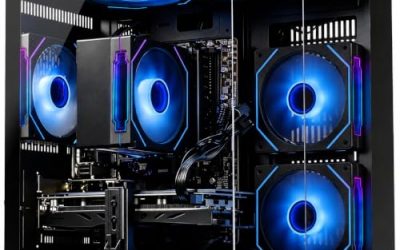
 KOTIN Prebuilt Gaming PC RTX 5070 12GB
- POWERED BY RTX 5070 12GB + RYZEN 7…
- 32GB DDR5 6000MHz MEMORY & 1TB NVMe SSD…
- IN 11.3-INCH Smart DISPLAY - An integrated smart…
 msi Codex Z2 Gaming Desktop: AMD R7-8700F
- Driven by the AMD Ryzen 7 8700F with…
- The NVIDIA GeForce RTX 5070 is powered by…
- Simplistic Design: Enjoy the latest generation of Windows…
 STGAubron Gaming PC Desktop
- This Gaming PC Desktop is well-suited for a…
- This high-performance Gaming Computer Desktop is capable of…
- PC Gaming System: This gaming computer desktop is…
| Product | Key specs | |
|---|---|---|
| KOTIN Prebuilt Gaming PC RTX 5070 12GB | POWERED BY RTX 5070 12GB + RYZEN 7… 32GB DDR5 6000MHz MEMORY & 1TB NVMe SSD… IN 11.3-INCH Smart DISPLAY - An integrated smart… | Check price |
| msi Codex Z2 Gaming Desktop: AMD R7-8700F | Driven by the AMD Ryzen 7 8700F with… The NVIDIA GeForce RTX 5070 is powered by… Simplistic Design: Enjoy the latest generation of Windows… | Check price |
| STGAubron Gaming PC Desktop | This Gaming PC Desktop is well-suited for a… This high-performance Gaming Computer Desktop is capable of… PC Gaming System: This gaming computer desktop is… | Check price |
 Alienware Aurora Gaming Desktop Alienware Aurora Gaming Desktop | Legend perfected: Modern design with a matte basalt… Game changing graphics: Step into the future of… Marathon gaming unlocked: This high-performance technology ensures clean… | Check price |
 Lenovo Legion Tower 5i Lenovo Legion Tower 5i | Whether you’re dominating the leaderboard, streaming your gameplay… The Intel Core Ultra 7 265F CPU is… The NVIDIA GeForce RTX 5070 Ti GPU is… | Check price |
 CyberPowerPC Gaming PC CyberPowerPC Gaming PC | System: AMD Ryzen 5 5500 3.6GHz 6 Cores… Graphics: AMD Radeon RX 6500 XT 4GB Graphics… Connectivity: 4 x USB-A 3.2 | 4 x… | Check price |
 Dell Gaming Tower Desktop PC Dell Gaming Tower Desktop PC | Processor: Intel Core i5-7500 7th Gen Memory: 16GB DDR4 RAM Storage: 256GB SSD | Check price |
 YAWYORE Gaming PC YAWYORE Gaming PC | CPU: AMD Ryzen7 5700X (up to 4.6GHz) 8-Core… Main board: MSI B550M-A PRO motherboard provides reliable… GPU: Geforce RTX 5060 8GB GDDR7 Graphics Cards… | Check price |
As an Amazon Associate we earn from qualifying purchases at no extra cost to you.
⚡ Save on Your Next PC — Amazon Prime
Prime members get fast free shipping on the systems above, plus early access to Prime Day & Black Friday PC deals. New members get a 30-day free trial.
Watch: Best Gaming PC Under $1500 — Video Review
How to Choose Gaming PC Under $1500
- Match the GPU to your monitor: An RTX 5070 is the sweet spot for 1440p high-refresh gaming and comfortably handles 1080p at max settings. If you’re still on a 1080p 60Hz display, you can save meaningfully by stepping down a tier — and if you’re targeting 1440p ultra or light 4K, stretch for the 5070 Ti.
- Don’t ignore the CPU pairing: A modern Ryzen 7 or Core Ultra 7 keeps a 5070-class GPU fed. Older or entry-level chips like a Ryzen 5 5500 will bottleneck fast-paced competitive titles, especially at 1080p where CPU load is highest.
- 32GB DDR5 is the new baseline: Sixteen gigabytes still works for pure gaming, but it’s increasingly tight if you stream, run a browser with 40 tabs, or play sim titles with heavy mods. At this budget, 32GB should be standard, not a premium add-on.
- Check storage capacity, not just speed: A 1TB NVMe drive fills up after roughly six or seven modern AAA installs. If a build ships with 512GB, budget another $60–$80 for a second drive and confirm there’s a free M.2 slot before you buy.
- Verify the PSU and upgrade path: Look for at least a 650W unit with an 80+ Bronze rating or better. Also check whether the case uses a standard ATX motherboard and power supply — proprietary layouts from some big-brand OEMs make future GPU upgrades far more expensive than they should be.
The Best Picks Reviewed
KOTIN RTX 5070 Gaming PC (Ryzen 7 9700X)
This is the most balanced spec sheet on the list: a Ryzen 7 9700X paired with an RTX 5070, 32GB of DDR5, and a 1TB NVMe drive hits every box we look for at this price without obvious compromises. Expect comfortable 1440p high-refresh performance in nearly everything, with a Zen 5 CPU that won’t hold the GPU back for years.
MSI Codex Z2 (R7-8700F, RTX 5070)
MSI’s Codex Z2 doubles the storage to 2TB, which is the single upgrade most buyers underestimate, and adds front USB Type-C plus a properly ventilated chassis. The R7-8700F is a touch behind the 9700X in raw single-core speed, but the difference is marginal in GPU-bound scenarios and the extra SSD capacity is worth more to most people.
Lenovo Legion Tower 5i (Core Ultra 7 265F, RTX 5070 Ti)
If your budget stretches to the very top of the range, the 5070 Ti in the Legion Tower 5i delivers a meaningful step up at 1440p ultra and makes 4K gaming genuinely viable with DLSS. Lenovo’s thermal design and standardized internals are among the better ones in the prebuilt space, and the bundled Game Pass trial adds real value.
Alienware Aurora (RTX 5070, Core Ultra 7 265F)
The Aurora offers strong build quality, tidy cable management, and Dell’s support network, which matters if you’d rather not troubleshoot hardware yourself. Just be aware that Alienware’s chassis and PSU choices have historically limited DIY upgrades, so treat this as a machine you buy for what it is today rather than what you’ll expand it into.
STGAubron Core i7 (RX 580 8GB)
This is a budget-tier entry that sits far below the $1,500 cap, and it shows: the RX 580 is a decade-old GPU and 512GB of storage fills quickly. It’s only worth considering if you play esports titles at 1080p and want the absolute lowest entry price, but most buyers at this budget should spend more.
Frequently Asked Questions
Is an RTX 5070 enough for 1440p gaming in 2026?
Yes. The 5070 handles 1440p at high settings in virtually every current title, typically well above 60fps, and DLSS 4 gives you additional headroom in demanding ray-traced games. It’s the most sensible resolution-to-price match at this budget.
Should I buy a prebuilt or build it myself?
Building yourself usually saves 10–15% and gives you full control over parts. But prebuilts at this price have become genuinely competitive, come with a single warranty covering everything, and remove the risk of a compatibility mistake — a fair trade for most buyers.
Do I need 32GB of RAM for gaming?
For gaming alone, 16GB still works. But 32GB has become the practical baseline if you stream, multitask, or play heavily modded games, and DDR5 prices are low enough that it’s no longer a meaningful premium.
Can I upgrade the GPU later?
In most standard ATX prebuilts, yes — check that the PSU has enough wattage and the right connectors first. Systems from large OEMs sometimes use proprietary power supplies or cases, which makes a later GPU swap considerably more expensive.
Final Thoughts
For most buyers, the KOTIN RTX 5070 build offers the best raw value here, pairing a current-generation Ryzen 7 with the right amount of memory and no obvious weak links. The MSI Codex Z2 is the smarter pick if storage capacity matters to you, doubling the SSD for a similar outlay, while the Lenovo Legion Tower 5i earns its place at the top of the budget with a 5070 Ti that meaningfully extends how long the system stays comfortable at 1440p and above.