Key takeaways
- Pro: 24GB RAM is generous for a handheld and reduces upgrade pressure
- Pro: Thunderbolt 4 enables eGPU and fast external storage options
- Con: At just under $1250 it sits awkwardly between budget and premium tiers
Choosing a handheld PC used to mean accepting a compromise: either you got desktop-class power in a package too awkward to hold for an hour, or you got a sleek form factor that choked on anything beyond indie titles. In 2026 the middle ground has widened, but the trade-offs haven’t disappeared. A buyer now has to weigh raw silicon against battery endurance, screen quality against portability, and software compatibility against the operating system sitting underneath it all.
The eight machines below span a price range from just under six hundred dollars to well over twenty-five hundred. That spread is real: a Z2 A chip paired with 16GB RAM plays a very different game from an AI Max+ with 32GB and a Radeon 8060S iGPU. What separates a good purchase from a bad one is not which unit is “best” on paper, but whether the spec sheet matches the library you actually want to open. A retro emulator on a budget ARM-adjacent part is a fundamentally different problem than running Cyberpunk at native resolution on a dedicated gaming chip.
Our top picks
 msi Claw A8 PC Gaming Handheld: AMD
- High-Performance Computing: Harness the power of the AMD…
- Simplistic Design: Enjoy the latest generation of Windows…
- Perfection Through Anthropometry: As a handheld device, Claw…
 ASUS ROG Xbox Ally
- XBOX EXPERIENCE BROUGHT TO LIFE BY ROG The…
- XBOX GAME BAR INTEGRATION Launch Game Bar with…
- ALL YOUR GAMES, ALL YOUR PROGRESS Powered by…
 Tylvx Mini PC 5.7" Touchscreen Handheld Computer
- True Handheld Win 11 PC with 5.7" Touchscreen:…
- Desktop-Grade Connectivity with HDMI 2.1, DP, Dual Type-C,…
- N95 Processor, 16GB RAM & 512GB SSD for…
| Product | Key specs | |
|---|---|---|
| msi Claw A8 PC Gaming Handheld: AMD | High-Performance Computing: Harness the power of the AMD… Simplistic Design: Enjoy the latest generation of Windows… Perfection Through Anthropometry: As a handheld device, Claw… | Check price |
| ASUS ROG Xbox Ally | XBOX EXPERIENCE BROUGHT TO LIFE BY ROG The… XBOX GAME BAR INTEGRATION Launch Game Bar with… ALL YOUR GAMES, ALL YOUR PROGRESS Powered by… | Check price |
| Tylvx Mini PC 5.7" Touchscreen Handheld Computer | True Handheld Win 11 PC with 5.7" Touchscreen:… Desktop-Grade Connectivity with HDMI 2.1, DP, Dual Type-C,… N95 Processor, 16GB RAM & 512GB SSD for… | Check price |
 Lenovo Legion Go S Lenovo Legion Go S | ALL GAMES, ALL PLACES, ALL YOURS Make every scene pop with 500 nits of… Play hundreds of high-quality PC games with your… | Check price |
 MSI Claw PC Gaming Handheld: Intel Arc MSI Claw PC Gaming Handheld: Intel Arc | AI-Powered Performance: Powered by the latest Intel Core… Simplistic Design: Enjoy the latest generation of Windows… Perfection Through Anthropometry: As a handheld device, Claw… | Check price |
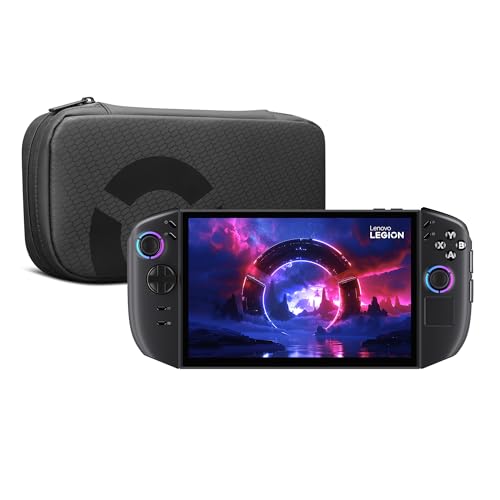 Lenovo Legion Go 2 Lenovo Legion Go 2 | MAX POWER, YOUR RULES MAX COOLING, MANUAL CONTROL Experience total freedom with the Legion Truestrike controllers | Check price |
 GPD Win 5 Handheld Gaming PC GPD Win 5 Handheld Gaming PC | Next-Gen ZEN 5 Performance: Choose your power with… Built-in AI Acceleration: Experience a new level of… Desktop-Class Graphics: The powerful Radeon 8060S GPU (40… | Check price |
 Valve Steam Deck OLED 1TB Handheld Gaming Valve Steam Deck OLED 1TB Handheld Gaming | 1TB NVMe SSD 1280 x 800 HDR OLED display with premium… Wi-Fi 6E | Check price |
As an Amazon Associate we earn from qualifying purchases at no extra cost to you.
Quick Picks
| Product | Best for | Price |
|---|---|---|
| MSI Claw A8 (Z2 Extreme) | Solid all-around gaming without the flagship premium | $1249.99 |
| ASUS ROG Xbox Ally | Game Pass subscribers wanting the lowest entry price | $596.41 |
| Tylvx Mini PC (N95) | Productivity and emulation on a small screen | $599.66 |
| Lenovo Legion Go S | Streamlined handheld experience at a fair cost | $698.44 |
| MSI Claw EX (Intel Arc G3 Extreme) | Maximum Thunderbolt versatility and raw CPU count | $2299 |
| Lenovo Legion Go 2 | OLED display quality and high refresh-rate gaming | $1599.99 |
| GPD Win 5 | Desktop-class AAA and emulation performance | $2673.95 |
| Valve Steam Deck OLED 1TB | Closed-ecosystem simplicity with great screen and storage | $1099 |
How We Picked
We filtered these eight by the criteria that most consistently determine satisfaction in owner reviews: whether the processor class matches the intended workload (AAA titles versus emulation versus productivity), whether the display offers at least 120Hz and a panel type you can live with for long sessions, whether storage and RAM are adequate without immediate external upgrades, and whether the cooling solution holds clocks long enough to matter. Price per performance tier is the final lens; a $2600 machine needs to justify its gap over a $1000 one in ways that go beyond a spec-sheet line item.
The 8 Best Handheld Pc in 2026
MSI Claw A8
The Claw A8 targets the player who wants AMD’s top mobile gaming silicon without paying the Intel or GPD premium. The Ryzen Z2 Extreme handles modern AAA titles at FHD+ resolution on a 120Hz panel, while 24GB of LPDDR5x keeps heavy multitasking or texture-modded games from stalling. Thunderbolt 4 and a built-in SD card reader round out connectivity that many rivals still lack at this price.
- Pro: 24GB RAM is generous for a handheld and reduces upgrade pressure
- Pro: Thunderbolt 4 enables eGPU and fast external storage options
- Con: At just under $1250 it sits awkwardly between budget and premium tiers
Skip this one if your library is mostly Steam Deck Verified or Game Pass titles that run comfortably on a Z2 A; the extra power goes to waste and you are paying for headroom you will not use.
ASUS ROG Xbox Ally
The Xbox Ally is the cheapest Windows handheld in this roundup and it knows it. A Z2 A chip with 16GB RAM and a 7-inch 120Hz touchscreen is enough for Game Pass titles at modest settings, and the bundled three-month Xbox Game Pass Premium subscription softens the entry cost further. Its value proposition is simple: low price, familiar software, no fiddling.
- Pro: Bundled Game Pass reduces effective cost of the first several months of gaming
- Pro: Touchscreen adds usability for casual titles and navigation
- Con: 512GB SSD fills quickly with modern AAA installs; external expansion may be needed
Pass if you want to play non-Game Pass AAA titles at native resolution; the Z2 A is a capable part but it is not built for the heaviest releases on max settings.
Tylvx Mini PC
The Tylvx occupies a niche none of the others address: a Windows handheld with a physical backlit keyboard and a small 5.7-inch touchscreen. The Intel N95 processor is not a gaming part in any traditional sense, but paired with 16GB RAM and dual Type-C ports it serves retro emulation, media consumption, and light productivity in a pocketable shell. HDMI 2.1 output means you can dock it to a monitor and treat it as a compact desktop.
- Pro: Physical keyboard distinguishes it from every gamepad-only rival here
- Pro: HDMI 2.1 and WiFi 6 make it genuinely useful as a travel desktop
- Con: N95 cannot run modern AAA titles; this is an emulation and productivity device
Not for you if gaming performance is the primary goal; the N95 is the weakest CPU in this lineup by a wide margin.
Lenovo Legion Go S
The Legion Go S strips the original’s detachable controllers down to a fixed-grip design, which reduces weight and likely improves long-session comfort. The Z2 Go processor and 8-inch 120Hz IPS PureSight display hit a sweet spot for players who want Legion-tier software without the full Go form factor. At just under $700 it undercuts the Claw A8 by a meaningful margin while offering a similar resolution class.
- Pro: Fixed controllers eliminate the connection issues some detachable models have had
- Pro: 120Hz IPS display at this price is competitive with options costing nearly double
- Con: 16GB RAM is the bare minimum for current AAA multitasking workloads
Skip if you need Thunderbolt connectivity or plan to dock to high-bandwidth peripherals; the S trim likely narrows the port selection compared to the full Go.
MSI Claw EX (Intel Arc G3 Extreme)
The Claw EX is the highest-priced MSI in this group and it earns that position with the Intel Arc G3 Extreme processor, 32GB LPDDR5, and a 1TB SSD. The CPU count and integrated graphics target players who want to run demanding titles without thermal throttling mid-session. Thunderbolt 4 and a MicroSD Express reader keep the connectivity story strong.
- Pro: 32GB RAM provides substantial headroom for future titles and heavy modding
- Pro: Intel Arc G3 Extreme is among the strongest integrated GPUs available in any handheld
- Con: $2299 puts this squarely in GPD Win 5 territory with a smaller community
Not the right buy if the GPD Win 5 is within reach and you prioritize a proven enthusiast community and modding ecosystem.
Lenovo Legion Go 2
The Legion Go 2 leads this roundup on display quality alone: an 8.8-inch WQXGA PureSight OLED panel at 144Hz is the sharpest, most color-accurate screen in the list. The Ryzen Z2 CPU and 16GB RAM form a solid mid-to-high tier configuration, while 1TB of storage and a fingerprint reader add practical conveniences. At $1600 it sits between the Claw A8 and the GPD Win 5.
- Pro: OLED at 144Hz is unmatched in this group for visual fidelity and response time
- Pro: Fingerprint reader is a small but welcome security feature for shared devices
- Con: 16GB RAM limits future-proofing relative to the more expensive Intel or AMD flagships
Consider skipping if peak integrated graphics power matters more to you than the screen; the Z2 CPU is a generation behind the Z2 Extreme or Arc G3 Extreme.
GPD Win 5
The GPD Win 5 is the enthusiast’s answer in this category. An AMD Ryzen AI Max+ (the 395 chip) paired with 32GB LPDDR5x and a 2TB SSD means desktop-class CPU and GPU performance in a handheld. The Radeon 8060S integrated graphics can handle AAA titles at frame rates no other unit here matches. It is also the most capable device for demanding emulation, from PS3 through Switch at high settings.
- Pro: 2TB SSD eliminates storage concerns for the lifetime of the device
- Pro: AI Max+ 395 delivers the highest raw compute and graphics power in this lineup
- Con: At $2674 it is the most expensive option and demands serious commitment
Skip unless you need every frame this can produce or your workload extends beyond gaming into productivity tasks that require real multicore throughput.
Valve Steam Deck OLED 1TB
The Steam Deck OLED with 1TB of storage is the best choice for players whose library lives primarily on Steam. Valve’s software layer, display calibration, and battery optimization remain the most cohesive package in the category. The OLED panel delivers rich blacks and wide color at a refresh rate that feels responsive in practice. At $1099 it occupies the upper-mid price band but includes a mature software ecosystem that Windows handhelds still struggle to replicate for pure gaming.
- Pro: SteamOS integration and Verified status for a huge portion of the catalog
- Pro: 1TB storage handles multiple large installs without external media
- Con: Locked to SteamOS out of the box; Windows desktop use requires extra steps
Not ideal if you need broad Windows application compatibility, non-Steam launchers, or maximum raw FPS regardless of software polish.
Buying Guide
Processor Tier and What It Actually Buys You
Handheld CPUs now split into clear bands: the N95 class handles emulation and productivity, the Z2 A and Z2 Go tiers run AAA at medium settings around FHD resolution, the Z2 Extreme and Arc G3 Extreme classes push high settings without constant frame drops, and the AI Max+ 395 sits above everything else. The practical rule is to match your heaviest game to the band below your purchase. If you know you will play one or two AAA titles at high settings, the Z2 Extreme or Arc G3 Extreme is the floor. If emulation and Game Pass are the goal, a Z2 A saves real money.
RAM and Storage Beyond the Marketing Number
Modern AAA installs routinely exceed 100GB, so 512GB is the practical minimum and you will manage storage actively. 1TB gives breathing room; 2TB is future-proof. On RAM, 16GB is adequate today but texture mods, background applications, and newer titles are already pushing past it. 24GB or 32GB removes that ceiling. LPDDR5x is preferable to DDR4 for power efficiency, which directly affects play time between charges.
Display Type, Refresh Rate, and Resolution
OLED panels deliver superior contrast and color at the cost of higher power draw and a small burn-in risk over years of static UI elements. IPS LCDs like the ones on the Claw and Legion Go S are easier on the eyes over long sessions and slightly cheaper. Resolution matters in relation to the GPU: a 7-inch 1080p screen on a Z2 A will render more playable frames than an 8.8-inch WQXGA panel on the same chip. Always check that the GPU class supports the panel’s native pixel count before buying.
Our Verdict
Top pick: The GPD Win 5 wins on raw capability, but its price excludes most buyers. The true best-value pick is the MSI Claw A8 at $1249.99, because the Z2 Extreme, 24GB RAM, and Thunderbolt 4 together deliver the most complete Windows gaming handheld experience without the GPD premium. Budget pick: The ASUS ROG Xbox Ally at $596.41 with bundled Game Pass is the lowest-cost path into the category and makes sense for subscribers. Condition that shifts the answer: If display quality is your single most important factor and you play in a dark room, the Legion Go 2’s OLED panel at $1599.99 overtakes every other option here regardless of spec-sheet rankings.
FAQ
Can any of these replace a full desktop PC?
Not realistically. Even the GPD Win 5 uses integrated graphics and a mobile power envelope, so sustained workloads, multi-monitor productivity, and heavy 3D rendering still favor a desktop tower. They excel as portable gaming and light productivity devices, not desktop replacements.
Do Windows handhelds run every Steam game?
Most will, but some titles with anti-cheat software that conflicts with the handheld’s driver stack will fail to launch or kick you from multiplayer. A small subset also runs poorly on mobile-class integrated GPUs even when technically compatible.
Is the Steam Deck OLED worth the price gap over budget Windows handhelds?
For players whose entire library is on Steam, yes. The software polish, display quality, and battery optimization are tighter than any Windows handheld at a similar cost. If you need non-Steam launchers, Windows applications, or maximum raw FPS, the money is better spent on a Claw or Legion Go S.
How long until a handheld PC is outdated?
The mid-tier options (Z2 A, Z2 Go) will remain comfortable for two to three years at medium settings. The Z2 Extreme and Arc G3 Extreme tier holds longer. The GPD Win 5 is the exception; its desktop-class silicon should stay relevant for the full life of the current console generation.