Key takeaways
- Frame timing: 144Hz delivers a new frame every 6.9ms; 240Hz every 4.2ms. That’s roughly a 2.8ms improvement — real, measurable, but a fraction of the leap you got moving from 60Hz.
- Motion clarity: More refreshes mean less sample-and-hold blur. Tracking a strafing enemy or flick-aiming across the screen looks noticeably cleaner at 240Hz, especially on panels with backlight strobing or 1ms MPRT modes.
- GPU demand: 144fps is achievable in most modern games on a mid-range card. Sustaining 240fps generally requires competitive titles at reduced settings, or a genuinely strong GPU.
- Resolution trade-off: Affordable 240Hz displays are overwhelmingly 1080p. At the same budget, 144Hz opens the door to 1440p — a bigger visual upgrade for single-player gaming.
- Panel technology: Both tiers now offer IPS and curved VA options. Models like the Dell SE2426HG and SE2726HG pair 240Hz with IPS for wider viewing angles, while curved VA screens such as the SANSUI 27 and Sceptre C255B-FWT240 lean into contrast and immersion.
- Connectivity: DisplayPort 1.4 is the reliable path to 240Hz. HDMI works on most of these panels, but check that your cable and GPU port support the full refresh rate before assuming it.
The jump from 60Hz to high-refresh gaming was obvious the moment you saw it. The jump from 144Hz to 240Hz is subtler, more contested, and far more dependent on what you actually play. In 2026 the debate has shifted again: fast 1080p panels have become so cheap that 240Hz is no longer a premium tier reserved for tournament players — it’s often sitting on the shelf right next to the 144Hz model for a modest difference in price.
That changes the calculus. The question is no longer “is 240Hz worth a big premium?” but “is there any reason left to buy 144Hz?” The honest answer is yes, for plenty of people — refresh rate is only one variable, and spending your budget on resolution, panel quality, or screen size often produces a more satisfying setup than chasing frames your GPU can’t deliver. Below we break down where each option genuinely wins.
Our top picks
 Dell 24 240Hz Gaming Monitor
- Smooth motion: 240Hz refresh rate and fast 0.5ms…
- Seamless gaming: FreeSync Premium and HDMI VRR eliminate…
- Fast IPS: Faster 0.5ms response with excellent color…
Dell 27 240Hz Gaming Monitor- Smooth motion: 240Hz refresh rate and fast 0.5ms…
- Seamless gaming: FreeSync Premium and HDMI VRR eliminate…
- Fast IPS: Faster 0.5ms response with excellent color…
 ArcticPro 24 Inch Gmaing Monitor
- [Full HD Resolution] Enjoy the crystal-clear image quality…
- [Adaptive Sync] With adaptive sync technology, it effectively…
- [Smooth Performance] With 240Hz refresh rate, 1ms MPRT…
| Product | Key specs | |
|---|---|---|
| Dell 24 240Hz Gaming Monitor | Smooth motion: 240Hz refresh rate and fast 0.5ms… Seamless gaming: FreeSync Premium and HDMI VRR eliminate… Fast IPS: Faster 0.5ms response with excellent color… | Check price |
| Dell 27 240Hz Gaming Monitor | Smooth motion: 240Hz refresh rate and fast 0.5ms… Seamless gaming: FreeSync Premium and HDMI VRR eliminate… Fast IPS: Faster 0.5ms response with excellent color… | Check price |
| ArcticPro 24 Inch Gmaing Monitor | [Full HD Resolution] Enjoy the crystal-clear image quality… [Adaptive Sync] With adaptive sync technology, it effectively… [Smooth Performance] With 240Hz refresh rate, 1ms MPRT… | Check price |
 SANSUI 27 Inch Curved 240Hz Gaming Monitor SANSUI 27 Inch Curved 240Hz Gaming Monitor | 27” 240Hz 1500R Curved FHD 1080P Gaming Monitor… Prioritizes Gaming Performance: Up to 240Hz high refresh… Cinematic Color Accuracy: 130% sRGB & DCI-P3 95%… | Check price |
 SANSUI 32 Inch Curved 240Hz Gaming Monitor SANSUI 32 Inch Curved 240Hz Gaming Monitor | 32 Inch curved 1500R gaming monitor, 240Hz high… Performance: 240Hz refresh rate, Full HD 1920*1080P resolution,… Interfaces: HDMI up to 240Hz, DP 1.4 up… | Check price |
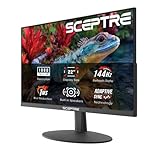
 Sceptre Curved 24.5-inch Prime Gaming Monitor up Sceptre Curved 24.5-inch Prime Gaming Monitor up | 240Hz Refresh Rate: Stay above the pack with… 1ms Response Time: Colors fade and illuminate instantly… 1500R Curvature: The 1500R degree curved design immerses… | Check price |
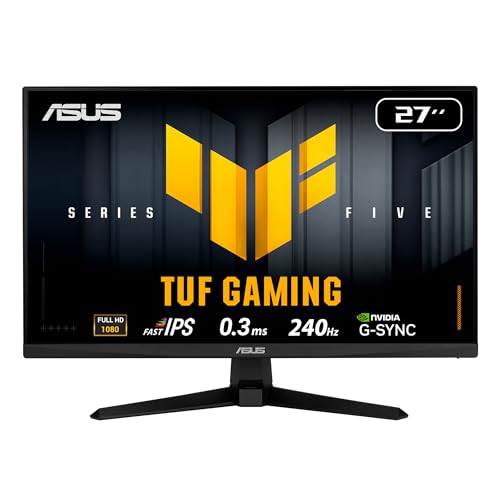 ASUS TUF Gaming 27”1080P Monitor ASUS TUF Gaming 27”1080P Monitor | 27-inch Full HD Fast IPS Display: Features a… Ultra-Fast Response Time: ASUS Fast IPS technology enables… Adaptive Sync Technology: FreeSync Premium and G-Sync compatible… | Check price |
 Samsung 27" Odyssey OLED G6 Samsung 27" Odyssey OLED G6 | Samsung’s 27” Odyssey OLED G6 Gaming Monitor is… OLED Safeguard technology supports performance by actively helping… Glare Free Technology keeps screen clear of reflection… | Check price |
As an Amazon Associate we earn from qualifying purchases at no extra cost to you.
⚡ Save on Your Next PC — Amazon Prime
Prime members get fast free shipping on the systems above, plus early access to Prime Day & Black Friday PC deals. New members get a 30-day free trial.
Watch: 144Hz vs 240Hz Monitor: Worth It in 2026? — Video Review
Quick Verdict
Choose 144Hz if you play story-driven and AAA games, run a mid-range GPU, or would rather put your money toward 1440p and a better panel — it’s still smooth, still responsive, and far easier to feed. Choose 240Hz if competitive shooters are your main diet, you consistently push high frame rates in titles like CS2, Valorant, Overwatch 2, or Rocket League, and you want the lowest possible motion blur and input latency. At 1080p in 2026, 240Hz has become the sensible default for esports-focused builds.
Key Differences
- Frame timing: 144Hz delivers a new frame every 6.9ms; 240Hz every 4.2ms. That’s roughly a 2.8ms improvement — real, measurable, but a fraction of the leap you got moving from 60Hz.
- Motion clarity: More refreshes mean less sample-and-hold blur. Tracking a strafing enemy or flick-aiming across the screen looks noticeably cleaner at 240Hz, especially on panels with backlight strobing or 1ms MPRT modes.
- GPU demand: 144fps is achievable in most modern games on a mid-range card. Sustaining 240fps generally requires competitive titles at reduced settings, or a genuinely strong GPU.
- Resolution trade-off: Affordable 240Hz displays are overwhelmingly 1080p. At the same budget, 144Hz opens the door to 1440p — a bigger visual upgrade for single-player gaming.
- Panel technology: Both tiers now offer IPS and curved VA options. Models like the Dell SE2426HG and SE2726HG pair 240Hz with IPS for wider viewing angles, while curved VA screens such as the SANSUI 27 and Sceptre C255B-FWT240 lean into contrast and immersion.
- Connectivity: DisplayPort 1.4 is the reliable path to 240Hz. HDMI works on most of these panels, but check that your cable and GPU port support the full refresh rate before assuming it.
144Hz: Still the Practical Choice for Most Gamers
144Hz remains the best-balanced refresh rate in gaming. It’s smooth enough that motion feels effortless, forgiving enough that a mid-tier GPU can hold the frame rate in demanding titles, and common enough that adaptive sync support is universally solid. If you play a broad mix — RPGs, open-world games, sim racers, the occasional shooter — you’ll spend most of your time below 144fps anyway, which means a 240Hz panel would sit idle at its upper limit.
The strongest argument for 144Hz in 2026 is what you do with the savings. A 1440p 144Hz display shows visibly sharper textures, more legible UI, and more usable desktop space than any 1080p screen, regardless of refresh rate. For anyone who values image quality over reaction time, that’s the better allocation of budget. The counterpoint: if you’re set on 1080p anyway, 144Hz’s price advantage has largely evaporated.
240Hz: The Competitive Standard
For ranked play, 240Hz is the meaningful upgrade. The reduction in frame time trims input latency and — more importantly — sharpens moving objects, making it easier to track targets without the smearing that persists even at 144Hz. Players who spend their hours in tactical shooters consistently report faster target acquisition, and at 1080p the frame rates needed to saturate the panel are genuinely attainable.
Options are broad now. The 23.8-inch Dell SE2426HG suits classic esports positioning where the whole screen sits inside your focal cone, while the 27-inch SE2726HG and ArcticPro 24 offer IPS colour with the same speed. If you’d rather have immersion, the curved SANSUI 27 and 32-inch models and the Sceptre C255B-FWT240 wrap a 1500R panel around you without giving up refresh rate. Just be realistic: 240Hz only pays off if your GPU and settings can actually get there.
Which Should You Buy?
- For competitive FPS players: pick 240Hz — the Dell SE2426HG or ArcticPro 24 keep everything within easy eye reach.
- For mixed AAA and single-player gaming: pick 144Hz, ideally at 1440p, where sharpness matters more than frame time.
- For immersion and desk presence: pick a curved 240Hz panel like the SANSUI 32 or SANSUI 27 for contrast and wrap-around feel.
- For mid-range GPUs and console play: 144Hz is plenty; you won’t reliably feed 240fps, and adaptive sync smooths the rest.
- For a first high-refresh upgrade at 1080p: pick 240Hz — the price gap is small enough that there’s little reason to settle.
Frequently Asked Questions
Can you actually see the difference between 144Hz and 240Hz?
Most players notice it in fast horizontal motion, though it’s a refinement rather than a revelation. Trained competitive players see it most clearly; casual gamers may need a side-by-side comparison to spot it.
Do I need a high-end GPU for 240Hz?
Not for esports titles at 1080p, where mid-range cards routinely exceed 240fps at optimised settings. For modern AAA games, sustaining 240fps is unrealistic on anything but top-tier hardware.
Is 1080p at 240Hz better than 1440p at 144Hz?
It depends on genre. Competitive players generally prefer 1080p 240Hz; anyone who values visual detail in single-player games will be happier with 1440p 144Hz.
Does 240Hz reduce input lag?
Slightly. The display contributes about 2.8ms less frame latency than 144Hz. The larger real-world benefit is improved motion clarity, which helps you react to what you see.
Final Verdict
If competitive shooters drive your purchase and you’re shopping at 1080p, 240Hz is now the default — panels like the Dell SE2426HG, SE2726HG, ArcticPro 24, SANSUI curved models, and the Sceptre C255B-FWT240 make the speed accessible without a premium. If your library is broader or your GPU is mid-range, 144Hz paired with a higher resolution remains the smarter, better-looking buy.