Key takeaways
- Capacity over raw speed: At this budget, 1TB is the sweet spot. Modern titles routinely exceed 100GB, and a half-full drive performs better than one running at 90% capacity. A slower 1TB drive beats a faster 500GB one for most gamers.
- PCIe 4.0 is the value tier: Gen 5 drives command a steep premium for gains that barely register in gameplay. A solid PCIe 4.0 x4 drive delivering 5,000–7,000 MB/s saturates what DirectStorage and console decompression engines actually use.
- Watch for DRAM-less designs: Budget drives often omit a DRAM cache and lean on Host Memory Buffer instead. That’s acceptable for a game library, but it hurts random writes — so avoid these as a boot or scratch drive if you can help it.
- Check sustained write performance: Peak sequential speeds are marketing. What matters is what happens after the SLC cache fills during a 90GB download. Look for TLC NAND and a healthy TBW endurance rating for the capacity.
- Confirm the form factor and cooling: M.2 2280 is standard for desktops and PS5 expansion, but PS5 installs require a heatsink. Verify your motherboard slot runs at x4 lanes — some secondary slots are throttled to x2.
Storage prices have finally settled after years of volatility, but shopping for a gaming SSD under $100 is still a minefield. The listings that dominate search results are frequently flagship drives at flagship prices — 2TB PCIe 5.0 monsters that blow past a tight budget before you’ve even added a heatsink. Meanwhile, the genuinely affordable options bury their weaknesses in the spec sheet: DRAM-less controllers, shallow SLC caches that collapse mid-transfer, and QLC NAND that turns a large game install into a slideshow.
This guide cuts through that. We’ve focused on drives that realistically land at or near the $100 mark in 2026, explaining where each one makes sense and — just as importantly — where spending a little more genuinely pays off. You’ll find the value picks that belong in a mainstream gaming rig or a PS5 expansion bay, plus a look at the premium drives worth saving toward if your workload demands them. Every recommendation is judged on sustained real-world performance, not peak benchmark numbers you’ll never see in a game.
Our top picks
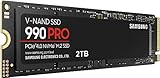
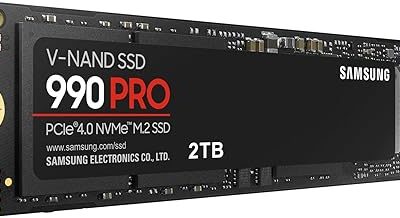
 Samsung SSD 990 PRO 2TB
- Product Group: Personal Computer
- Binding: Personal Computers

 Samsung SSD 9100 PRO 2TB
- Product Group: Personal Computer
- Binding: Personal Computers


As an Amazon Associate we earn from qualifying purchases at no extra cost to you. Ratings are shown as listed on Amazon.
⚡ Save on Your Next PC — Amazon Prime
Prime members get fast free shipping on the systems above, plus early access to Prime Day & Black Friday PC deals. New members get a 30-day free trial.
Watch: Best SSD Under $100 — Video Review
How to Choose SSD Under $100
- Capacity over raw speed: At this budget, 1TB is the sweet spot. Modern titles routinely exceed 100GB, and a half-full drive performs better than one running at 90% capacity. A slower 1TB drive beats a faster 500GB one for most gamers.
- PCIe 4.0 is the value tier: Gen 5 drives command a steep premium for gains that barely register in gameplay. A solid PCIe 4.0 x4 drive delivering 5,000–7,000 MB/s saturates what DirectStorage and console decompression engines actually use.
- Watch for DRAM-less designs: Budget drives often omit a DRAM cache and lean on Host Memory Buffer instead. That’s acceptable for a game library, but it hurts random writes — so avoid these as a boot or scratch drive if you can help it.
- Check sustained write performance: Peak sequential speeds are marketing. What matters is what happens after the SLC cache fills during a 90GB download. Look for TLC NAND and a healthy TBW endurance rating for the capacity.
- Confirm the form factor and cooling: M.2 2280 is standard for desktops and PS5 expansion, but PS5 installs require a heatsink. Verify your motherboard slot runs at x4 lanes — some secondary slots are throttled to x2.
The Best Picks Reviewed
Kingston NV3 1TB
This is the pick that most consistently fits the brief: a PCIe 4.0 Gen 4×4 drive rated to 6,000 MB/s at a price that leaves room in the build budget. It’s DRAM-less, so it won’t win productivity benchmarks, but for loading games and general desktop use the difference is imperceptible — and the 1TB capacity is where the real value lies.
SanDisk Optimus 5100 500GB
A capable PCIe 4.0 x4 drive with up to 6,600 MB/s read speeds, this makes sense as a dedicated game or capture drive alongside existing storage. The 500GB capacity is its main limitation in 2026, so treat it as a supplement rather than a primary drive unless your library is small.
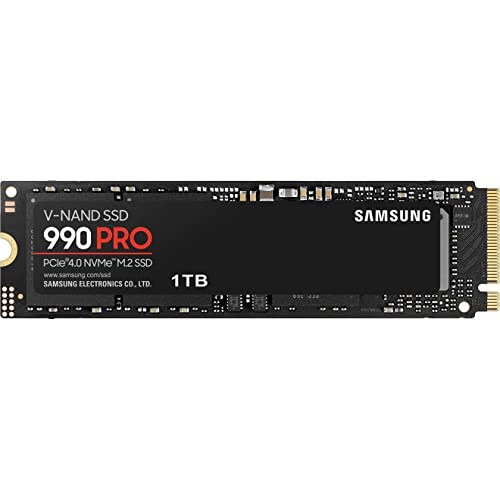
Samsung 990 PRO 1TB
The 990 PRO remains the benchmark for PCIe 4.0 performance, pairing 7,450 MB/s reads with genuine DRAM caching, TLC NAND and excellent sustained write behaviour. It typically sits above the $100 line, but if you can stretch, it’s the drive that will still feel fast in five years.
Samsung 990 PRO 2TB
Everything good about the 1TB model with double the headroom, which matters more than peak speed once you’re installing multiple 150GB titles. Comfortably outside a sub-$100 budget, but the per-gigabyte value is strong and it’s the sensible upgrade target for a serious gaming library.
Samsung 9100 PRO 1TB
Samsung’s PCIe 5.0 flagship pushes up to 14,700 MB/s, which is spectacular on paper and largely academic in games — load-time differences versus a good Gen 4 drive are measured in fractions of a second. Worth it for content creation and heavy DirectStorage workloads, not for a budget gaming build.
Frequently Asked Questions
Is 500GB enough for gaming in 2026?
Only if you rotate titles regularly. With flagship games routinely landing between 100GB and 200GB, a 500GB drive holds three or four modern installs after the OS. 1TB is the practical minimum for a primary gaming drive.
Will a PCIe 5.0 SSD load games faster?
Marginally. Game load times are increasingly limited by CPU decompression and engine initialisation rather than raw storage bandwidth. A quality PCIe 4.0 drive delivers virtually identical in-game results for a fraction of the cost.
Does a DRAM-less SSD hurt gaming performance?
Not meaningfully. Games are read-heavy and largely sequential, which is where DRAM-less drives hold up well thanks to Host Memory Buffer. The compromise shows up in sustained random writes — file transfers, video editing scratch work and heavy multitasking.
Can I use these drives in a PS5?
Any PCIe 4.0 M.2 2280 drive meeting Sony’s minimum 5,500 MB/s read recommendation will work, including the NV3 and 990 PRO. You must fit a heatsink — either a model sold with one or an aftermarket one that clears the console’s bay.
Final Thoughts
For most gamers shopping with a hard $100 ceiling, the Kingston NV3 1TB is the clear recommendation: PCIe 4.0 speeds, a sensible capacity, and no meaningful compromise where gaming is concerned. If your library is modest or you’re adding a secondary drive, the SanDisk Optimus 5100 500GB offers strong sequential performance for less. And if you can stretch beyond the budget, the Samsung 990 PRO 1TB is the drive that justifies every extra dollar with DRAM caching, superb sustained writes and the kind of longevity that makes it a genuine buy-once component.