Key takeaways
- Ray tracing: NVIDIA’s RT cores lead clearly; AMD has closed the gap but still trails in the heaviest RT titles.
- Upscaling: NVIDIA’s DLSS with frame generation is the most refined; AMD’s FSR is open and improving fast.
- Value and VRAM: AMD usually offers more memory and frames per dollar at a given price, as with the RX 9070 XT.
- Creator and AI work: NVIDIA’s CUDA ecosystem dominates rendering, streaming, and AI workloads.
- Power efficiency: Both are competitive, but specific models vary; check the exact card’s draw.
- Software features: NVIDIA’s app and AMD’s Adrenalin both offer strong tuning; feature parity is close.
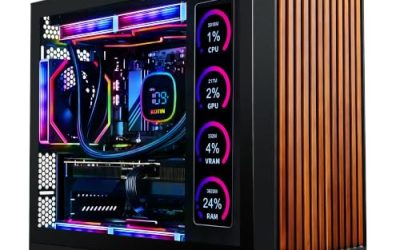
Your graphics card decides your frame rate more than any other part, which makes the NVIDIA versus AMD choice the most consequential decision in any gaming build. In 2026 the battle spans everything from prebuilt towers like the ZOTAC MEK with an RTX 5080 to AMD-driven systems, and both camps deliver superb raw performance. The real differences now live in features: ray tracing, upscaling, and price-to-frame value.
This comparison breaks down where each brand wins so you can match the card to how you actually play. Whether you chase maximum ray-traced eye candy or the most frames per dollar, understanding the tradeoffs will save you from overpaying or missing a feature you’d have loved.
Our top picks



As an Amazon Associate we earn from qualifying purchases at no extra cost to you. Ratings are shown as listed on Amazon.
⚡ Save on Your Next PC — Amazon Prime
Prime members get fast free shipping on the systems above, plus early access to Prime Day & Black Friday PC deals. New members get a 30-day free trial.
Watch: NVIDIA vs AMD GPUs in 2026 — Video Review
Quick Verdict
NVIDIA leads in ray tracing and has the more mature upscaling and frame-generation tech, making it the pick for cutting-edge visuals and creator work. AMD counters with strong rasterization and typically more VRAM and frames per dollar at each price tier, making it the value champion for high-refresh gaming. If you play competitive titles at high frame rates, AMD’s value is compelling; if you want the best-looking single-player experiences, NVIDIA earns its premium.
Key Differences
- Ray tracing: NVIDIA’s RT cores lead clearly; AMD has closed the gap but still trails in the heaviest RT titles.
- Upscaling: NVIDIA’s DLSS with frame generation is the most refined; AMD’s FSR is open and improving fast.
- Value and VRAM: AMD usually offers more memory and frames per dollar at a given price, as with the RX 9070 XT.
- Creator and AI work: NVIDIA’s CUDA ecosystem dominates rendering, streaming, and AI workloads.
- Power efficiency: Both are competitive, but specific models vary; check the exact card’s draw.
- Software features: NVIDIA’s app and AMD’s Adrenalin both offer strong tuning; feature parity is close.
NVIDIA GPUs
NVIDIA’s RTX 5000 series, seen in cards like the ASUS TUF Gaming RTX 5080 and RTX 5070, sets the bar for ray-traced visuals and upscaling. DLSS with frame generation can multiply frame rates in supported games while keeping image quality high, and NVIDIA’s lead in RT means the most demanding path-traced titles run best on their hardware. For streamers and creators, the CUDA and NVENC ecosystem is a genuine productivity advantage.
The tradeoff is price. NVIDIA cards typically cost more per frame in pure rasterization, and lower-tier models sometimes ship with less VRAM than their AMD counterparts. If you don’t care about ray tracing or creator apps, you may be paying for features you won’t use.
AMD GPUs
AMD’s RDNA 4 cards, like the GIGABYTE Radeon RX 9070 XT Gaming OC and ASRock RX 9070 Challenger, deliver excellent traditional rasterization and generous VRAM, which translates to strong high-refresh performance and future-proofing at competitive prices. FSR upscaling is open and works across a wide range of hardware, and AMD’s frames-per-dollar advantage is real for gamers focused on raw performance rather than the latest RT showcase.
AMD’s weaknesses are narrowing but persist in the heaviest ray-tracing scenarios and in professional CUDA-dependent software. For the majority of gamers who prioritize frame rate and value over path-traced reflections, though, AMD makes a very strong case.
Which Should You Buy?
- Buy NVIDIA if: You want the best ray tracing, DLSS frame generation, or do creator and AI work.
- Buy AMD if: You want the most frames per dollar and extra VRAM for high-refresh gaming.
- Buy NVIDIA if: You play story-driven titles and want maximum visual fidelity.
- Buy AMD if: You mainly play competitive esports and value raw rasterization.
- Either works if: You’re at a fixed budget; compare the specific models’ benchmarks at your target resolution.
Frequently Asked Questions
Is NVIDIA or AMD better for ray tracing?
NVIDIA leads in ray tracing thanks to more mature RT cores and DLSS. AMD has improved significantly but still trails in the most demanding ray-traced and path-traced games.
Does AMD offer better value than NVIDIA?
Generally yes in rasterization. At most price points AMD gives more frames per dollar and often more VRAM, though NVIDIA’s feature set can justify its premium for some players.
How much VRAM do I need in 2026?
Aim for at least 12GB for comfortable 1440p gaming and 16GB for 4K or heavy texture mods. AMD cards frequently include more memory at a given price.
Will FSR or DLSS make a big difference?
Both upscalers meaningfully boost frame rates. DLSS is more refined and NVIDIA-only, while FSR is open and runs on both brands, so NVIDIA owners get the best of both worlds.
Final Verdict
There’s no wrong choice here, only the right fit. Pick NVIDIA for class-leading ray tracing, DLSS, and creator power, and pick AMD for superior frames per dollar and generous VRAM in high-refresh gaming. Decide which features you’ll genuinely use, compare the specific models at your resolution, and buy the card that delivers the most of what you actually play.