Key takeaways
- Gaming performance: AMD’s 3D V-Cache chips lead in many games; standard Intel and AMD parts trade blows within a few frames.
- Platform longevity: AMD’s AM5 socket promises upgrades through 2027+, while Intel tends to change sockets more often.
- Value: Intel frequently wins on price-to-performance in the mid-range, especially on sale.
- Productivity: High-core Intel and AMD parts both excel at multitasking, streaming, and rendering.
- Efficiency and heat: AMD’s X3D chips typically draw less power under gaming load and run cooler.
- Integrated graphics: Intel’s iGPU is a reliable fallback if your GPU fails, useful for troubleshooting.
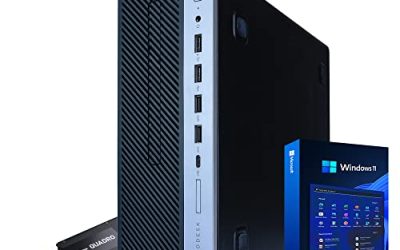
The Intel versus AMD debate is the oldest argument in PC gaming, and in 2026 it’s closer than it has ever been. Both make excellent gaming CPUs, both power off-the-shelf rigs from prebuilts like the Blackout Computers Intel 12th Gen tower to AMD-driven machines like the GMKtec M5 Ultra Mini PC, and the “right” answer depends far more on your budget, your motherboard plans, and what else you do besides gaming than on brand loyalty.
This comparison cuts through the tribalism. We’ll look at raw gaming performance, value, platform longevity, and the specific workloads where each brand pulls ahead, so you can pick the CPU that actually fits your build rather than the one with the loudest fanbase.
Our top picks
 Prebuilt Gaming PC Desktop
- 【Sleek Design & Efficient Cooling】 Features an A-pillar-free…
- 【Powerful Multi-Core Performance, Smooth Multitasking】 Equipped with the…
- 【Entry-Level Gaming Graphics】Powered by AMD Radeon R7 350…
 Blackout Computers Gaming PC Intel 12th Gen
- 802.11 AC WIFI | Bluetooth 5.0 | Graphic…
- AMD Radeon RX 580 8GB GDDR5 Graphics Card…
- 4 RGB Fans for Maximum Air Flow |…
 NIMO 15.6" IPS FHD-Light Gaming-Laptop
- [High-Performance Processing] Powered by the AMD Ryzen 5…
- [Future-Proof Expandability] Designed for longevity, the N153 allows…
- [Enhanced Privacy & Security] Protect your sensitive data…
| Product | Key specs | |
|---|---|---|
| Prebuilt Gaming PC Desktop | 【Sleek Design & Efficient Cooling】 Features an A-pillar-free… 【Powerful Multi-Core Performance, Smooth Multitasking】 Equipped with the… 【Entry-Level Gaming Graphics】Powered by AMD Radeon R7 350… | Check price |
| Blackout Computers Gaming PC Intel 12th Gen | 802.11 AC WIFI | Bluetooth 5.0 | Graphic… AMD Radeon RX 580 8GB GDDR5 Graphics Card… 4 RGB Fans for Maximum Air Flow |… | Check price |
| NIMO 15.6" IPS FHD-Light Gaming-Laptop | [High-Performance Processing] Powered by the AMD Ryzen 5… [Future-Proof Expandability] Designed for longevity, the N153 allows… [Enhanced Privacy & Security] Protect your sensitive data… | Check price |
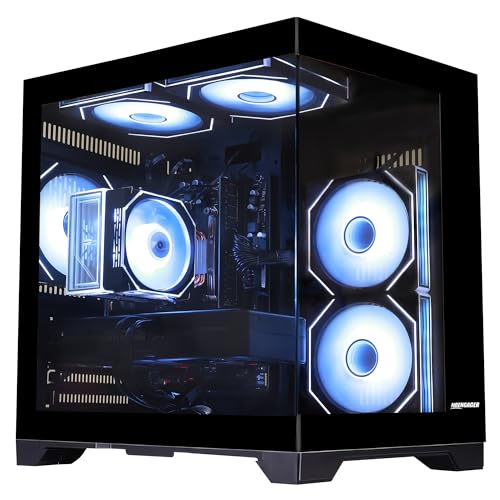 Prebuilt Gaming PC Desktop Prebuilt Gaming PC Desktop | High-Performance Gaming PC powered by Intel Core i5-14400F… 32GB DDR4 RAM 3200MHz ensures lag-free multitasking and… Built-in WiFi & Bluetooth for stable wireless connectivity,… | Check price |
 ASUS TUF A16 RTX 5060 Gaming Laptop ASUS TUF A16 RTX 5060 Gaming Laptop | Equipped with AMD Ryzen 7 260 processor and… IMMERSIVE 165Hz DISPLAY - Features a 16" FHD+… Built to withstand daily wear and tear with… | Check price |
 NOVATECH Phantom 2.0 NOVATECH Phantom 2.0 | AMD RX580 Graphics card delivers smooth visuals and… GET MORE DONE, FASTER: Powered by an Intel… UPGRADE YOUR SETUP’S LOOK: Encased in a high-quality… | Check price |
 Corsair Vengeance RGB RS DDR5 16GB Corsair Vengeance RGB RS DDR5 16GB | Disclaimer: Maximum Speed requires overclocking/PC BIOS adjustments AMD EXPO & Intel XMP 3.0 Compatible Only:… Dynamic RGB Lighting: Individually addressable RGB lighting delivers… | Check price |
 GMKtec M5 Ultra Gaming Mini PC AMD GMKtec M5 Ultra Gaming Mini PC AMD | Office Gaming Mini PC - UPGRADED GMKtec Nucbox… 32GB DDR4 RAM & 1TB PCIe SSD -… DUAL NIC LAN 2.5G RJ45 - Fast Network… | Check price |
As an Amazon Associate we earn from qualifying purchases at no extra cost to you.
⚡ Save on Your Next PC — Amazon Prime
Prime members get fast free shipping on the systems above, plus early access to Prime Day & Black Friday PC deals. New members get a 30-day free trial.
Watch: Intel vs AMD for Gaming in 2026 — Video Review
Quick Verdict
For pure gaming with the best frame rates, AMD’s X3D chips with stacked cache currently lead in most titles and run cooler doing it. For mixed use, tight budgets, or if you want the strongest integrated graphics as a fallback, Intel offers superb value and broad availability. Neither will bottleneck a mainstream GPU noticeably, so most players should choose based on price and platform rather than chasing a few percent of FPS.
Key Differences
- Gaming performance: AMD’s 3D V-Cache chips lead in many games; standard Intel and AMD parts trade blows within a few frames.
- Platform longevity: AMD’s AM5 socket promises upgrades through 2027+, while Intel tends to change sockets more often.
- Value: Intel frequently wins on price-to-performance in the mid-range, especially on sale.
- Productivity: High-core Intel and AMD parts both excel at multitasking, streaming, and rendering.
- Efficiency and heat: AMD’s X3D chips typically draw less power under gaming load and run cooler.
- Integrated graphics: Intel’s iGPU is a reliable fallback if your GPU fails, useful for troubleshooting.
Intel for Gaming
Intel’s strength is versatility and value. Its hybrid design pairs performance and efficiency cores, so a mid-range Core i5 handles gaming and background tasks smoothly, which is why so many prebuilts like the Blackout Computers 12th Gen tower and various Core i5 desktops use them. On sale, Intel often delivers the most frames per dollar in the mainstream tier.
The tradeoffs are power and platform. Top Intel chips can draw more watts and run hotter under heavy load, demanding a capable cooler, and Intel changes sockets more frequently, so a future CPU upgrade may mean a new motherboard. For a gamer who buys a complete system and keeps it for years, that rarely matters.
AMD for Gaming
AMD’s headline advantage is the X3D line, whose stacked L3 cache dramatically boosts frame rates in cache-sensitive games, often topping the charts while sipping power. Beyond that, the AM5 socket’s long upgrade runway means you can drop in a newer CPU later without replacing the board, a real money-saver for upgraders. AMD also spans everything from mini PCs like the GMKtec M5 Ultra to full desktop Ryzen builds.
AMD’s mainstream non-X3D chips are strong all-rounders too, competing closely with Intel on value. The main caution is that the very best gaming chips carry a premium, so budget builders may find better raw value in a mid-range part from either brand.
Which Should You Buy?
- Buy AMD X3D if: You want the highest frame rates and cool, efficient gaming performance.
- Buy AMD AM5 if: You plan to upgrade the CPU later and want a long-lived socket.
- Buy Intel if: You want the best value in the mid-range or a strong integrated-graphics fallback.
- Buy either if: You’re pairing a mainstream GPU, since both keep it fed without a real bottleneck.
- Prioritize the GPU first: Whatever CPU you pick, spend more of the budget on the graphics card for gaming.
Frequently Asked Questions
Is AMD really better than Intel for gaming in 2026?
AMD’s X3D chips lead in many games, but standard parts from both brands are extremely close. For most players the difference is a handful of frames, so value and platform matter more.
Does the CPU or GPU matter more for gaming?
The GPU matters most for frame rates at typical resolutions. The CPU matters for minimum frame rates, high-refresh 1080p, and CPU-heavy games, but you should never starve the GPU to afford a fancier CPU.
Will an Intel or AMD CPU bottleneck my GPU?
A modern mid-range or better CPU from either brand won’t meaningfully bottleneck a mainstream GPU at 1440p or 4K. Bottlenecks appear mainly at very high refresh 1080p with a top-tier card.
Can I upgrade my CPU later?
On AMD’s AM5 you likely can, since the socket is supported for several generations. On Intel it depends on timing; a socket change may require a new motherboard.
Final Verdict
Both brands make gaming CPUs that will delight you, so this isn’t a war worth losing sleep over. Choose AMD’s X3D for the outright best gaming frames and efficiency, AMD’s AM5 for upgrade longevity, and Intel for mid-range value and a handy iGPU fallback. Then put every spare dollar into the GPU, because that’s what your frame rate will thank you for.