Key takeaways
- 16GB (for example the Patriot Viper Venom DDR5 16GB or Corsair Vengeance RGB RS DDR5 16GB) still handles most single-title gaming smoothly and is the budget-conscious choice for an entry build.
- 32GB is the safer long-term pick. It absorbs background apps, heavily modded games, and future titles without you ever thinking about it, which is why kits like the CORSAIR Vengeance RGB DDR5 32GB are so popular.
RAM is one of the easiest upgrades to get wrong in either direction. Too little and games stutter, alt-tabbing crawls, and your system leans on slow storage as overflow. Too much and you have spent money on capacity that sits empty while your GPU or CPU was the real bottleneck. Knowing the sweet spot for 2026 saves you both frustration and cash.
This guide breaks down how much RAM modern games actually use, why DDR5 speed and dual-channel setups matter as much as raw capacity, and how to match a kit to your platform. You will come away knowing exactly which capacity and speed tier fits your build, and why 32GB has quietly become the new default.
Our top picks




As an Amazon Associate we earn from qualifying purchases at no extra cost to you. Ratings are shown as listed on Amazon.
⚡ Save on Your Next PC — Amazon Prime
Prime members get fast free shipping on the systems above, plus early access to Prime Day & Black Friday PC deals. New members get a 30-day free trial.
Watch: How Much RAM Do You Need for Gaming in 2026? — Video Review
How Much RAM Games Really Use in 2026
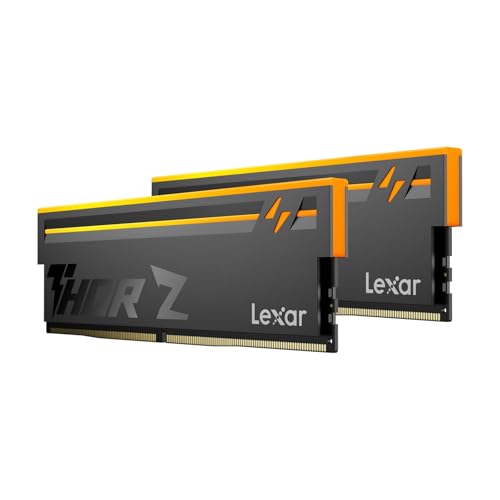
Most modern titles are comfortable within 8 to 12GB of RAM for the game alone, but you are never running only the game. Windows, a browser with a dozen tabs, Discord, and a recording or streaming tool all take their share. That is why 16GB is now the realistic floor and 32GB kits like the CORSAIR Vengeance DDR5 32GB or Lexar Thor Z RGB 32GB have become the comfortable default for anyone who multitasks while gaming.
16GB vs 32GB: Which Should You Buy?
- 16GB (for example the Patriot Viper Venom DDR5 16GB or Corsair Vengeance RGB RS DDR5 16GB) still handles most single-title gaming smoothly and is the budget-conscious choice for an entry build.
- 32GB is the safer long-term pick. It absorbs background apps, heavily modded games, and future titles without you ever thinking about it, which is why kits like the CORSAIR Vengeance RGB DDR5 32GB are so popular.
Why Speed and Dual-Channel Matter
Capacity is only half the story. Gaming performance, especially on AMD Ryzen and Intel platforms, scales meaningfully with memory speed and low latency. On DDR5, a 6000MHz CL36 kit is the current value sweet spot for Ryzen, and running two matched sticks in dual-channel roughly doubles memory bandwidth versus a single stick. Always buy a matched two-stick kit rather than a single module or mismatched pair.
DDR4 vs DDR5 and XMP/EXPO
If you are building new in 2026, DDR5 is the platform to target; it offers higher bandwidth and better headroom for current CPUs. Whichever you choose, remember that RAM ships running at a slow default speed until you enable the memory profile in BIOS. Turning on XMP (Intel) or EXPO (AMD) unlocks the rated speed printed on the kit, such as the 6000MHz on a Vengeance kit or the 6400MHz on the faster CORSAIR Vengeance DDR5 32GB. Skipping this step leaves free performance on the table.
Don’t Forget Laptop and SFF Memory
Desktop DIMMs do not fit laptops or many small-form-factor systems, which use SODIMM modules instead. If you are upgrading a gaming laptop or a compact machine, look for a SODIMM kit like the Crucial 32GB DDR5 SODIMM rather than a standard desktop kit. Check your machine’s supported speed and maximum capacity before buying, since laptop memory support varies more than desktop.
Tips
- Always buy a matched dual-channel kit (two sticks) rather than one large single stick.
- Enable XMP or EXPO in BIOS after installing, or your fast RAM runs at slow default speeds.
- For a build you want to keep several years, 32GB is worth the modest extra cost over 16GB.
- Match the RAM type (DDR4 vs DDR5) and form factor (DIMM vs SODIMM) to your exact motherboard or laptop.
Frequently Asked Questions
Is 16GB still enough for gaming in 2026?
For pure single-game sessions, yes, 16GB remains playable in most titles. But if you keep a browser, Discord, and a streaming app open, or you play heavily modded games, 32GB removes stutter and future-proofs the build for very little extra money.
Does faster RAM actually improve frame rates?
Yes, especially on AMD Ryzen systems and in CPU-limited scenarios. Moving from slow default speeds to a 6000MHz CL36 DDR5 kit with EXPO enabled can add several percent to average and 1% low frame rates in many games.
Do I need to enable XMP or EXPO?
You do if you want the speed you paid for. Out of the box, DDR5 kits run at a conservative JEDEC default. Enabling the XMP or EXPO profile in BIOS applies the advertised timings and clock, which is a free performance boost.
Can I mix different RAM kits?
It is best avoided. Mixing kits with different speeds, timings, or capacities can cause instability or force the system to run at the slowest common settings. For reliability, buy a single matched kit that gives you the total capacity you want.
Conclusion
For most gamers in 2026, a 32GB DDR5 kit running at 6000MHz CL36 with XMP or EXPO enabled is the no-regret choice, while 16GB remains a fine budget option for single-title play. Buy a matched dual-channel kit that fits your platform, turn on the memory profile, and RAM becomes another component you can happily forget about.