Key takeaways
- Resolution and size: At this budget, 27-inch 1440p is the clear winner. It offers roughly 77% more pixels than 1080p at the same size, delivering visibly sharper text and detail without demanding the GPU horsepower that 4K gaming requires.
- Panel type: Fast IPS panels dominate this price bracket for good reason, offering strong color accuracy and wide viewing angles. VA panels deliver deeper blacks and often curve nicely, while QD-OLED brings genuinely perfect contrast if you can stretch to the top of the budget.
- Refresh rate and motion handling: Anything from 144Hz upward is competitive, but 180Hz has become the standard for 1440p monitors in this range. Pay closer attention to actual pixel response and overdrive tuning than to the marketing “1ms” figure, which is rarely achievable across all transitions.
- Adaptive sync support: FreeSync Premium and G-SYNC Compatible certification eliminate tearing and stutter across a wide refresh window. Both are effectively free at this price, so treat their absence as a reason to walk away.
- Ports and extras: Check for DisplayPort 1.4 plus at least two HDMI 2.0 inputs if you’re mixing PC and console. USB-C with power delivery is worth a small premium if you also connect a laptop, and built-in speakers are a convenience rather than a serious audio solution.
Shopping for a gaming monitor under $500 in 2026 means wading through a flood of nearly identical spec sheets. Every panel claims 1ms response, every box promises HDR, and every listing shouts about refresh rates that sound impressive until you realize the panel behind them smears in dark scenes. The result is a market where the difference between a genuinely great display and a mediocre one is rarely visible from the product page alone.
This guide cuts through that noise. We’ve focused on 27-inch 1440p displays, the sweet spot for value in 2026, and evaluated each pick on panel quality, real-world motion clarity, connectivity, and whether it justifies its place in your budget. Every monitor here lands comfortably under $500, and we’ve flagged exactly who each one is for.
Our top picks





As an Amazon Associate we earn from qualifying purchases at no extra cost to you. Ratings are shown as listed on Amazon.
⚡ Save on Your Next PC — Amazon Prime
Prime members get fast free shipping on the systems above, plus early access to Prime Day & Black Friday PC deals. New members get a 30-day free trial.
Watch: Best Gaming Monitor Under $500 — Video Review
How to Choose Gaming Monitor Under $500
- Resolution and size: At this budget, 27-inch 1440p is the clear winner. It offers roughly 77% more pixels than 1080p at the same size, delivering visibly sharper text and detail without demanding the GPU horsepower that 4K gaming requires.
- Panel type: Fast IPS panels dominate this price bracket for good reason, offering strong color accuracy and wide viewing angles. VA panels deliver deeper blacks and often curve nicely, while QD-OLED brings genuinely perfect contrast if you can stretch to the top of the budget.
- Refresh rate and motion handling: Anything from 144Hz upward is competitive, but 180Hz has become the standard for 1440p monitors in this range. Pay closer attention to actual pixel response and overdrive tuning than to the marketing “1ms” figure, which is rarely achievable across all transitions.
- Adaptive sync support: FreeSync Premium and G-SYNC Compatible certification eliminate tearing and stutter across a wide refresh window. Both are effectively free at this price, so treat their absence as a reason to walk away.
- Ports and extras: Check for DisplayPort 1.4 plus at least two HDMI 2.0 inputs if you’re mixing PC and console. USB-C with power delivery is worth a small premium if you also connect a laptop, and built-in speakers are a convenience rather than a serious audio solution.
The Best Picks Reviewed
ASUS TUF Gaming VG27AQ3A
This is the most complete all-rounder under $500, pairing a Fast IPS panel at 180Hz with genuinely well-tuned overdrive and ELMB Sync for backlight strobing without giving up adaptive sync. Its 130% sRGB coverage means colors look punchy without the oversaturation that plagues cheaper panels, and dual certification for FreeSync Premium and G-SYNC makes it a safe pick regardless of your GPU.
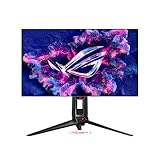
ASUS ROG XG27ACS
The XG27ACS is the pick for anyone splitting time between a desktop and a laptop, since its USB-C connection carries video, data, and power delivery over a single cable. You’re paying a modest premium over the TUF model for that convenience and a slightly more refined stand, but the 180Hz 1440p panel underneath is every bit as capable for competitive play.
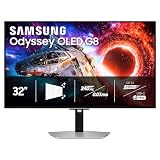
Samsung Odyssey OLED G6 (G61SH)
If you can find this QD-OLED near the top of the budget, it delivers contrast and per-pixel response that no LCD in this guide can approach, making dark games and fast motion look genuinely transformative. The tradeoffs are real, though: lower full-screen brightness in bright rooms and the ongoing need for burn-in mitigation if you leave static desktop elements on screen for hours.
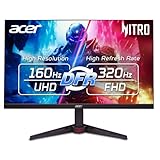
Acer Nitro KG271U N3bmiipx
Acer’s Nitro is the value benchmark here, hitting 180Hz on a competent IPS panel for noticeably less than the ASUS options. The stand is basic and the on-screen menu is fiddly, but the panel itself gives up very little in actual gameplay, making this the smart choice if you’d rather put the savings toward a GPU upgrade.
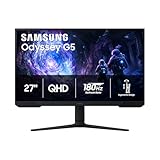
Samsung Odyssey G5 (G51F)
The G51F leans on a VA panel to deliver contrast that IPS competitors simply can’t match, which pays off in atmospheric single-player games and dark environments. Expect slightly softer motion clarity than the Fast IPS picks above, so competitive shooter players should look elsewhere, but immersion-focused gamers get a lot for the money.
Frequently Asked Questions
Is 1440p worth it over 1080p for gaming?
For a 27-inch display, yes. At that size, 1080p produces a visibly coarse pixel structure, while 1440p keeps text sharp and game detail clean. Modern mid-range GPUs handle 1440p at high refresh rates comfortably in most titles.
Do I need 180Hz, or is 144Hz enough?
The jump from 60Hz to 144Hz is dramatic; the jump from 144Hz to 180Hz is subtle and mostly noticeable in competitive shooters. If a 144Hz monitor offers better panel quality or connectivity for your money, take it without hesitation.
Is OLED risky for a monitor used for work as well as gaming?
It’s manageable rather than risky. Modern QD-OLED panels include pixel shifting and refresh cycles, and warranties now typically cover burn-in. Still, if you spend eight hours a day with static toolbars on screen, an IPS panel is the lower-maintenance choice.
Should I choose a curved or flat monitor?
At 27 inches, curvature is a mild preference rather than a meaningful advantage. Curves become genuinely useful at 32 inches and above or on ultrawide panels; below that, choose based on panel quality instead.
Final Thoughts
For most buyers, the ASUS TUF Gaming VG27AQ3A is the monitor to beat under $500, combining strong motion handling, accurate color, and full adaptive sync support without asking you to compromise anywhere obvious. If your budget is tighter, the Acer Nitro KG271U delivers the same core 1440p 180Hz experience for meaningfully less, and if you can stretch to the ceiling of this budget, the Samsung Odyssey OLED G6 offers a genuine step up in image quality that no LCD here can match.