Key takeaways
- 45 to 55 degrees (moderate slant): Easier transition from a flat mouse, still requires some pronation. Good for mild discomfort or mixed use.
- 57 to 65 degrees (true vertical): Handshake posture, significant reduction in forearm rotation. Best for pronounced tingling, numbness, or diagnosed carpal tunnel.
- 70+ degrees (near-vertical): Maximum pronation relief but can feel less precise for fine cursor work until you adapt for 1 to 2 weeks.
The best ergonomic vertical mice for carpal tunnel are the Logitech MX Vertical for large hands and full palm support, the Logitech Lift for small to medium hands, and the Evoluent VerticalMouse D for maximum wrist pronation relief, with the right choice depending on your hand size, grip angle, and whether you need wireless flexibility or a wired, lightweight option.
How a Vertical Mouse Helps With Carpal Tunnel
A traditional flat mouse forces your forearm to pronate, rotating the palm face-down. This compresses the median nerve through the carpal tunnel. A vertical mouse keeps your hand in a handshake position at a 50 to 70-degree angle, which reduces forearm pronation, lowers pressure on the wrist flexor tendons, and keeps the wrist in a more neutral alignment. It does not cure carpal tunnel syndrome, but it can reduce strain during long desk sessions when combined with proper arm position, keyboard height, and breaks.
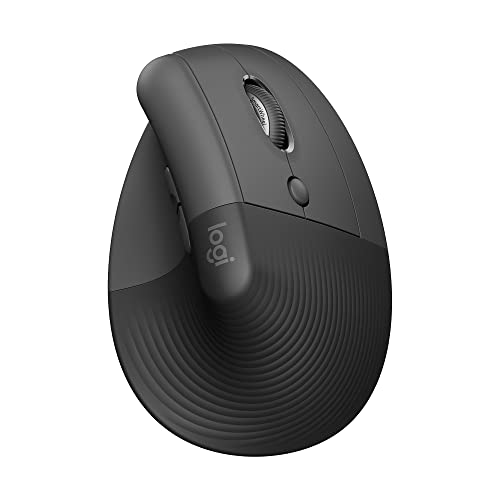
Logitech Lift Vertical Ergonomic Wireless Mouse - Graphite
Included for 'Best Vertical Mice for Carpal Tunnel' because the listing specifies Graphite, details this guide uses to compare options.
View on Amazon
Logitech MX Vertical Wireless Mouse Ergonomic Design - Graphite
Included for 'Best Vertical Mice for Carpal Tunnel' because the listing specifies Graphite, details this guide uses to compare options.
View on Amazon
Anker 2.4G Wireless Ergonomic Mouse, Right Hand Vertical Mouse USB Receiver
Included for 'Best Vertical Mice for Carpal Tunnel' because the listing specifies Right Hand Vertical Mouse USB Receiver, details this guide uses to compare options.
View on Amazon
ProtoArc EM11 NL Wireless Ergonomic Vertical Mouse, Rechargeable, Black
Included for 'Best Vertical Mice for Carpal Tunnel' because the listing specifies Rechargeable and Black, details this guide uses to compare options.
View on AmazonFor the setup to work, your elbow should stay close to 90 degrees with your forearm roughly parallel to the floor. If your desk is 29 to 30 inches high, which is standard, and your chair armrests sit at 25 to 27 inches, your wrist should float slightly above the desk rather than resting heavily on a hard edge. A vertical mouse is most effective when your wrist is not anchored and bent upward.
Buying Criteria: What Matters Most for Carpal Tunnel Relief
1. Vertical Angle and Wrist Position
The angle determines how neutral your wrist stays. Most ergonomic vertical mice fall into three ranges:
- 45 to 55 degrees (moderate slant): Easier transition from a flat mouse, still requires some pronation. Good for mild discomfort or mixed use.
- 57 to 65 degrees (true vertical): Handshake posture, significant reduction in forearm rotation. Best for pronounced tingling, numbness, or diagnosed carpal tunnel.
- 70+ degrees (near-vertical): Maximum pronation relief but can feel less precise for fine cursor work until you adapt for 1 to 2 weeks.
2. Hand Size and Fit
Fit is more important than features. If the mouse is too large, you will overreach and extend your fingers, which strains the tendons. If it is too small, you will claw-grip and compress the palm.
- Measure your hand: From the base of the palm to the tip of the middle finger. Under 7 inches (178mm) is typically small, 7 to 7.75 inches (178-197mm) is medium, over 7.75 inches is large.
- Palm vs. fingertip contact: For carpal tunnel, a full palm-supported grip reduces the need to pinch or lift the mouse.
- Weight: Lighter mice (88-110g) require less force to move, which helps if you have thumb or wrist weakness. Heavier mice (120-135g) feel more stable but fatigue faster.
3. Grip Materials and Edge Comfort
Material affects friction, sweat, and long-term durability. This is where product listings often lack detail.
| Material | Feel and Grip | Durability | Best For |
|---|---|---|---|
| Textured rubber with matte plastic | Soft, high friction, warm to touch | Can wear smooth after 18-24 months of heavy use, may collect skin oils | Dry hands, need for secure grip without squeezing |
| Hard textured plastic | Firmer, slightly slippery when hands sweat | Very durable, easy to clean | Warm offices, users who prefer easy wipe-down |
| Fabric or leatherette side panel | Premium, cushioned feel | Absorbs moisture, shows wear first along thumb rest | Comfort priority, climate-controlled rooms |
If you have sweaty hands or share the mouse, prioritize hard plastic or rubber over fabric. Smooth glossy surfaces look clean but force a tighter grip to prevent slipping, which increases forearm tension.
4. Button Placement and Force Required
Look for low-actuation force clicks and accessible thumb buttons that do not require you to lift or twist your thumb. Side buttons placed too far forward force thumb extension. Ideally, forward/back buttons sit directly under the thumb pad with no reaching. A dedicated DPI button on top is useful, but avoid models where you must contort your index finger to change sensitivity. Top buttons should click with about 55-65g of force, similar to a standard office mouse. Anything significantly stiffer will aggravate finger flexors.
5. Sensor and Tracking
For office and browsing use, a sensor from 1000 to 4000 DPI is more than enough. Higher DPI does not help carpal tunnel, but adjustable DPI (often 400/800/1600/3200) lets you move the cursor with smaller hand movements, which reduces repetitive wrist travel. A mouse that tracks well on wood desks and low-pile surfaces without a mousepad gives you more freedom to position your arm naturally rather than confining yourself to a small pad area.
6. Connectivity and Desk Fit
Most modern vertical mice offer Bluetooth, 2.4GHz USB receiver, or wired USB. For a clean home office setup, measure your desk depth. If your desk is only 24 inches deep and your keyboard takes up 8 to 9 inches, you have about 12 to 14 inches of usable mouse space in front of your arm. Bluetooth reduces cable drag and allows you to keep the mouse closer to your body, which keeps the elbow at a neutral angle. Battery life typically ranges from 70 hours for rechargeable models with backlighting to 2 years for single AA/AAA models on Bluetooth Low Energy. Rechargeable via USB-C is usually $40-$110, while AA-powered models are usually $25-$80.
Top Picks by Situation in 2026
Best for Large Hands and Full Palm Support: Logitech MX Vertical
57-degree angle, 126g, 79mm wide x 120mm tall x 79mm deep. The MX Vertical is the best option if your hand measures over 7.75 inches. It has a deep thumb rest and a wide base that lets the entire hand rest without dangling fingers. Sensor up to 4000 DPI, connects via Bluetooth, Logi Bolt receiver, or USB-C wired. Best for 8+ hour desk days where stability matters more than ultra-light weight. Usually $85-$110. The size makes it less ideal for desks with limited clearance or for users under 5’6″ with smaller hands.
Best for Small to Medium Hands: Logitech Lift Vertical Ergonomic Mouse
57-degree angle, 125g, 71mm wide x 108mm tall x 70mm deep. The Lift is essentially a compact MX Vertical designed for hands under 7.5 inches. Same handshake angle but shorter length and narrower grip, so small hands can click without stretching. Available in left and right-handed versions. Runs on a single AA battery for up to 24 months. Usually $60-$80. The lighter grip diameter reduces thumb pinch force, which often helps with early-stage carpal tunnel symptoms.
Best for Maximum Pronation Relief: Evoluent VerticalMouse D
Near-vertical orientation with adjustable angle feel, available in Small, Medium, Large, and Wireless variants. Weights range from 105g to 130g depending on size. The Evoluent positions the hand in a more fully vertical posture than Logitech models and offers extensive button customization, including pointer speed controls on the side. Often recommended by ergonomists for users who already experience numbness in the thumb, index, and middle fingers. Usually $90-$130. The learning curve is steeper and the footprint is larger, so ensure you have at least 5 x 4 inches of flat mouse area.
Budget-Friendly Lightweight Option: Anker Vertical Ergonomic Optical Mouse
Moderate slant around 50-55 degrees, 95-100g, wired USB. Smaller chassis, 5-button layout, 800/1200/1600 DPI switch. The lower angle makes transition easier if you are trying a vertical mouse for the first time and do not want a dramatic change. Usually $25-$40. Build quality is more basic hard plastic, but the low weight reduces effort to glide. Good secondary mouse to keep at a second workstation.
Alternative for Office Durability: Kensington Pro Fit Ergo Vertical
60-degree angle, 130g, wireless with Bluetooth and 2.4GHz. Textured grip with larger base for wrist support. Usually $50-$75. Known for a firmer shell that holds up well to daily office use and easy cleaning.
Head-to-Head Comparison
| Model | Vertical Angle | Dimensions (W x H x D) | Weight | Hand Size Fit | Connectivity | DPI Range |
|---|---|---|---|---|---|---|
| Logitech MX Vertical | 57 degrees | 79 x 120 x 79 mm | 135g | Large (7.5-8.5 in) | Bluetooth, USB-C, Logi Bolt | 400-4000 |
| Logitech Lift | 57 degrees | 71 x 108 x 70 mm | 125g | Small-Medium (6.5-7.5 in) | Bluetooth, Logi Bolt, AA battery | 400-4000 |
| Evoluent VerticalMouse D Large | ~70 degrees implied | 85 x 130 x 80 mm | ~130g | Large only, size-specific | Wired or Wireless 2.4GHz | 1200-2600 |
| Anker Vertical Ergonomic | ~50 degrees | 68 x 120 x 60 mm | 95g | Medium (7.0-7.75 in) | Wired USB | 800-1600 |
| Kensington Pro Fit Ergo Vertical | 60 degrees | 75 x 115 x 78 mm | 130g | Medium-Large | Bluetooth, 2.4GHz | 800-3400 |
Decision Matrix: Which Mouse Fits Your Situation
| Your Situation | Recommended Choice | Why |
|---|---|---|
| Small hands, mild tingling, tight desk (apartment, 10×10 ft room, 42-inch desk) | Logitech Lift | Compact footprint fits shallow desks, full support without overreach |
| Large hands, all-day computer work, back and wrist pain | Logitech MX Vertical | Wide palm support keeps wrist neutral, stable base reduces micro-movements |
| Diagnosed carpal tunnel, pronounced nighttime numbness | Evoluent VerticalMouse D (size-matched) | Most vertical posture minimizes median nerve compression |
| Renter or hot-desking, need portable and easy to clean | Kensington Pro Fit Ergo or Anker Wired | Durable hard plastic, lightweight, no charging cradle needed |
| Mix of office work and light gaming | Logitech MX Vertical or Lift | Higher DPI range and precise sensor allow small movements without large wrist sweeps |
| Budget under $40, trying vertical for first time | Anker Vertical Ergonomic | Low cost, moderate angle for easier adaptation |
Adjustment and Desk Setup Tips
Expect 7 to 14 days to adapt. Start by lowering your DPI to 800-1000 so you make deliberate, larger arm movements rather than flicking the wrist. Keep the mouse directly in line with your shoulder, not angled outward. If your chair has armrests, set them so your elbow rests lightly without hiking your shoulder. Avoid resting the edge of your wrist on the desk lip, which creates pressure even with a vertical mouse. A thin desk mat with 2-3mm cushion can soften the heel of the palm.
Durability note: The first parts to wear are usually the rubber thumb grip and the micro-switches under the primary buttons. Rubber can become glossy and lose traction after 12-18 months in warm environments. Models with replaceable AA batteries avoid battery swelling issues seen in sealed rechargeable units after 2-3 years. Wired models eliminate charging downtime but add cable drag, which can subtly increase shoulder effort on deep desks over 30 inches.
When a Vertical Mouse Is Not Enough
If you have constant numbness, dropping objects, or pain that wakes you at night, a vertical mouse alone will not resolve it. Combine ergonomic changes with neutral keyboard tenting, frequent 30-second micro-breaks every 20-30 minutes, and a medical evaluation. For severe symptoms, a split keyboard and an arm-supported workstation may be more effective than any mouse upgrade alone.