Key takeaways
- Best-in-class gaming performance and frame-time consistency in 2026
- Fully unlocked and overclockable thanks to the redesigned cache placement
- Drops into existing AM5 boards, keeping upgrade costs down
- Strong efficiency in games relative to the frames delivered
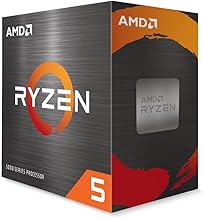
The AMD Ryzen 7 9800X3D is an 8-core, 16-thread desktop processor built on AMD’s Zen 5 architecture with a second-generation 3D V-Cache design. It is, in plain terms, the gaming CPU to beat in 2026 — the chip that sits at the top of nearly every “best for gaming” list thanks to its enormous stacked L3 cache and, crucially, a redesigned cache layout that finally lets it clock aggressively.
This processor is for gamers and enthusiasts who want the highest frame rates a mainstream AM5 platform can deliver, especially at high refresh rates in CPU-bound titles. It is also a fine all-rounder for people who game and do some content creation. Pure productivity users chasing many-threaded workloads should weigh the higher-core alternatives noted later, but for gaming-first builds this is the headline act.
Our top picks
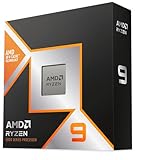
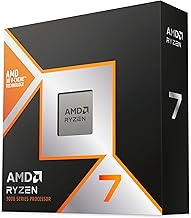
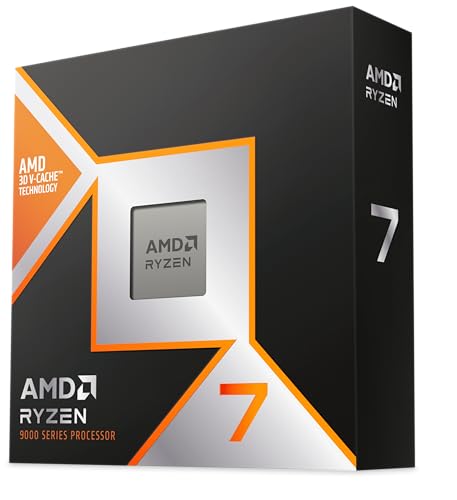 AMD RYZEN 7 9800X3D 8-Core
- Product Group: Personal Computer
- Binding: Personal Computers
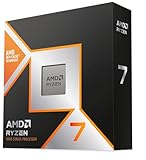
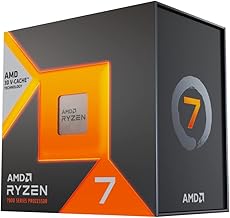
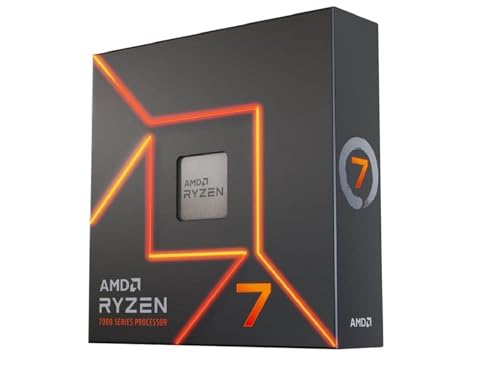
 AMD Ryzen 7 7800X3D 8-Core
- Product Group: Personal Computer
- Binding: Personal Computers
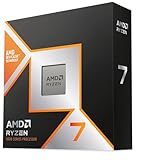
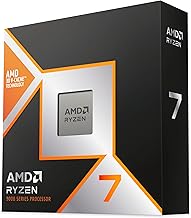
 AMD Ryzen™ 7 9850X3D Desktop Processor
- Product Group: Personal Computer
- Binding: Personal Computers


As an Amazon Associate we earn from qualifying purchases at no extra cost to you. Ratings are shown as listed on Amazon.
⚡ Save on Your Next PC — Amazon Prime
Prime members get fast free shipping on the systems above, plus early access to Prime Day & Black Friday PC deals. New members get a 30-day free trial.
Watch: Ryzen 7 9800X3D Review — Video Review
Design & Build
The 9800X3D drops into the AM5 socket and works with existing 600- and 800-series boards after a BIOS update, which keeps upgrade costs sensible. The big engineering story is that AMD moved the 3D V-Cache beneath the compute die rather than on top of it. That change improves heat transfer from the cores, so unlike the previous 7800X3D this chip is fully unlocked and overclockable, and it tolerates higher clocks without the thermal ceiling that held back the last generation. It runs hot under load like any high-performance chip, so a capable air or liquid cooler is expected rather than optional.
Performance
In games the 9800X3D is exceptional. The stacked cache dramatically reduces memory latency for the engine, and in CPU-limited scenarios — competitive shooters at high refresh, simulation and strategy titles, 1080p and 1440p with a strong GPU — it delivers class-leading frame rates and, just as importantly, excellent frame-time consistency. Paired with a fast GPU it removes the CPU as the bottleneck in almost everything.
The honest counterpoint is that it is still an 8-core part. For heavily multithreaded productivity — large code compiles, heavy video renders, running many virtual machines — chips with more cores will finish faster. It handles creative work well and is no slouch, but if your day is dominated by rendering rather than gaming, the higher-core options make more sense. It is also priced at a premium and frequently sells out, so availability and cost are real considerations.
Pros & Cons
- Best-in-class gaming performance and frame-time consistency in 2026
- Fully unlocked and overclockable thanks to the redesigned cache placement
- Drops into existing AM5 boards, keeping upgrade costs down
- Strong efficiency in games relative to the frames delivered
- Only 8 cores, so higher-core chips win heavy multithreaded work
- Premium price and frequent stock shortages
- Runs hot under load and expects a quality cooler
Alternatives to Consider
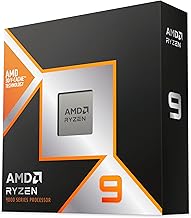
If you want gaming plus serious multitasking, the AMD Ryzen 9 9950X3D 16-Core Processor pairs 3D V-Cache with double the cores for creators who also game. Budget-conscious buyers should look at the AMD Ryzen 7 7800X3D, the previous gaming champion that is still excellent and often cheaper, while those wanting cores without the cache premium can consider the AMD Ryzen 7 9700X for a more general-purpose Zen 5 build.
Frequently Asked Questions
Is the 9800X3D worth upgrading to from a 7800X3D?
For most gamers the jump is modest in average frame rates, since both use 3D V-Cache. The 9800X3D’s real gains are higher clocks, full overclocking, and better performance in CPU-heavy and productivity tasks. If you already own a 7800X3D, the upgrade is optional.
Do I need a new motherboard?
No. It uses the AM5 socket and works with existing 600- and 800-series boards after a BIOS update, so you can often reuse your current board.
What cooler does it need?
A strong air cooler or a 240mm-or-larger liquid cooler is recommended. It runs hot under sustained load, and better cooling lets it hold higher boost clocks.
Is 8 cores enough in 2026?
For gaming, absolutely — it is the fastest gaming CPU available. For heavy multithreaded rendering or compiling, a higher-core chip like the 9950X3D will be faster.
Verdict
The Ryzen 7 9800X3D earns its reputation: it is the definitive gaming CPU of this generation, and the redesigned cache that unlocks overclocking makes it a clear step forward rather than a rehash. The only reasons to look elsewhere are budget or a workload dominated by multithreaded production. For a gaming-first build, it is the chip to buy.