Key takeaways
- Near-flagship gaming performance thanks to 3D V-Cache
- 16 cores and 32 threads for genuinely fast production work
- One chip that excels at both gaming and heavy multitasking
- Unlocked and drops into existing AM5 boards
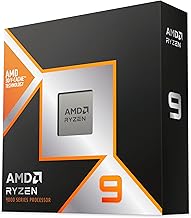
The AMD Ryzen 9 9950X3D is a 16-core, 32-thread flagship desktop processor that fuses AMD’s second-generation 3D V-Cache with the full core count of the Zen 5 lineup. It is the chip AMD builds for people who refuse to compromise — top-tier gaming performance and serious multithreaded muscle in a single socket.
This processor is for the creator-gamer who both plays demanding titles at high refresh rates and does real production work: video editing, 3D rendering, code compiling, or streaming while gaming. If you only game, the cheaper 8-core X3D chip captures most of the gaming benefit for far less money, so the 9950X3D makes the most sense when your workload genuinely spans both worlds.
Our top picks


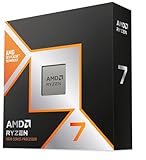
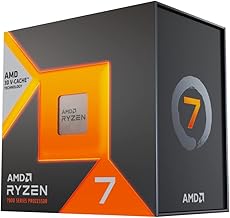
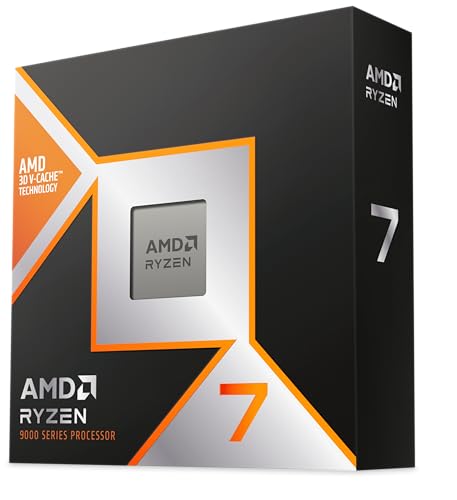 AMD RYZEN 7 9800X3D 8-Core
- Product Group: Personal Computer
- Binding: Personal Computers


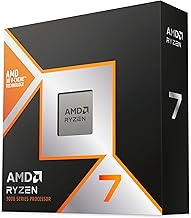
 AMD Ryzen™ 7 9850X3D Desktop Processor
- Product Group: Personal Computer
- Binding: Personal Computers

As an Amazon Associate we earn from qualifying purchases at no extra cost to you. Ratings are shown as listed on Amazon.
⚡ Save on Your Next PC — Amazon Prime
Prime members get fast free shipping on the systems above, plus early access to Prime Day & Black Friday PC deals. New members get a 30-day free trial.
Watch: Ryzen 9 9950X3D Review — Video Review
Design & Build
The 9950X3D uses the AM5 socket and slots into existing 600- and 800-series boards after a BIOS update. Internally it is a two-die design: one core chiplet carries the 3D V-Cache for gaming, the other is a standard high-clocking chiplet for throughput. AMD’s updated cache-under-core layout improves thermals over the first generation, and the chip is unlocked for overclocking. The flip side of that dual-die arrangement is scheduling: Windows and AMD’s chipset software have to steer gaming threads onto the cache-heavy die, and while this works well in 2026, it is a layer of complexity a single-die chip does not have. Expect real heat under all-core load and plan cooling accordingly.
Performance
In gaming the 9950X3D sits right alongside the best, delivering frame rates and frame-time consistency within a hair of the dedicated 8-core X3D part once the cache die is engaged. The advantage over that cheaper chip appears when you leave games: with 16 cores and 32 threads it chews through rendering, encoding, and compiling far faster, making it a legitimate workstation processor as well as a gaming one.
The honest trade-offs are cost and thread management. It is expensive, and in a handful of games a mis-scheduled workload landing on the wrong die can cost a few percent of performance until the software sorts it out — something the single-die 9800X3D avoids entirely. For a pure gamer that complexity and price are hard to justify. For someone who renders in the morning and games at night, the 9950X3D is one of the few chips that does both near the top of each field without switching machines.
Pros & Cons
- Near-flagship gaming performance thanks to 3D V-Cache
- 16 cores and 32 threads for genuinely fast production work
- One chip that excels at both gaming and heavy multitasking
- Unlocked and drops into existing AM5 boards
- Expensive, and overkill for gaming-only builds
- Dual-die scheduling can occasionally cost a little gaming performance
- High heat output under all-core load demands strong cooling
Alternatives to Consider
If you game far more than you create, the AMD Ryzen 7 9800X3D delivers virtually the same gaming experience with simpler single-die behavior at a much lower price. Productivity users who do not need the gaming cache should weigh the AMD Ryzen 9 9950X 16-Core, 32-Thread processor, which offers the same core count at lower cost, and there is even a special AMD Ryzen 9 9950X3D2 Dual Edition for enthusiasts chasing the top configuration.
Frequently Asked Questions
Should I buy the 9950X3D or the 9800X3D for gaming?
For gaming alone, the 9800X3D is the smarter buy — it matches the 9950X3D’s gaming performance closely and costs much less. Choose the 9950X3D only if you also need the extra 8 cores for production work.
Does the dual-die design cause problems?
Usually not. AMD and Windows steer gaming threads onto the cache die, and it works well in 2026. Occasionally a game may briefly land on the wrong die and lose a little performance, but this is the exception rather than the rule.
Is it good for streaming while gaming?
Yes. The 16 cores give it ample headroom to game and encode a stream simultaneously without the frame drops a lower-core chip might suffer.
What cooling does it require?
Plan on a high-end air cooler or a 280mm-plus liquid cooler. Under all-core production loads it generates significant heat, and better cooling protects sustained clocks.
Verdict
The Ryzen 9 9950X3D is a rare do-it-all flagship: it games like the best and works like a proper 16-core workstation chip. The catch is that you pay for both halves, and if you only use one of them a cheaper CPU serves you better. For creators who also game seriously, though, it is the single most capable AM5 processor you can buy.