Key takeaways
- Architecture: The 9800X3D uses Zen 5 with second-generation 3D V-Cache; the 7800X3D uses Zen 4 with the original first-generation stack.
- Cache placement: AMD moved the cache below the compute die on the 9800X3D, so heat escapes directly to the IHS — the single biggest engineering change between the two.
- Clock speeds: 4.7GHz base and 5.2GHz boost on the 9800X3D, versus 4.2GHz base and 5.0GHz boost on the 7800X3D.
- Overclocking: The 9800X3D is fully unlocked with Precision Boost Overdrive and manual multiplier control; the 7800X3D is effectively limited to Curve Optimizer tuning.
- Power and cooling: The 7800X3D typically pulls around 86W peak and stays easy to cool; the 9800X3D can push past 160W under load and wants a strong 240mm AIO or a large dual-tower air cooler.
- Productivity: Zen 5 IPC plus higher clocks give the 9800X3D a 15–20% lead in rendering, compiling, and encoding — the gap is wider there than in games.
Two years after it launched, the AMD Ryzen 7 7800X3D is still one of the most recommended gaming CPUs ever made — and it is still on shelves. Sitting above it is the Ryzen 7 9800X3D, the Zen 5 successor that took the 3D V-Cache formula, flipped the cache stack underneath the compute die, and unlocked the clock speeds that the first generation had to leave on the table. Both are 8-core, 16-thread AM5 processors with 96MB of total L3 cache. On paper they look like siblings. In practice, they occupy very different places in a 2026 build.
The choice matters more now than it did at launch, because the price gap between them has become the real deciding factor. GPUs have moved on, 1440p is the mainstream resolution, and CPU bottlenecks show up mostly in simulation, strategy, and high-refresh competitive titles. Spending the difference on a better graphics card is a legitimate strategy — but so is buying the fastest gaming chip once and not touching the socket again until 2028. Below is how the two actually compare, and which one belongs in your build.
Our top picks
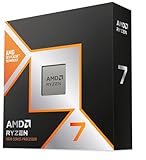
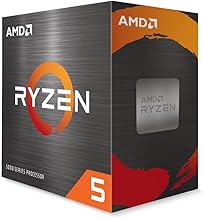
 AMD Ryzen 7 7800X3D 8-Core
- Product Group: Personal Computer
- Binding: Personal Computers
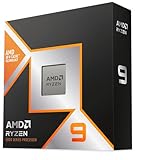
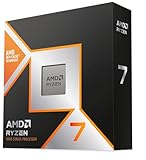
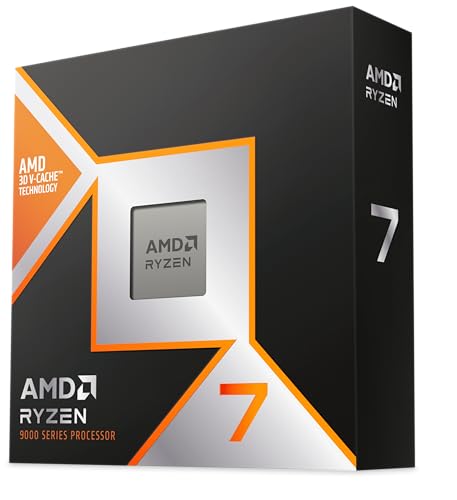 AMD RYZEN 7 9800X3D 8-Core
- Product Group: Personal Computer
- Binding: Personal Computers


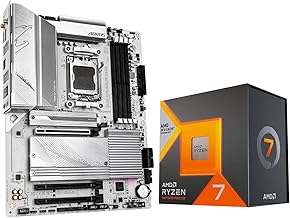

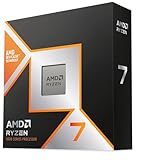
 AMD Ryzen 7 5800X3D 8-core
- Product Group: Personal Computer
- Binding: Personal Computers
As an Amazon Associate we earn from qualifying purchases at no extra cost to you. Ratings are shown as listed on Amazon.
⚡ Save on Your Next PC — Amazon Prime
Prime members get fast free shipping on the systems above, plus early access to Prime Day & Black Friday PC deals. New members get a 30-day free trial.
Watch: Ryzen 7 9800X3D vs 7800X3D: Upgrade in 2026? — Video Review
Quick Verdict
The Ryzen 7 9800X3D is the better processor in every measurable way: roughly 8–12% faster in real gaming workloads, meaningfully quicker in productivity, and fully unlocked for overclocking. It is the right pick for 1080p/1440p high-refresh gamers, sim racers, MMO and strategy players, and anyone pairing it with a flagship GPU. The Ryzen 7 7800X3D is the better purchase for most people building to a budget — it delivers the large majority of that performance, runs cooler and quieter, and frequently appears in CPU-plus-motherboard bundles that undercut a bare 9800X3D outright.
Key Differences
- Architecture: The 9800X3D uses Zen 5 with second-generation 3D V-Cache; the 7800X3D uses Zen 4 with the original first-generation stack.
- Cache placement: AMD moved the cache below the compute die on the 9800X3D, so heat escapes directly to the IHS — the single biggest engineering change between the two.
- Clock speeds: 4.7GHz base and 5.2GHz boost on the 9800X3D, versus 4.2GHz base and 5.0GHz boost on the 7800X3D.
- Overclocking: The 9800X3D is fully unlocked with Precision Boost Overdrive and manual multiplier control; the 7800X3D is effectively limited to Curve Optimizer tuning.
- Power and cooling: The 7800X3D typically pulls around 86W peak and stays easy to cool; the 9800X3D can push past 160W under load and wants a strong 240mm AIO or a large dual-tower air cooler.
- Productivity: Zen 5 IPC plus higher clocks give the 9800X3D a 15–20% lead in rendering, compiling, and encoding — the gap is wider there than in games.
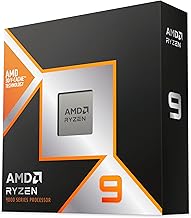
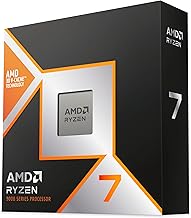
AMD Ryzen 7 9800X3D
The AMD Ryzen 7 9800X3D 8-Core, 16-Thread Desktop Processor fixed the one real complaint about the original X3D chips: they were thermally boxed in. By relocating the cache beneath the CCD, AMD let the cores clock like a normal Ryzen part while keeping the enormous L3 pool that makes these processors so devastating in cache-sensitive games. The result is a chip that leads in Microsoft Flight Simulator, Factorio, Cities: Skylines II, Star Citizen, and esports titles at 1080p, while no longer losing ground in the productivity tasks where the 7800X3D was merely adequate.
It is also the more future-proof buy. AM5 is supported into 2027 and beyond, but the 9800X3D starts from a higher baseline, so it will still be feeding a next-generation GPU comfortably in three years. The trade-offs are heat and price. Plan for a proper cooler, budget for a board with decent VRMs, and expect it to sit near the top of the AM5 price stack.
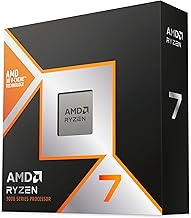
AMD Ryzen 7 7800X3D
The AMD Ryzen 7 7800X3D 8-Core, 16-Thread Desktop Processor remains an outstanding gaming CPU, and its efficiency is genuinely rare — around 50–70W in most games means low temperatures, quiet fans, and a smaller PSU requirement. At 1440p and 4K with a mid-range or upper-mid-range GPU, the difference between it and a 9800X3D often collapses to a few frames, because the graphics card becomes the limiting factor long before the processor does.
Its strongest argument in 2026 is packaging. Options like the 7800X3D with Cooler Master Hyper Spectrum V3 120mm PWM air cooler solve cooling in one purchase, while the Micro Center 7800X3D + GIGABYTE B850 Gaming WF and 7800X3D + GIGABYTE B650 AORUS Elite AX ICE combos bundle a modern DDR5, PCIe 5.0, Wi-Fi-equipped board for close to the cost of the CPU alone. That is a serious amount of platform for the money.
Which Should You Buy?
- For 1080p or 1440p high-refresh competitive gaming: pick the 9800X3D — this is exactly where its lead is visible.
- For 4K gaming with a mid-range GPU: pick the 7800X3D and put the savings into the graphics card.
- For a first AM5 build on a budget: pick a Micro Center 7800X3D motherboard combo; it is the cheapest credible route onto the platform.
- For gaming plus streaming, editing, or compiling: pick the 9800X3D — the Zen 5 multi-thread gains matter here.
- For a small, quiet, or air-cooled build: pick the 7800X3D, ideally the bundle that includes the Hyper Spectrum V3 cooler.
Frequently Asked Questions
Is the 9800X3D worth the upgrade from a 7800X3D?
No. An 8–12% gaming gain does not justify replacing a working CPU. Upgrade your GPU, add RAM, or move to a faster monitor instead. This comparison is for new builds and older-platform upgrades.
Do both CPUs use the same motherboards?
Yes — both are AM5 and work in B650, X670, B850, and X870 boards. Older B650/X670 boards may need a BIOS update before they will post with a 9800X3D, so check the vendor’s CPU support list.
What cooler do I need?
The 7800X3D is happy on a good 120mm tower cooler. The 9800X3D draws considerably more power and performs best with a 240mm or larger AIO, or a premium dual-tower air cooler.
Should I consider the Ryzen 7 7700X instead?
Only if gaming is secondary. The Ryzen 7 7700X 8-Core, 16-Thread Unlocked Desktop Processor is a fine general-purpose chip, but without 3D V-Cache it falls well behind both X3D parts in the games where these CPUs earn their reputation.
Final Verdict
Buy the Ryzen 7 9800X3D if you want the fastest gaming CPU available on AM